

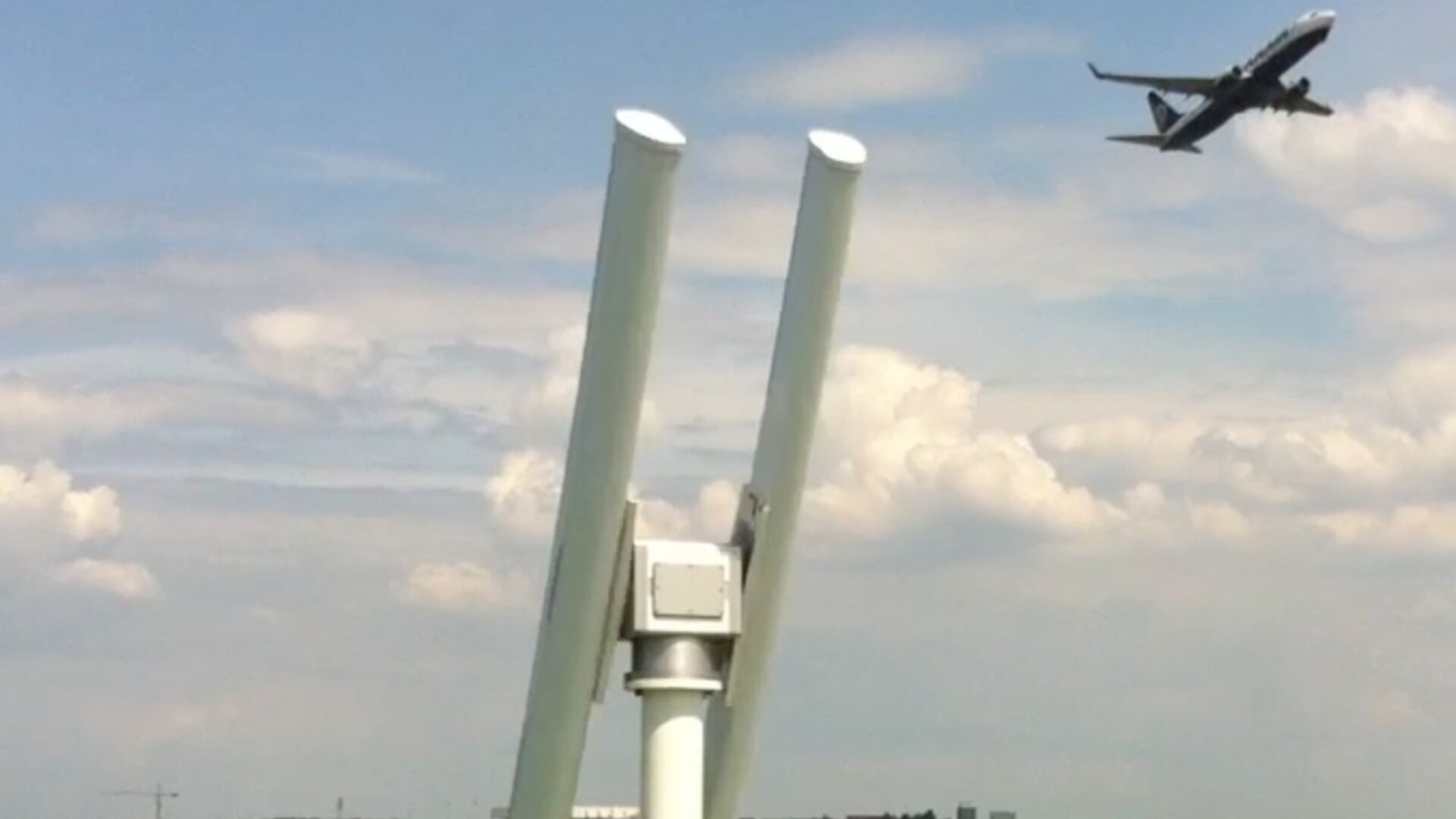
FlySafe adds new dimension to safe flying
Migrating birds fly as long as it takes to get to their destination, no matter what obstacles are in their way. When that obstacle is an aircraft, the results can be deadly.
According to the US Federal Aviation Administration, bird strikes have killed more than 231 people and destroyed over 220 aircraft worldwide since 1988.
Satellites are helping to change this deadly scene. In 2007, ESA began the FlySafe project in partnership with the Dutch, Belgian, French and German Air Forces and in cooperation with industry and research institutes from several European countries.
FlySafe showed how combining weather and environmental data from Earth-observing satellites and tracking of individual birds from space with local migration information from ground radars can improve national bird-warning systems.
Satcoms relay data in areas where terrestrial means are unavailable, as well as helping to track individual birds via GPS tags.
Ground radars include weather radars, surveillance radars and short-range local radar systems equipped with technology developed by Robin Radar Systems.

The Dutch company started selling the technology developed under FlySafe as an operational bird-warning service in 2010 to customers in Belgium, Bulgaria, Estonia, Netherlands, Norway, Poland, Spain and Turkey, including the Dutch and Belgian Air Forces.
Since then, the company has expanded its workforce fourfold and increased its revenues by more than 25% every six months.
“Air forces use the system in combination with their surveillance radars for en route bird strike prevention, during low-flying exercises, for example,” explains company CEO Siete Hamminga.
“With their long-range detection, these systems can scan hundreds of kilometres around. When a bird strike risk through high migration densities is identified, it is relatively easy for air forces to postpone flights or bring them in.
“In civil aviation, bird radar will ultimately be able to support realtime decision-making and automated deterrence.
“For example, through integration with realtime air traffic operations, systems could be used to provide risk assessments to pilots, who can then choose the safest runway or approach route.”
Recently, Robin secured significant funding from two key investors, Inkef Capital and Mainport Innovation Fund, which includes KLM and Schiphol Airport in the Netherlands.
“ESA has made a significant contribution to the rise of Robin,” says Siete.
“This is the explosive mixture you get when combining applied science with entrepreneurship. We are now ready to take Robin to the next level.”
Bird monitoring is increasingly important to the wind energy sector because it seeks to reduce the environmental effect of wind farms on bird populations.
Dedicated avian radars help to pinpoint the location and direction of flocks flying close to proposed and operational wind farms.
“The successful operational outcome of the FlySafe project has proven that ESA’s Integrated Applications Promotion Programme can play a fascinating role in bringing together user interests and communities,” says Amnon Ginati, leader of the programme.
“ESA uses a win–win approach that promotes the added value of space in a fair and unbiased way, and supports the development of sustainable space-based services for the benefit of society.”

