• → European Space Agency

      • Space for Europe
      • Space News
      • Space in Images
      • Space in Videos
    • About Us

      • Welcome to ESA
      • DG's News and Views
      • For Member State Delegations
      • Business with ESA
      • ESA Exhibitions
      • ESA Publications
      • Careers at ESA
    • Our Activities

      • Space News
      • Observing the Earth
      • Human Spaceflight
      • Launchers
      • Navigation
      • Space Science
      • Space Engineering
      • Operations
      • Technology
      • Telecommunications & Integrated Applications
    • For Public

    • For Media

    • For Educators

    • For Kids

    • ESA

    • Telecommunications & Integrated Applications

    • TIA - About Telecommunications
    • About ESA's TIA Directorate
    • Telecommunications satellites
    • Orbits
    • The Satcom market
    • Historical overview
    • Artemis
    • Hylas-1
    • ESA's Telecommunication Programmes
    • ARTES programme overview
    • Alphabus/Alphasat
    • SmallGEO
    • EDRS
    • Iris
    • Integrated Applications Promotion (IAP)
    • Partner Programme: Electra
    • Multimedia
    • Image gallery
    • Video gallery
    • Services
    • Subscribe
    • RSS feeds

    ESA > Our Activities > Telecommunications & Integrated Applications

    Historical overview

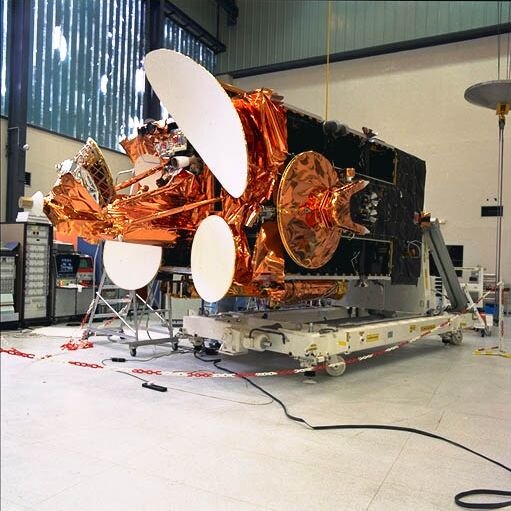
    OTS-2 test preparations

    ESA began developing communications satellites in 1968. Ten years later, the Agency launched an Orbital Test Satellite (OTS-2). ESA, Eutelsat (Europe's organisation for satellite telecommunications) and European national telecommunications companies used OTS-2 for over 13 years. It demonstrated new services, such as broadcasting to cable feeds and direct-to-home television. The success of OTS-2 inspired the design of many subsequent satellites in Europe.

    Following this pioneering work, ESA developed and launched four European Communications Satellites (ECS) between 1983 and 1988, for use by Eutelsat. Each ECS allowed coverage of the whole European continent for cable television, telephone communications, specialised services and Eurovision transmissions. Two of those satellites are still in commercial service.
     
    For communications with mobile stations, especially ships at sea, ESA developed two MARECS satellites. Launched in 1981 and 1984, they were later leased for operations to Inmarsat, the international maritime satellite organisation. Their L-band payloads, with global coverage, could handle around 50 telephone circuits.

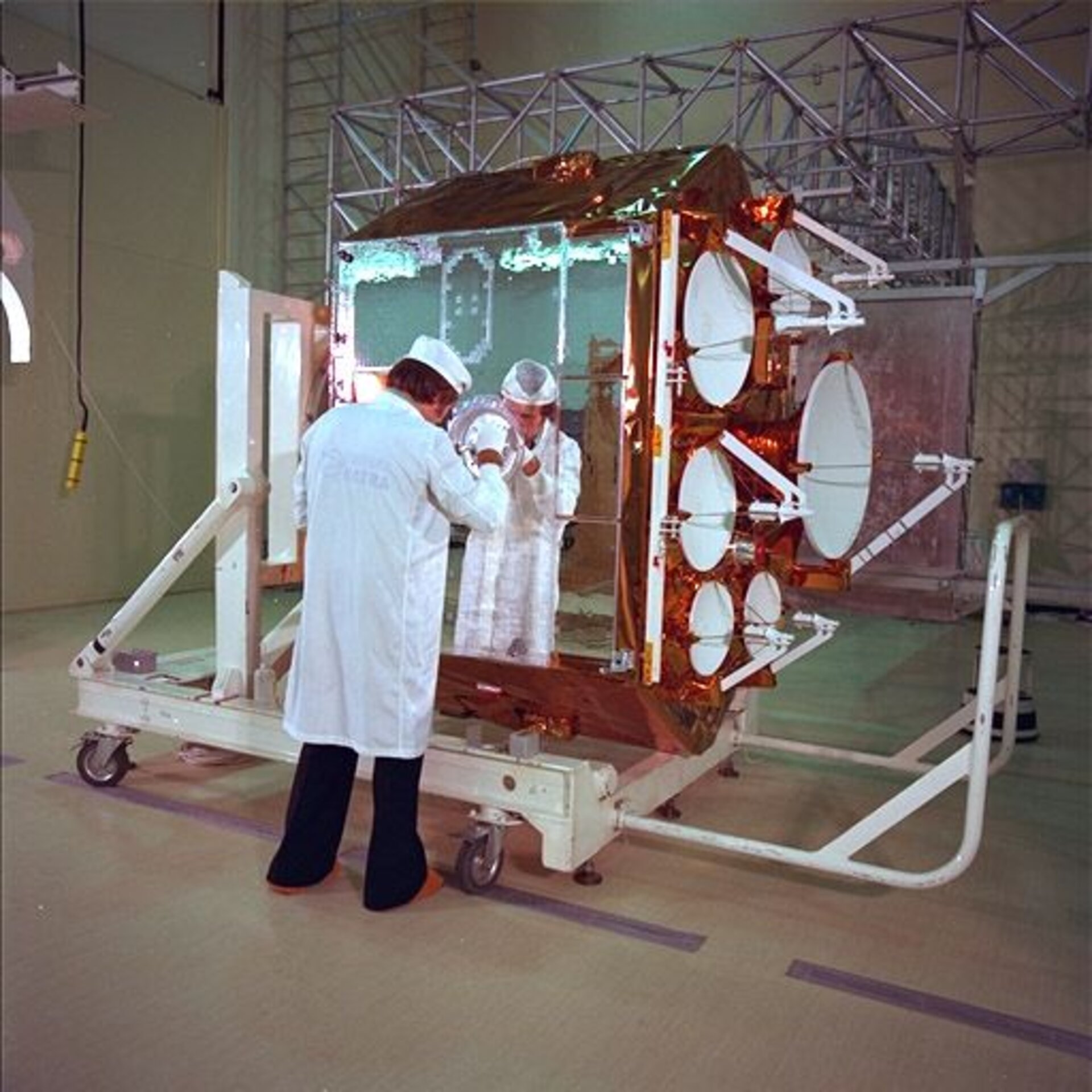
    Olympus

    Olympus launch preparations
    Olympus launch preparations

    ESA also developed Olympus, which was the largest civilian telecommunications satellite in the world at the time of its launch in 1989. Its design incorporated many key technologies that have later been incorporated in commercial satellites, including high-power transmitters, multi-spot beam Ka-band technology and on-board switching. Its direct-to-home TV broadcasting payload allowed national network programmes to be captured with dish antennas as small as 30 cm in diameter. Control of Olympus was accidentally lost in May 1991 but a major recovery action enabled it to resume full service by the following August. Two years later, the ambitious experimental mission ended when the spacecraft's fuel ran out.


    Artemis
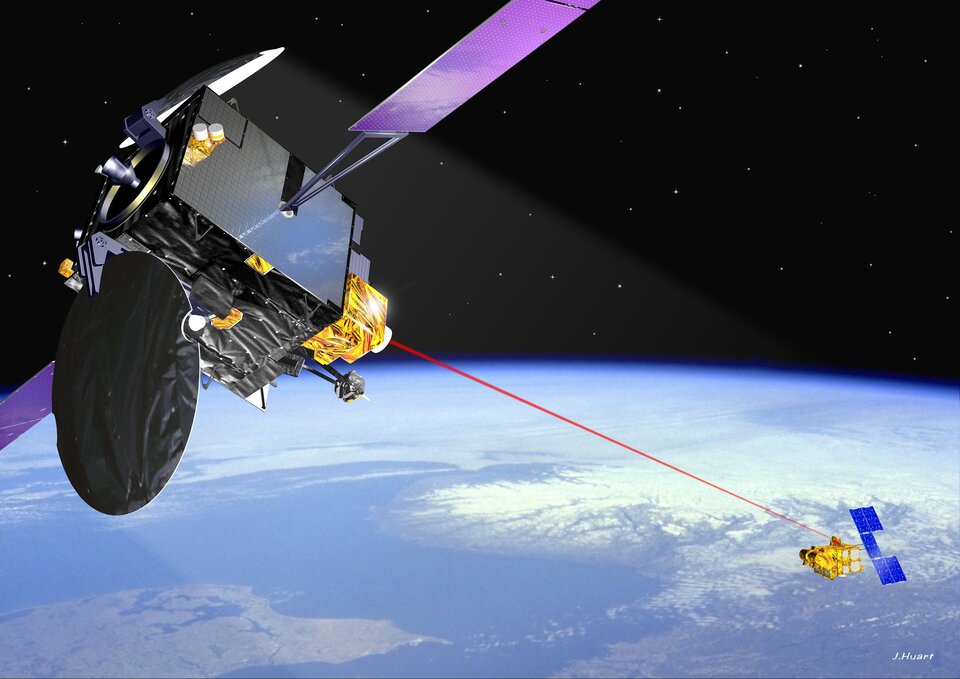
    Artemis and SPOT 4 communicating via the SILEX system - Artist's
    Artemis and SPOT 4 communicating via the SILEX system - Artist's impression.
     

    In 2001, a new telecommunications satellite called Artemis was launched to continue the technological development of Europe’s space infrastructure. Artemis is a technological demonstration satellite that incorporates pioneering Data Relay Satellite technology at both optical frequencies (SILEX payload) and in the Ka-band. It also incorporated a navigation payload, which is part of the EGNOS system, and a mobile services payload.

    Artemis solar array deployment test in ESTEC's facilities.
    Artemis solar array deployment test in ESTEC's facilities.

    In addition, Artemis pioneered a number of new technologies – one of the most important being ion propulsion – a system able to convert the solar energy received from the Sun into propulsive force to move the satellite. This was very serendipitous, since a failure on the upper stage of the launcher left Artemis well below its target orbit. By using a combination of its chemical and ion propulsion systems, Artemis was able to reach its orbital position at 21.5° east in geostationary orbit, where it has remained operational ever since.

    Last update: 8 April 2009

    Rate this

    Views

    Share

    • Currently 0 out of 5 Stars.
    • 1
    • 2
    • 3
    • 4
    • 5
    Rating: 0/5 (0 votes cast)

    Thank you for rating!

    You have already rated this page, you can only rate it once!

    Your rating has been changed, thanks for rating!

    91
    facebook
    twitter
    reddit
    google plus
    digg
    tumbler
    digg
    blogger
    myspace
    • TIA ARTES website

    Connect with us

    • RSS
    • Youtube
    • Twitter
    • Flickr
    • Google Buzz
    • Subscribe
    • App Store
    • LATEST ARTICLES
    • · CryoSat hits land
    • · Ariane 5 completes seven launches …
    • · Measuring skull pressure without t…
    • · Malargüe station inauguration
    • · The solar wind is swirly
    • FAQ

    • Jobs at ESA

    • Site Map

    • Contacts

    • Terms and conditions