

Overview
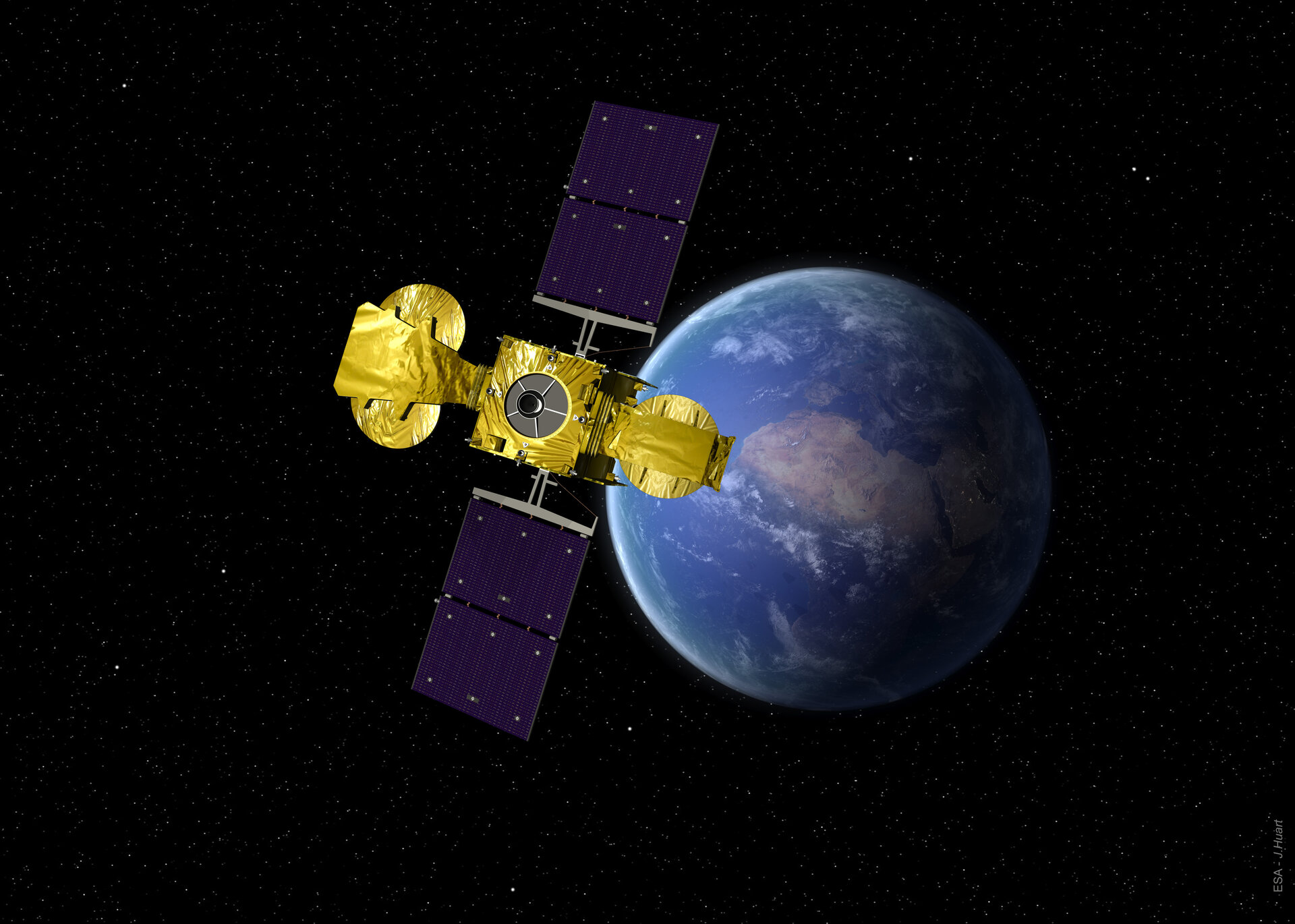
The Highly Adaptable Satellite is an advanced satellite system focused on high-speed internet connectivity for Europe.
Broadband from the sky
Operating across Ku- and Ka-band frequencies with advanced communication technology, Hylas-1 can pipe broadband through the sky to hundreds of thousands of previously underserved users while simultaneously broadcasting multiple standard and high-definition TV channels.
Ku-band and Ka-band are portions of the microwave spectrum: Ku-band is extensively used for satellite television broadcasting, while Ka-band is increasingly employed for broadband internet services.
Hylas-1’s wide Ku-band beam covers the whole of Europe. Its Ka-band antenna generates eight closely focused ‘spot beams’ for optimal frequency reuse, each providing coverage to a key European market. Bandwidth and power can be redistributed between beams to fulfil the changing needs of the market.
In partnership with business

Hylas-1 is an innovative mission put together in a new way: it is ESA’s first public–private partnership resulting in a full satellite system. The commercial operator, UK-based Avanti Communications, has contributed most of the mission budget and will use the satellite to deliver broadband services to customers. ESA’s involvement focuses on Hylas-1's payload technology.
Joining forces with a commercial operator means that Europe’s advanced telecom technologies reach orbit much more rapidly and economically than otherwise. The Hylas-1 public–private partnership drives the technical state-of-the-art forward in space while efficiently serving a developing market.
| Hylas-1 facts and figures | |
|---|---|
| Launch date: | 26 November 2010 |
| Launch vehicle: | Ariane 5 ECA |
| Launch site: | Guiana Space Centre, Kourou, French Guiana |
| Orbital location: | geostationary at 33.5°W |
| Operational lifetime: | 15 years |
| Payload: | repeaters: eight flexible Ka-band forward link transponders; one flexible Ka-band return link transponder; two flexible Ku-band transponders |
|
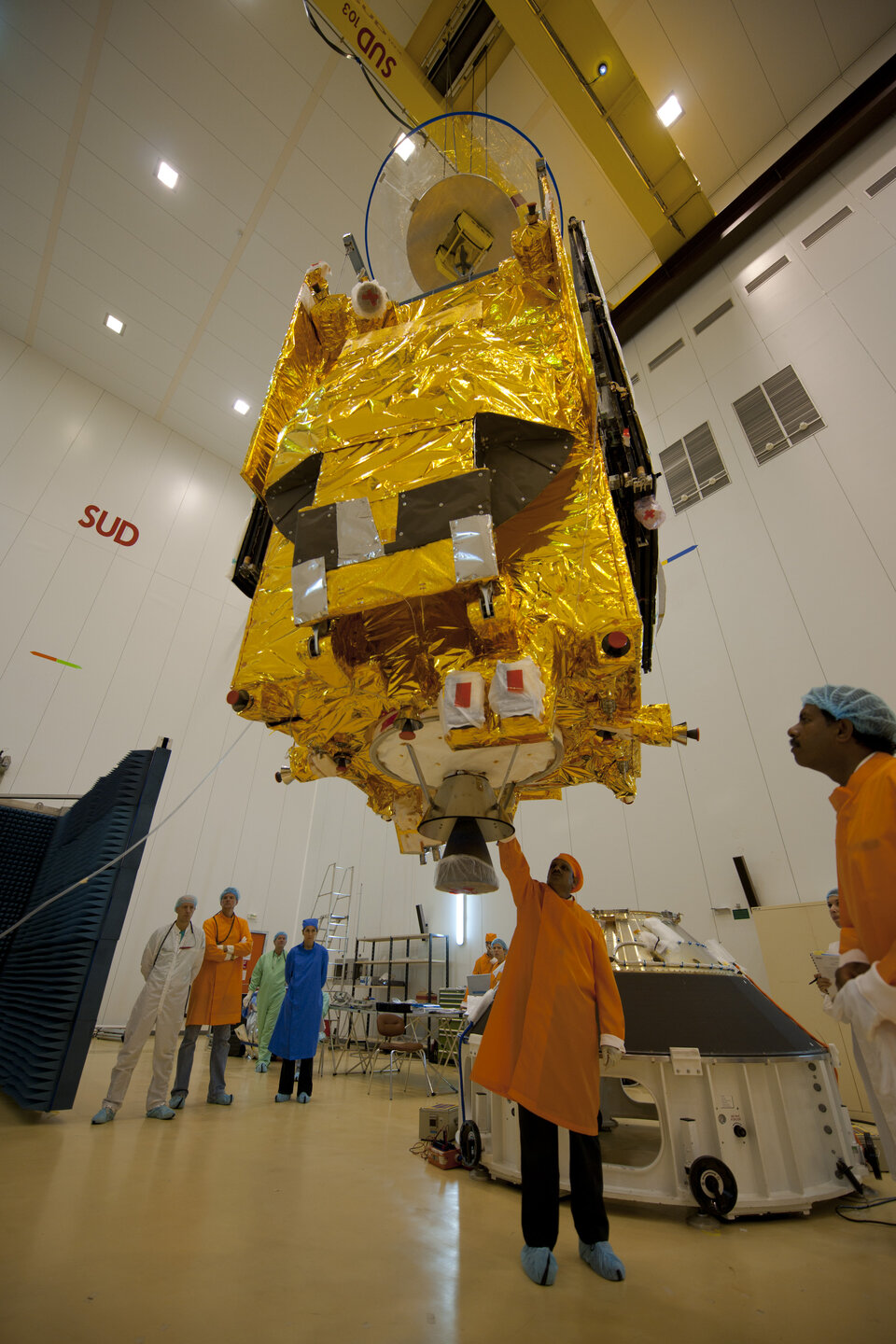
antennas: deployable 1.6 m-diameter Ku-band reflector antenna generating a linearly polarised shaped beam with European coverage; a single-feed-per-beam Ka-band antenna system with two elliptical antennas – each measuring 1.6 x 1.35 m – generating eight circularly polarised spot beams, each covering a key European market |
|
| Spacecraft bus: | ISRO I-2K (three-axis stabilised) |
| Launch mass: | 2242 kg (1109 kg dry mass) |
| Size: | 4.2 x 2.6 x 2.5 m; deployed solar array span 9.0 m; deployed antenna span 6.0 m |
| Power supply: | two Sun-tracking wings each comprising two (2.54 x 1.53 m) solar panels, made up of triple-junction gallium arsenide cells; two batteries each comprising 20 lithium-ion cells with 32 Ah capacity |
| Satellite control centre: | Inmarsat HQ, East London, UK |
| Network operations centre: | Avanti Communications HQ, London, UK |
| Gateway stations: | primary: Goonhilly (UK); back-up: Land’s End (UK) |


