• → European Space Agency

      • Space for Europe
      • Space News
      • Space in Images
      • Space in Videos
    • About Us

      • Welcome to ESA
      • DG's News and Views
      • For Member State Delegations
      • Business with ESA
      • ESA Exhibitions
      • ESA Publications
      • Careers at ESA
    • Our Activities

      • Space News
      • Observing the Earth
      • Human Spaceflight
      • Launchers
      • Navigation
      • Space Science
      • Space Engineering
      • Operations
      • Technology
      • Telecommunications & Integrated Applications
    • For Public

    • For Media

    • For Educators

    • For Kids

    • ESA

    • Telecommunications & Integrated Applications

    • TIA - About Telecommunications
    • About ESA's TIA Directorate
    • Telecommunications satellites
    • Orbits
    • The Satcom market
    • Historical overview
    • Artemis
    • Hylas-1
    • ESA's Telecommunication Programmes
    • ARTES programme overview
    • Alphabus/Alphasat
    • SmallGEO
    • EDRS
    • Iris
    • Integrated Applications Promotion (IAP)
    • Partner Programme: Electra
    • Multimedia
    • Image gallery
    • Video gallery
    • Services
    • Subscribe
    • RSS feeds

    ESA > Our Activities > Telecommunications & Integrated Applications

    Introduction

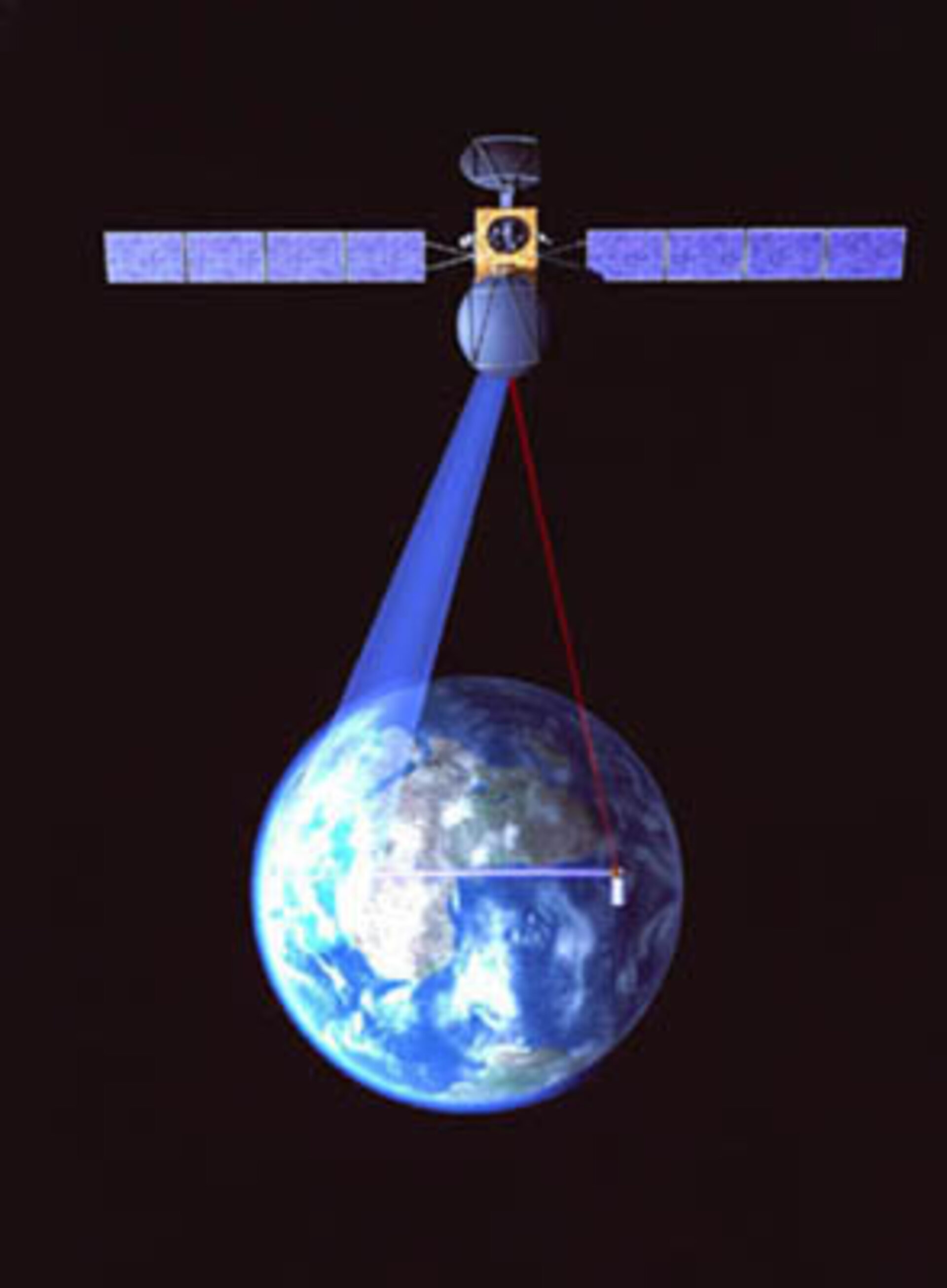
    Artemis - Artist impression
    Artemis - Artist's impression

    Why Artemis?

    ESA’s Artemis spacecraft will further develop European capabilities in satellite communications, testing new technologies and acting as a relay platform to improve existing services to other satellites and systems.

    As well as demonstrating new kinds of mobile communications satellite services and providing direct satellite-to-satellite communications, Artemis will support development of a European satellite navigation system.

    The spacecraft also has ion propulsion thrusters that will allow it to maintain a precise orbital position without having to carry large amounts of chemical propellant.

    Artemis has a planned lifetime of ten years and will perform three specific functions:

    • provide voice and data communications between mobile terminals, mainly for cars, trucks, trains or boats
    • broadcast accurate navigation information as an element of EGNOS, a European satellite system designed to augment US Global Positioning Satellites and a similar Russian system known as Glonass
    • send high data rate communications directly between satellites in low Earth orbit and the ground

    Artemis is due to be launched by Ariane 5 on 12 July from the European spaceport in French Guiana.

    Last update: 6 October 2004

    Rate this

    Views

    Share

    • Currently 0 out of 5 Stars.
    • 1
    • 2
    • 3
    • 4
    • 5
    Rating: 0/5 (0 votes cast)

    Thank you for rating!

    You have already rated this page, you can only rate it once!

    Your rating has been changed, thanks for rating!

    7
    Tweet
    • Related news
      • Artemis: Europe's advanced telecommunication satellite to be launched soon on Ariane-5
      • Artemis - the satellite
      • Artemis - launch
      • Artemis - vital statistics
      • Related links
      • Artemis homepage
      • EGNOS website
      • US Naval Observatory GPS operations
      • Glonass

    Connect with us

    • RSS
    • Youtube
    • Twitter
    • Flickr
    • G+
    • Facebook
    • Livestream
    • Subscribe
    • App Store
    • LATEST ARTICLES
    • · ESA astronaut Timothy Peake set fo…
    • · Space drives e-mobility
    • · Proba-V opens its eyes
    • · First new Galileo satellite arrive…
    • · Next destination: space
    • FAQ

    • Jobs at ESA

    • Site Map

    • Contacts

    • Terms and conditions
