Satellite’s role in telemedicine
Telemedicine can potentially play an important role in improving health services. Ways in which satellites can help to improve these services was the subject of a symposium that took place in Italy last weekend.
The symposium was organised by ESA at ESRIN, the European Space Research Institute just outside Rome. Participants came from a variety of backgrounds including central and local government, health services and hospitals, the military, academia and the space sector; all participants had one thing in common – an interest in encouraging the use of telemedicine.
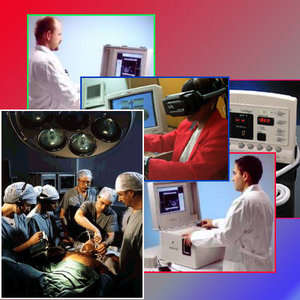
The benefits of expanding the use of telemedicine are threefold: it can improve the quality of healthcare services; permit the best use of often limited hospital resources such as beds, doctors, nurses and expensive medical equipment; and also help to resolve the problem of unequal access to good health care.
Several working groups were organised to cover various aspects of telemedicine, including:
- telemedicine and the elderly
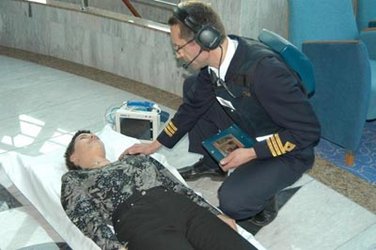
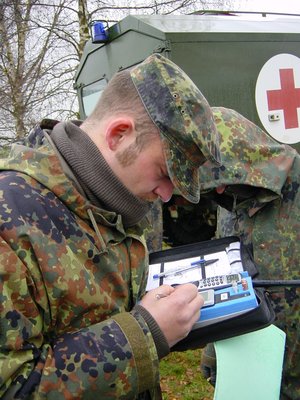
- telemedicine for disaster relief and emergencies
- telemedicine for hospitals in remote areas
- teleconsulting, 2nd opinion and regulatory aspects
- telemedicine, medical education and clinical research
- telemedicine technology development in satellite communications

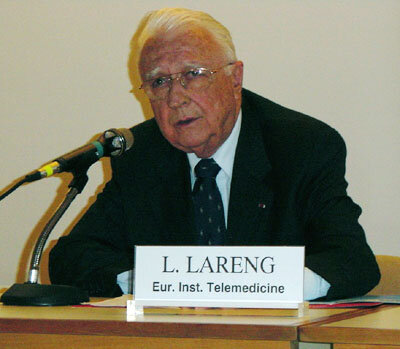
The symposium was co-chaired by ESA’s Director of Applications, Claudio Mastracci and Prof. Louis Lareng, Director of the European Institute of Telemedicine in Toulouse. Prof. Lareng helped to stimulate discussion by visiting each working group and asking them to consider whether satellites were used enough in telemedicine and if not, why not. The answer to the first question was a universal ’no’; answers to the second question were more diverse. Among the reasons given for not using satellites, several working groups mentioned lack of awareness as to the benefits.
The advantages that satellite communications can bring to telemedicine include instant access to broadband services, particularly in remote areas where telecommunications are poor or non existent, and swift response in disaster situations where speed is vital. Satellites also provide a powerful and relatively inexpensive tool, particularly for video links between multiple users. Plus, costs are constantly decreasing and satellites are a tried, tested and extremely reliable means of telecommunication.
In discussing telemedicine in general, participants agreed that although a promising start had been made in many areas, its expansion was hindered by a lack of universal standards; the availability, quality and speed of information transfer; legal and ethical concerns; security of data; funding; and a general lack of support, at European and national level, to encourage doctors and hospitals to set up telemedicine services.
ESA’s role
Participants believed that ESA could encourage the improvement and use of telemedicine services by acting as an ‘honest broker’. That is, by bringing all those concerned together, pushing for standardisation and interoperability at European level, monitoring developments, and encouraging further research and development.
There was general agreement that the symposium had been a positive exercise and ESA was asked to create a ‘permanent’ user-oriented working group on telemedicine with representatives mainly from the health sector. In his summing up, Claudio Mastracci said that ESA’s future objectives were, “to listen, encourage debate and understanding, and define future actions. It was the duty of governments to ensure good health services for all their citizens and ESA, together with the EU, will push for that”.
Prof. Lareng aptly summed up the purpose of the meeting in his closing remarks, when he reminded participants that: “the reason for encouraging telemedicine services is to relieve the suffering of people, wherever they may be”.
In the near future ESA will set up, via satellite, a user-driven telemedicine working group to define the actions needed to build up a European, telemedicine via satellite programme.