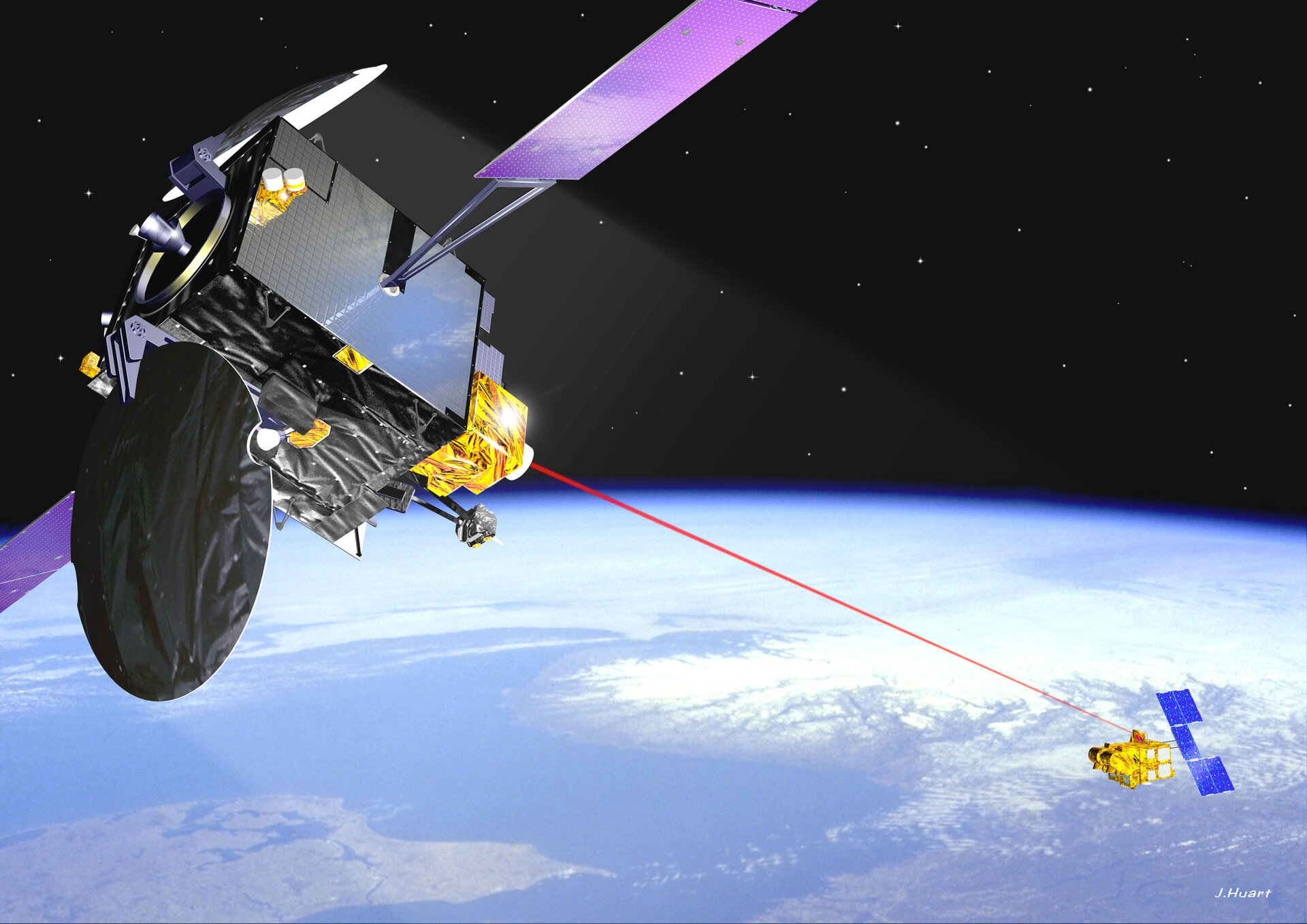
Technological breakthrough with Artemis
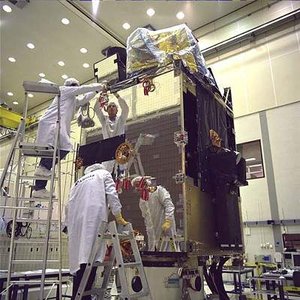
With a mass of 3100 kg at launch, solar arrays spanning 25 metres and the capacity to deliver 2.5 kW of electrical power, Artemis incorporates several significant technological advances that will not only impact services and facilities on Earth, but will also influence and enhance future satellite missions.
Ion propulsion - keeping on course for the future
Inclination control thrusters that use ion propulsion technology are a first for a European satellite. They maintain the satellite in a stable orbital position without the need for large amounts of chemical propellant.
In contrast to conventional chemical propulsion, this new technology ionises the noble gas, Xenon, and uses it as a propellant. A high voltage system subsequently accelerates these ions, which leave the ion engines as a neutralised beam, thus creating the necessary mass expulsion to provide thrust to the spacecraft.
Two types of thrusters are being demonstrated on Artemis, built by Astrium (UK) and Astrium (D). They are five times more efficient than traditional chemical systems and will pave the way for lighter, less expensive and more commercially attractive satellite missions in the future.
Communicating by sight and sound
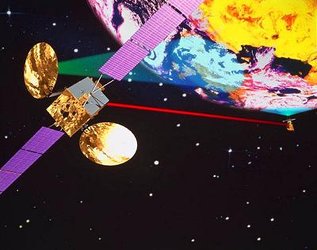
A new kind of communications link called SILEX (Semi-conductor laser Inter-satellite Link EXperiment) forms a part of the satellite's data relay payload.
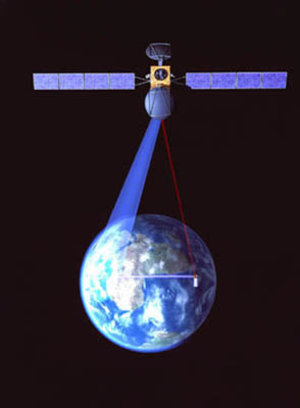
As the world's first civil inter-satellite data relay system to use lasers, it has the capability of transmitting data between terminals at a rate of 50 megabits per second and puts Europe at the forefront of optical space communications. It facilitates the transmission of large amounts of data from low Earth orbit satellites to smaller ground terminals.
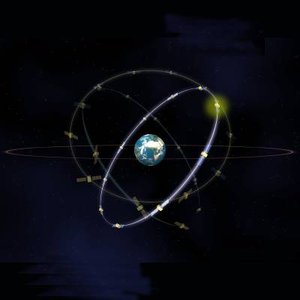
The first to benefit from this new technology was France’s Spot 4 satellite, which already carried a SILEX terminal at the time Artemis was launched. It used to take many hours for data from Spot 4 to be transmitted to Earth, depending on the location of the satellite and the proximity of a ground station. Further journey time to the processing centre in Toulouse was often also required. By using the SILEX laser, Spot 4 data can now be transmitted direct to Artemis in a geostationary orbit and then onward to Toulouse in near real-time, providing images in little more than half an hour.
In addition to the OICETS optical experiment, ESA's Earth observation satellite Envisat will use Artemis'Ka Band facility to relay its instrument data to ground, and an arrangement has been made between ESA and NASDA for part of the Artemis data relay capacity to be made available to Japan. This will be on ADEOS-2, a remote sensing satellite, and the NASDA module of the International Space Station.
Next: On the ground »