ESAATVInternational Space StationHuman Spaceflight and Exploration
   
Flight plan
ATV mission conceptATV flight phasesATV cargo capacity
Spacecraft
ATV configurationATV Integrated Cargo CarrierATV Service ModuleATV evolution
ATV Missions
ATV-1: Jules VerneATV-2: Johannes KeplerATV-3: Edoardo AmaldiATV-4: Albert Einstein
Operations
Flight operationsATV Control CentreCrew role
Industry
ESA's roleEuropean industry
Downloads
ATV Edoardo Amaldi factsheet (pdf)ATV Edoardo Amaldi info kit English (pdf)ATV Edoardo Amaldi info kit German (pdf)ATV Edoardo Amaldi info kit French (pdf)ATV Edoardo Amaldi info kit Italian (pdf)ATV: Servicing the International Space Station (pdf)
Multimedia gallery
ATV image galleryATV video gallery
Services


Bookmark and Share


printer friendly page
ATV mission scenario - picture report
 
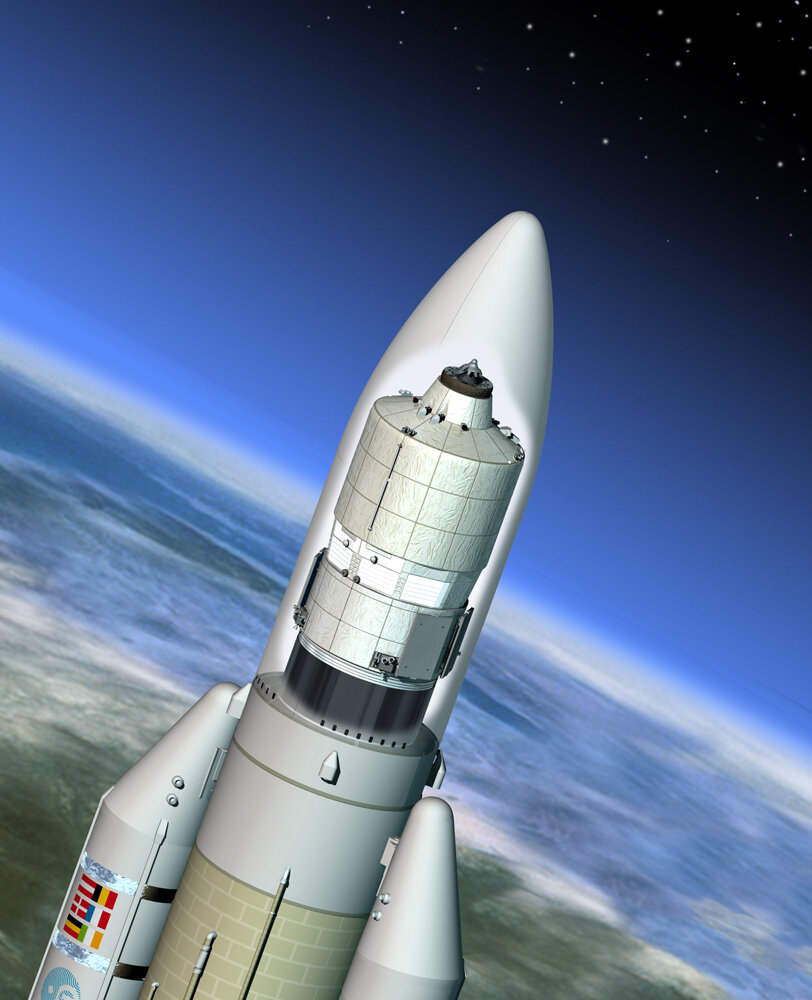
Ariane 5 launcher
The powerful Ariane-5 takes off from french Guiana. Next ATV, Johannes Kepler is planned to be launched in November 2010.
 
 
The Automated Transfer Vehicle
The ATV, weighing more than 20 tonnes, is well protected at the top of Ariane 5 during the three minutes of high pressure aerodynamic ascent.
 
 
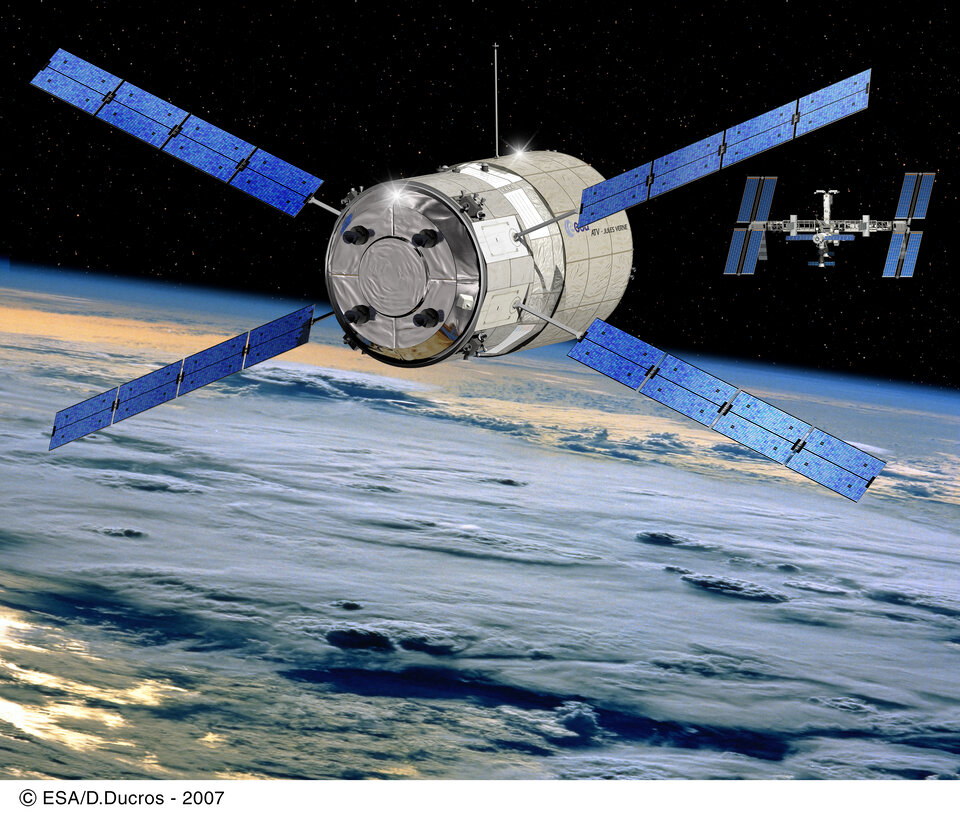
The Automated Transfer Vehicle
100 minutes after lift-off, the ATV becomes a fully automatic spaceship navigating towards the International Space Station (ISS)
 
 
The Automated Transfer Vehicle
Three days after launch, the ATV uses its eye-like rendezvous sensors to dock precisely and safely with the ISS.
 
 
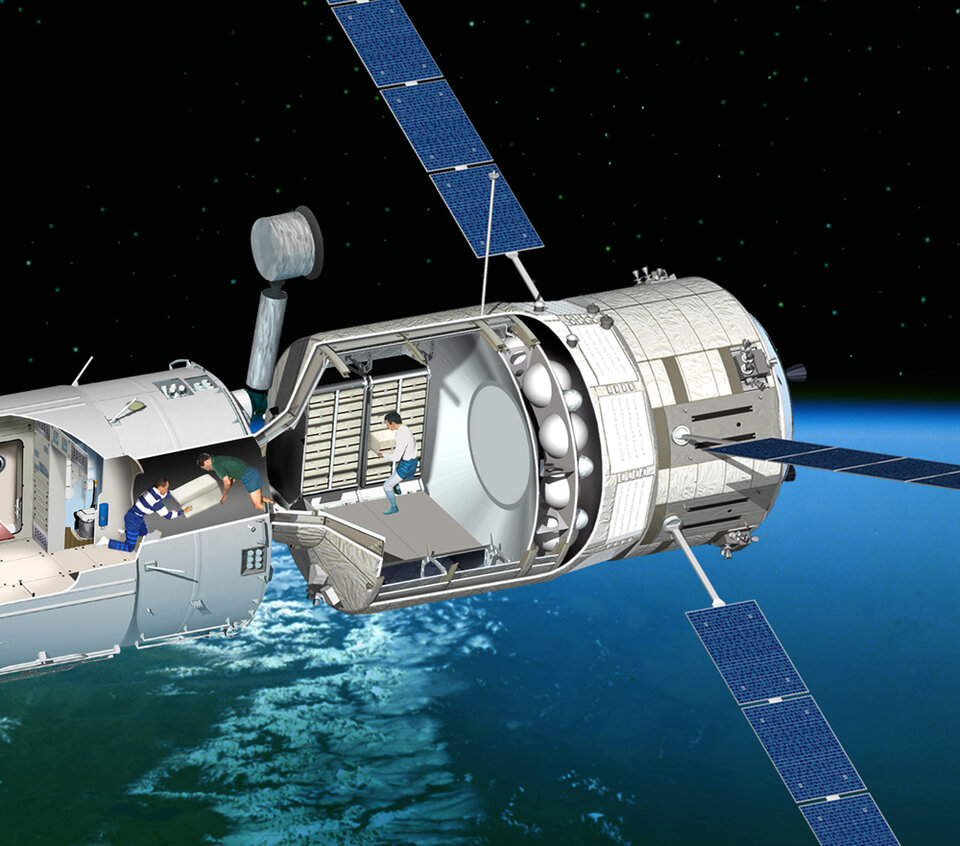
The Automated Transfer Vehicle
The ATV becomes an extension of the station. The 45 m³ pressurised module of the ATV delivers up to 6.6 tonnes of equipment, fuel, food, water and air for the crew.
 
 
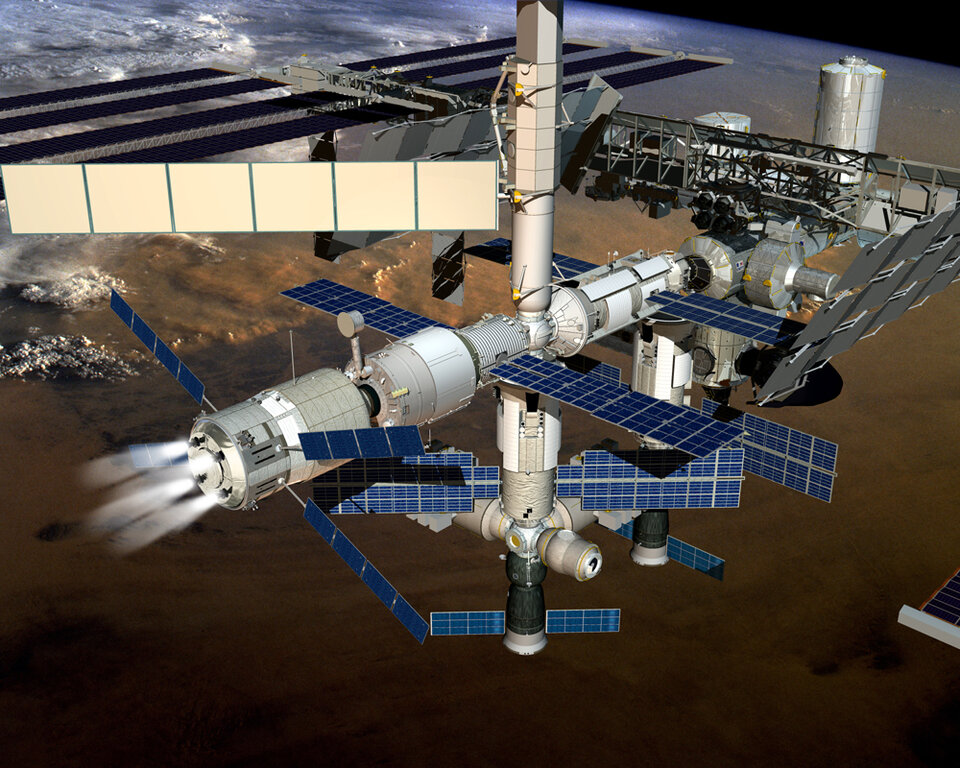
Automated Transfer Vehicle
The ATV may use up to 4 tonnes of propellant to raise the ISS altitude which naturally decreases with the residual atmospheric drag.
 
 
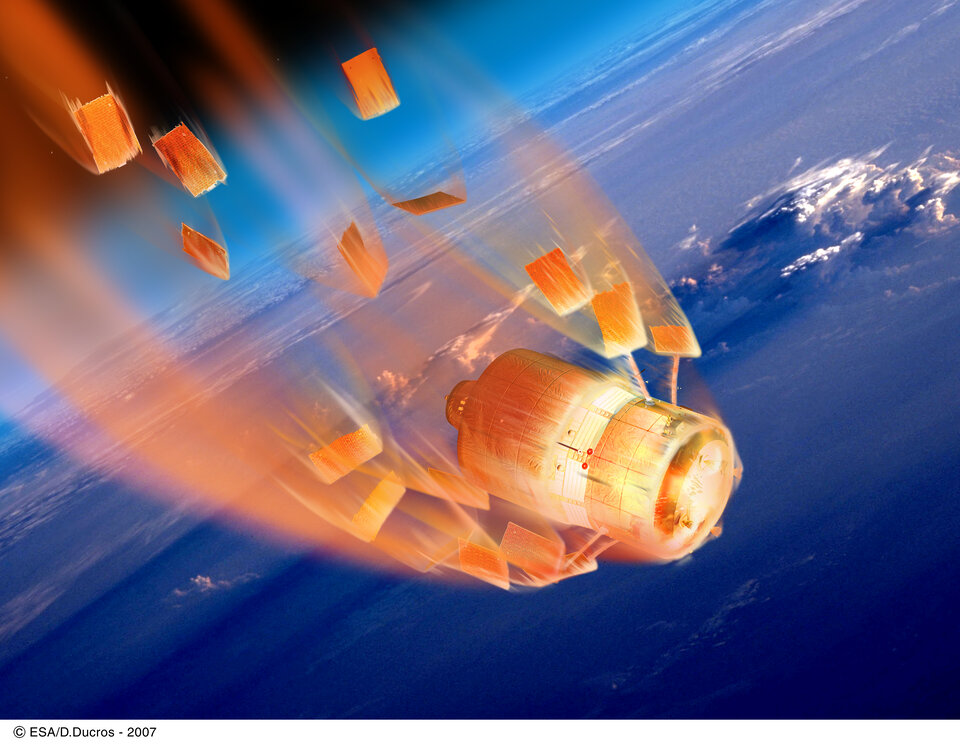
ATV burns up during reentry
After 6 months, the ATV, loaded with 6.5 tonnes of waste, separates from ISS and fully burns out during a guided and controlled re-entry high over the Pacific.
 
 
Last update: 4 March 2010


   Copyright 2000 - 2012 © European Space Agency. All rights reserved.