

Radiation dosimetry
ALTCRISS
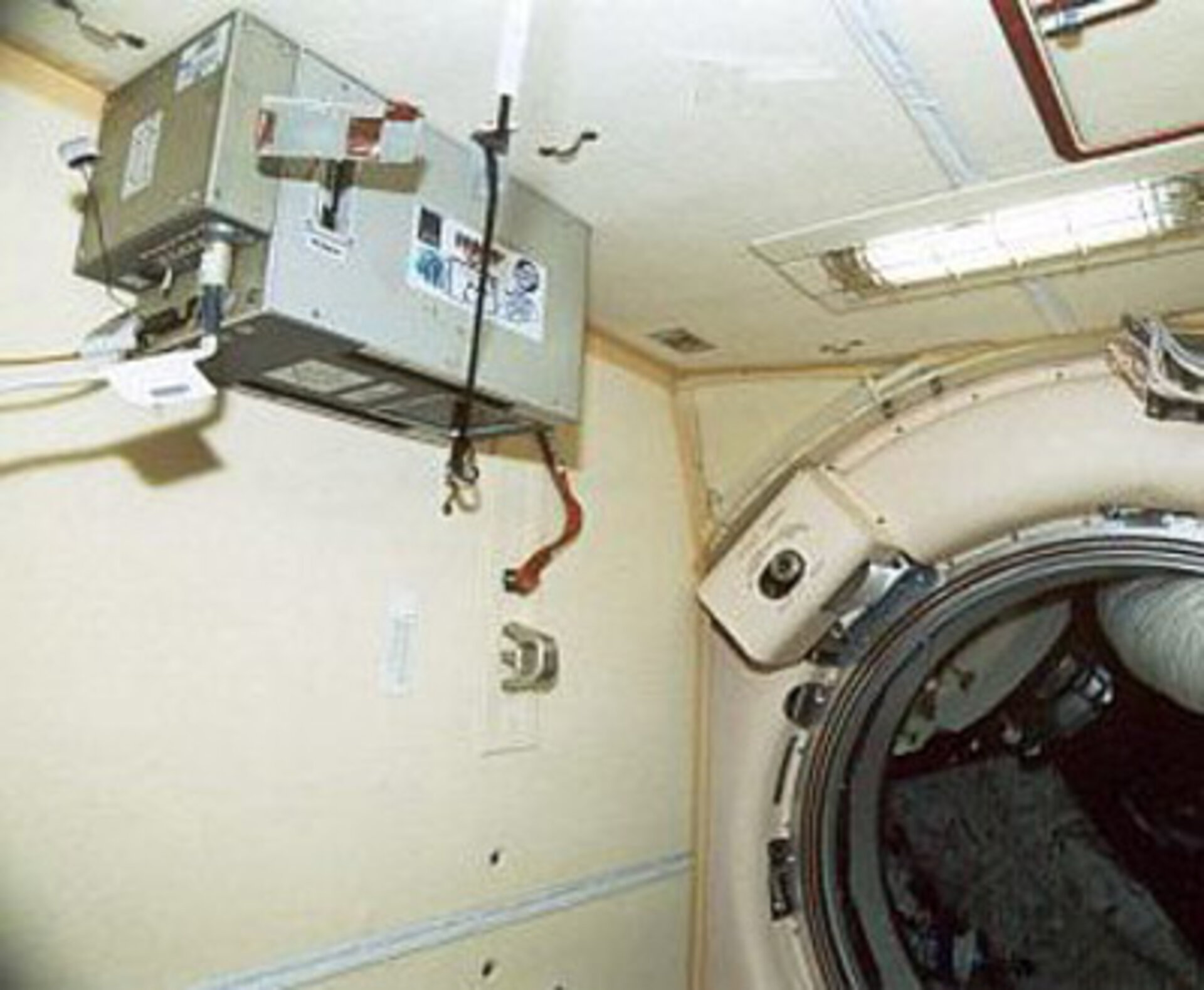
ALTCRISS, which stands for Alteino Long Term monitoring of Cosmic Rays on the International Space Station, is an ESA experiment to study the effect of shielding on cosmic rays in two complementary ways. The detector of the Alteino device monitors differences in the flow of cosmic rays with regard to the position and orientation of the Alteino device and also with regard to different shielding materials placed over the particle acceptance windows of the Alteino instrument.
The Alteino detector was operational during the European Marco Polo and Eneide missions with ESA astronaut Roberto Vittori. It consists of a cosmic ray detector (AST/Sileye-3) and an Electroencephalograph (EEG), although the Electroencephalograph is not be used in the Altcriss project. The obtained data will be used to better understand the radiation environment in spacecraft and how to provide efficient shielding against it.
Matroshka 2
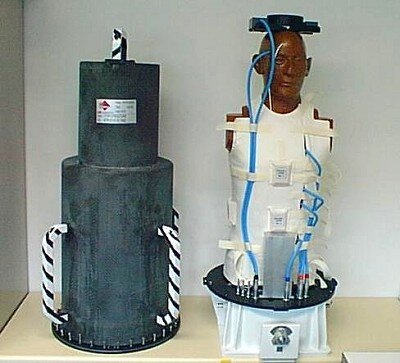
The ESA Matroshka facility was installed on the external surface of the International Space Station on 27 February 2004 to study radiation levels experienced by astronauts during spacewalks. It consists of a human shape (head and torso) called Phantom equipped with active and passive radiation dosimeters.
Phantom is mounted inside a carbon-fibre, reinforced plastic container which simulates a spacesuit. The facility was brought back inside the Spae Station on 18 August 2005 during Expedition 11. Passive radiation sensors were removed and returned to Earth with Expedition 11. In September 2006 Matroshka was moved outside again.
Under the Background Influence
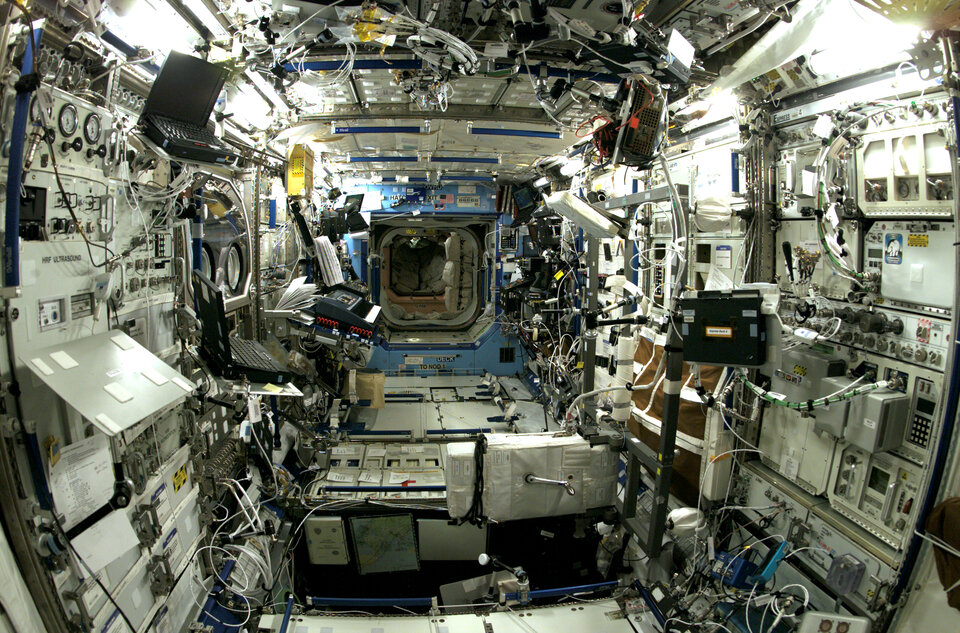
During the Under The Background Influence (UTBI) experiment, background radiation is measured inside the modules of the International Space Station using a new type of radiation sensor. Radiation models, that predict these radiation levels, will be verified and, if necessary, corrected with the experimental data.
The new type of sensor that measures the radiation is made of an alloy of Cadmium, Zinc and Tellurium. The advantage of this specific detector is that it is compact and does not require cryogenic cooling. The UTBI experiment demonstrates this specific sensor technology for the first time in space and could act as a precursor for an instrument of ESA’s Atmospheric-Space Interaction Monitor (ASIM), which was planned to be accomodated on an external payload adapter on the outside surface of the European Columbus laboratory.
Radiation can have severe health consequences for astronauts. Understanding radiation, its inter-action with the Station and its impact on the human body are considered an important factor that has to be taken into account for long-duration flights around Earth and beyond.