

Biology
BASE
In the Bacterial Adaptation to Space Environments (BASE) experiment, the science team studies how bacteria cope with and adapt to space environment such as weightlessness, cosmic radiation, space electromagnetism and space vibrations. Based on these results, scientists will assess how such adaptations might influence their potential to contaminate and biodeteriorate the space habitat, their potential to endanger crew health, or their function in waste recycling or food production systems. The scientists also study the physiology, gene expression, gene re-arrangement and gene transfer of cultures of several model bacteria grown under microgravity and other spaceflight conditions.
LEUKIN
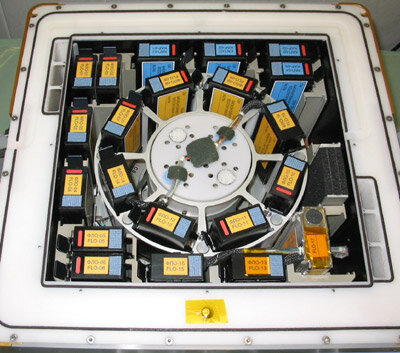
This experiment studies the signal transduction pathway of the activation of T-lymphocytes. The focus is on the role of the IL-2 receptor and on the determination of its genetic expression. The hypothesis is that the lack of expression of IL-2 R is the major cause for the loss of activation in re-suspended cells in weightlessness. This experiment will help us better understand the mechanisms by which spaceflight alters immune cell function, which may help in the development of more adequate preventative or corrective measures for immune suppression during long term space missions.

YING
This experiment studies the influence of weightlessness on “Flo processes”, cell-surface interaction on solid and cell-cell interaction in liquid media in yeast cells Saccharomyces cerevisiae. Weightlessness has a direct impact on yeast cell physiology due to a changed gravitational micro-environment and in the case of yeast cell cultivation in liquid media, also the changed shear environment in microgravity will have an effect. The overall goal is to obtain a detailed insight into the importance of gravity and shear stress on the formation of organised cell structures, such as yeast flocs, biofilms and filaments, which are of considerable interest for both fundamental science and industry as well as the medical field.