Methane clouds and surface features now visible on Titan
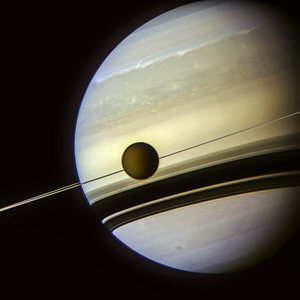
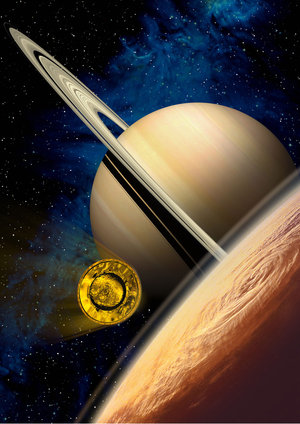
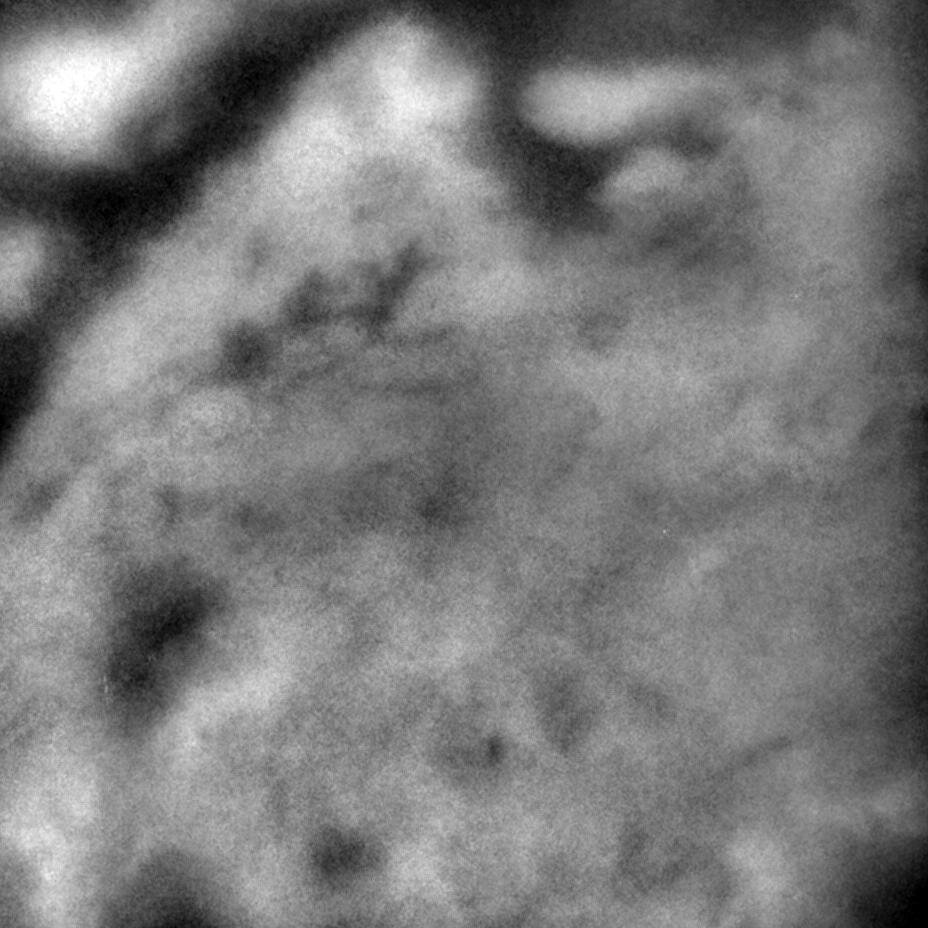
These are processed images from the first Cassini-Huygens fly-by of Titan. The spacecraft instruments peered through the haze of the moon's atmosphere to detect areas of varying brightness in unprecedented detail.
During this fly-by, the Cassini-Huygens spacecraft flew within a distance of 339 000 kilometres from the moon, providing our best look at Titan so far. Over the next four years, the Cassini orbiter will make 45 fly-bys, some as close as 950 kilometres.
The most prominent feature seen was a region of cumulus-type clouds near the south pole, about 450 kilometres across and about 15 kilometres above the surface. Data from Cassini-Huygens indicate the clouds are made from hydrocarbons, possibly methane, and may be associated with a ground feature.
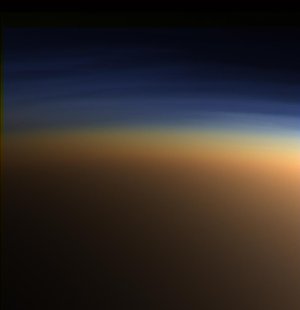
The initial images appear bland and hard to interpret, but with a combination of instruments, Cassini-Huygens can see Titan's surface with unprecedented clarity. This is because Titan's atmosphere blocks light at most wavelengths, but the spacecraft has captured some surface details by viewing at wavelengths which can pass through the atmosphere.


Credits: NASA/JPL/Space Science Institute