ESAESA ScienceCassini-Huygens
   
Unique insights into a ringed world
About Cassini-Huygens
About Saturn
About Titan
Meet the team
Multimedia
VideoTalkCassini-Huygens imagesCassini-Huygens videosTitan virtual tourHygens probe descent - multilingual CD-romDownload wallpapersDownload screensavers3D Flash 'model'SOI animationWaiting for Titan - the human side of Huygens
Watch the event
Services
Comments


printer friendly page
Titan, Saturn's largest moon
Titan's atmosphere
 
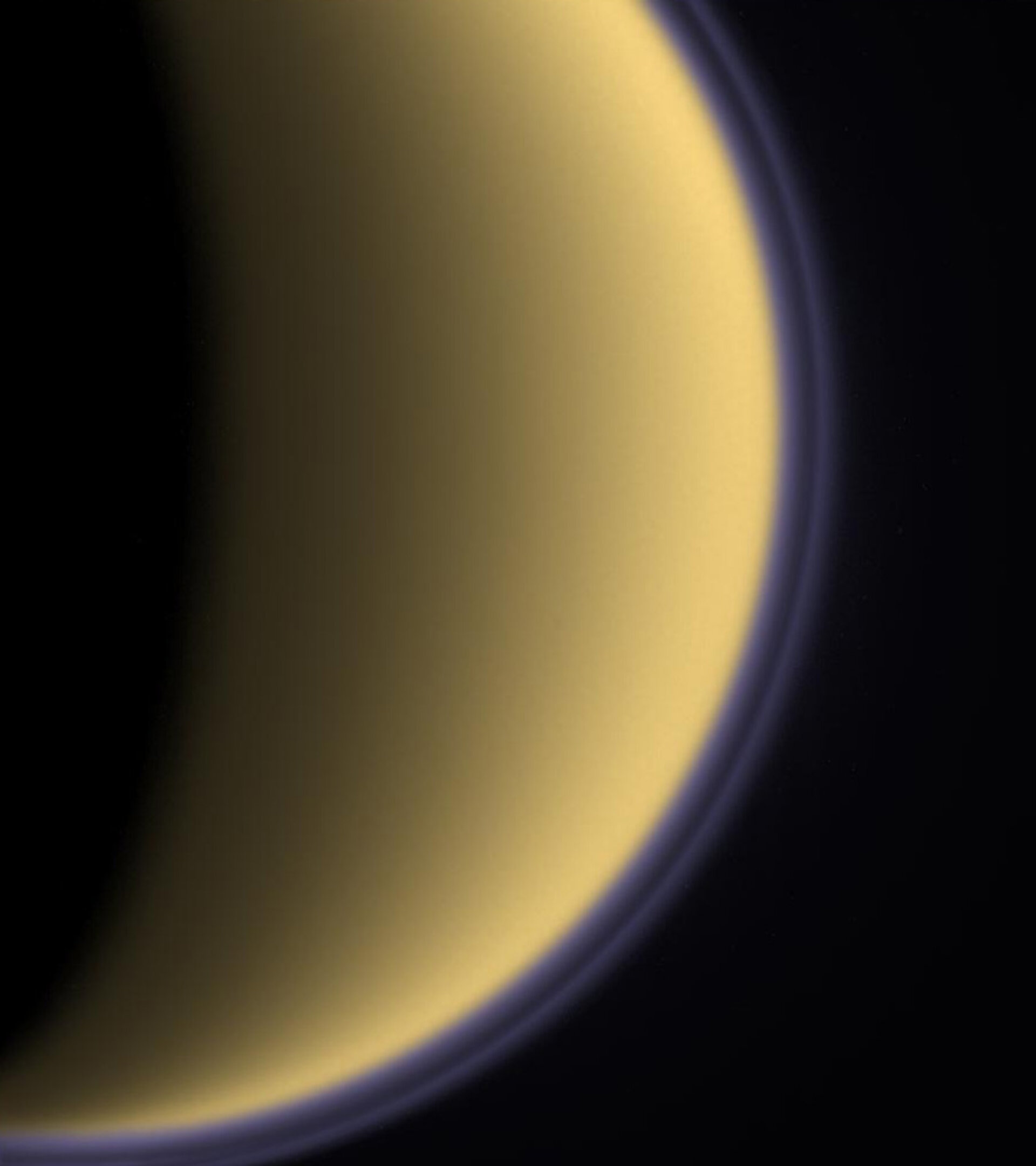
NASA's Voyager 1 provided the first detailed images of Titan in 1980. They showed only an opaque, orange atmosphere, apparently homogeneous.
 
It was so thick that you could not see the surface. However, other data revealed exciting things. Similarly to Earth, Titan's atmosphere is mostly nitrogen but there is also methane and many other organic compounds.

Before the arrival of the ESA Huygens probe, planned for January 2005, astronomers will observe Titan using the most powerful ground-based telescopes.  
 
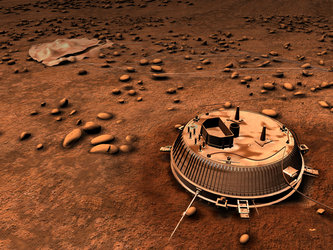
Titan's murky atmosphere with the Huygens probe
Titan's murky atmosphere with the Huygens probe descending on the left
Images from the WM Keck Observatory reveal methane-containing clouds near Titan's south pole. This could mean that Titan has the equivalent of a weather cycle similar to ours on Earth.

This is a major discovery which means that the atmosphere is much more dynamic than previously thought.

The NASA Cassini orbiter will clearly see these clouds, carrying out precise observations before, during and after releasing the Huygens probe.


At Saturn and TitanViews on approach to Saturn
More about...
More on TitanMore on Saturn's moons
Related articles
Cassini-Huygens factsheetChristiaan Huygens: Discoverer of TitanJean-Dominique Cassini: Astrology to astronomy
Related links
NASA JPL Cassini-Huygens siteItalian Space Agency (ASI)


   Copyright 2000 - 2010 © European Space Agency. All rights reserved.