Success for STRAPLEX balloon programme
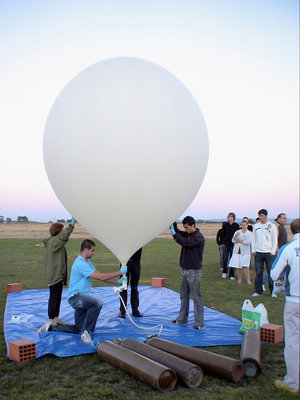
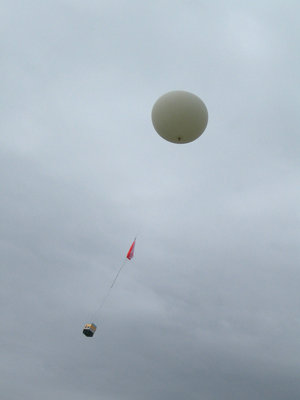
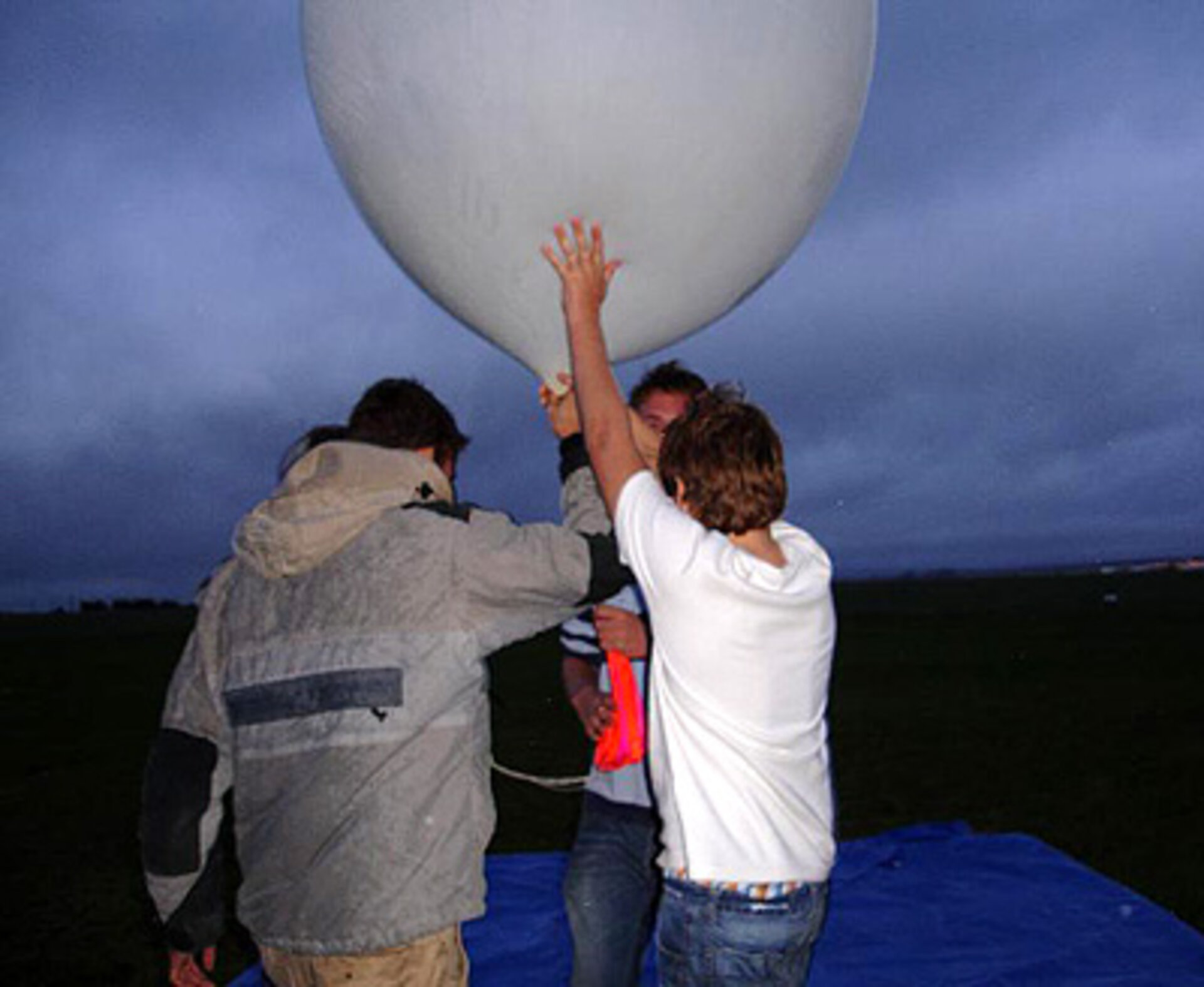
The latest flight of the ESA-supported Student Stratospheric Platform Experiment (STRAPLEX) programme was completed successfully on 22 October, when the balloon lifted off from Évora, southern Portugal.
The main payload tested during this flight was a radiation experiment which has been developed by students from the University of Valencia, Spain. The experiment will eventually fly into space on board the SSETI European Student Earth Orbiter (ESEO) satellite, which is expected to be launched in 2008.
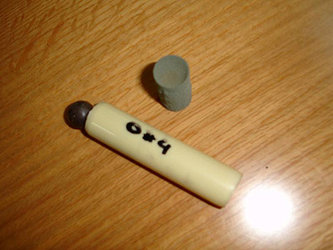
Students from a Dutch international school took advantage of the surplus payload-carrying capacity of the balloon by providing a tiny experiment which measured the force of impact upon landing.
"We were very pleased with the outcome of this flight," said Guerric Pont, ESA coordinator for the STRAPLEX project. "The experiment provided by the Dutch international school operated successfully and now the students are going to perform some ground tests in order to cross-check their flight data.
"The students also had a lot of fun and their teacher mentioned his interest in having other student teams working on similar projects in the future. He emphasised the importance of having such an activity as part of a study programme in order to give some practical experience to students.
"The radiation experiment also operated successfully and the Spanish team is now ready to pursue the design of their payloads to be integrated on ESEO."

The STRAPLEX-XS-05 launch followed on from the second STRAPLEX qualification flight which took place in April. Although some onboard equipment was stolen before the payload could be retrieved by the ground team, the second flight was considered to be a resounding success.
"The computer memory was still inside the capsule, so we were able to retrieve all the data," said Guerric Pont, ESA coordinator for the STRAPLEX project. "All of the sensors functioned perfectly. We now consider the system qualified for further tests."
A decision has yet to be made about conducting one more flight before the end of the year. The ESA Education department is currently considering a drop test of a modified STRAPLEX capsule. Following balloon burst, this would provide 20 seconds of microgravity conditions before the capsule’s new parachute system is deployed to enable recovery of the payload. When operational, such a system will provide microgravity flight opportunities at a much cheaper cost than even parabolic flights on board aircraft.
Background
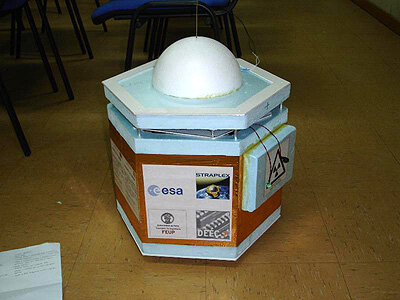
The STRAPLEX programme uses a 3 kg helium balloon which rises to an altitude of at least 35 km over a period of two hours. Various small capsules can be carried aloft and then deployed in order to test and demonstrate various experiments and systems.
STRAPLEX is a programme led by the University of Porto, Portugal, in collaboration with the Education Projects Division of ESA. The programme is intended to give students practical hands-on experience and to encourage them to pursue a career in space technology and science.
STRAPLEX enables university students from ESA Member States to send experiments into the stratosphere, using helium-filled balloons. It also provides valuable opportunities to perform short-duration scientific and technological experiments in near-space conditions, and to participate in the development of future space capsules.