ESAHomeGalileo
   
About Galileo
What is Galileo?Why Europe needs Galileo
Multimedia
Galileo image galleryGalileo video galleryGIOVE videoGalileo signal received
Brochure
GIOVE - First Galileo Satellites (.pdf, 1.2 Mb)
Services


News
 
printer friendly page
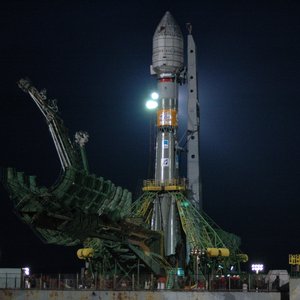
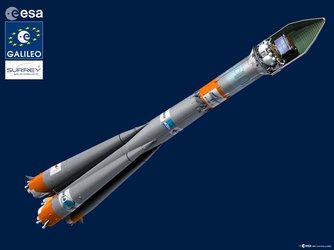
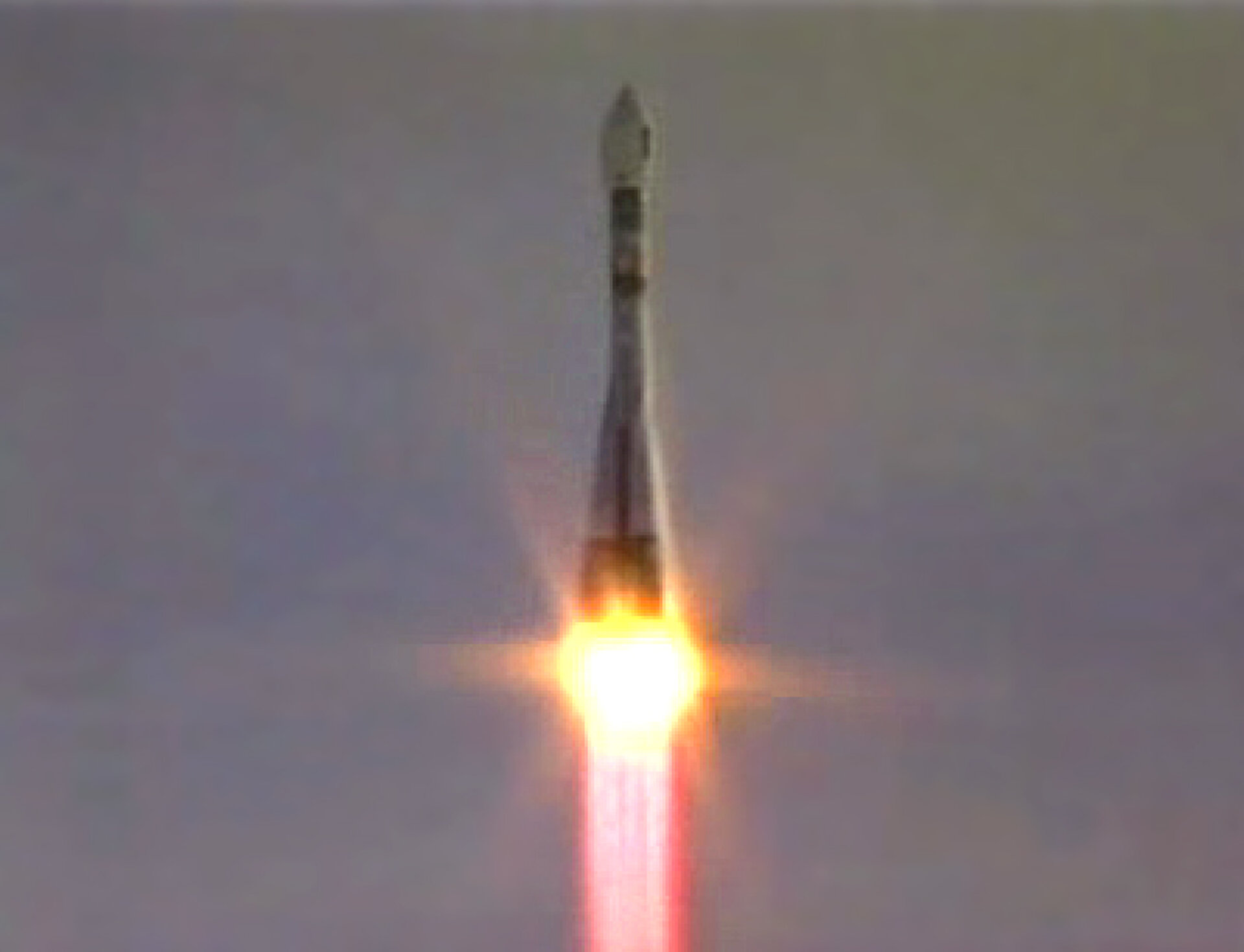
Lift off of Soyuz carrying GIOVE-A
GIOVE-A launch news
 
28 December 2005
GIOVE-A lifted off on schedule at 05:19 UTC (06:19 CET).
 
The satellite is now its final orbit. The launch and early orbit phase of the mission is complete.


Time
(CET)
Timeline
(hr:min:sec)
Event

05:49:08

L - 00:30:00

Start of service tower retraction
As planned, 30 minutes before lift off, the tower enabling access to the rocket and protecting it has started to be retracted.

05:59:08 L - 00:20:00 Completion of service tower retraction
The service tower has been retracted. Soyuz stands alone on the Kazakh steppes.

06:12:08

L - 00:07:00

Upper stage intialised and switched to internal power
The Fregat upper stage is switched to being powered by its batteries and prepared for take-off.

06:13:08

L - 00:06:00

Upper stage declared ready to launch
Fregat is initialised and ready to go.

06:13:48

L - 00:05:20

Key on start
Last countdown operations.

06:16:33

L - 00:02:35

Umbilical drop-off
The umbilical cables and pipes connecting the launcher and tower have been disconnected.

06:17:03

L - 00:02:05

Lift-off command
The command for lift-off has been given; there is no stopping the launch now.

06:18:48 L - 00:00:20

Core and lateral booster engine ignition
The four engines of the Soyuz core (second stage) and the four engines in each of the four Soyuz boosters (first stage) have been ignited.

06:19:08

L0

Lift-off

06:19:16

L + 00:00:08

End of vertical climb
After eight seconds of vertical flight, the Soyuz urns towrds the east.

06:21:00

L + 00:01:52

Soyuz lateral boosters transition to intermediate thrust
The sixteen booster engines are throttled back ready for separation.

06:21:06

L + 00:01:58

Soyuz first stage separation
The four lateral boosters separate and drop away.

06:23:21

L + 00:04:13

Fairing jettison
The fairing, or nose cone, that has been protecting GIOVE and Fregat is discarded.

06:23:54

L + 00:04:46

Soyuz third stage ignition

06:23:55

L + 00:04:47

Soyuz second stage separation
The Soyuz core separates from the third stage.

06:27:57

L + 00:08:49

Fregat separation
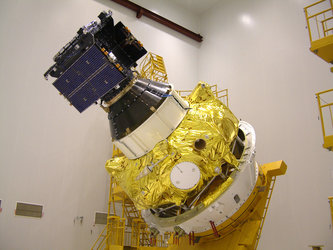
The third stage drops away. GIOVE stands alone on top of Fregat

06:28:57

L + 00:09:49

Start of Fregat main engine first burn
To reach GIOVE's final orbit, a number of manoeuvres are will be performed by the re-ignitable Fregat upper stage. The first burn lasts twenty seconds.

06:29:17

L + 00:10:09

Fregat main engine cut-off for first burn
GIOVE and Fregat fly along a ballistic trajectory until a further engine burn to re-orient the composite (Fregat + GIOVE-A)

06:57:33

L + 00:38:25

Start of Fregat main engine second burn
A burn of 9m:56s moves Fregat and GIOVE from ballistic coast to an elliptical transfer orbit. There is no real-time status information as the spacecraft are not visible from the ground station network.

07:07:29

L + 00:48:21

Fregat main engine cut-off for second burn
Spacecraft are still not visible

07:07:39

L + 00:48:31

Injection into transfer orbit
GIOVE-A and Fregat have reached the elliptical orbit that will take them up to GIOVE's final, circular orbit.

08:19:46

L + 02:00:38

Re-acquisition of Fregat telemetry
The spacecraft are now visible from the Russian ground station network. Information on the status of Fregat and GIOVE-A is again available in real time.

09:55:57

L + 03:35:59

Start of Fregat main engine third burn
A burn of 4m:01s duration moves GIOVE-A and Fregat from their elliptical transfer orbit into a circulat orbit.

09:59:08

L + 03:40:00

Fregat main engine cut-off for third burn

10:01:39

L + 03:42:31

GIOVE-A separation from Fregat and injection into final orbit
The Soyuz-Fregat mission is over. The satellite will begin its early orbit phase operations.

*

*

Signal acquisition
GIOVE-A ground stations have acquired the satellite and are able to track it.

*

*

Sun acquisition
GIOVE-A has entered sun pointing mode.

*

*

Deployment of first solar array
GIOVE-A has unfolded one of its solar generator panels.

*

*

Deployment of second solar array
GIOVE-A has successfully unfolded its second solar generator panel.

*

*

Completion of launch and early orbit phase
GIOVE-A is now in its final orbit, with both solar arrays deployed and commissioning can begin. The first European navigation satellite is alive and well, Galileo has started in space!

* GIOVE-A signal acquisition occurred somewhat earlier than expected. As a consequence, accurate times for the events that followed are not yet available.


Related news
GIOVE-A lift-off in picturesGIOVE-A on the launch pad; launch rehearsal completedGIOVE-A ready to join its Soyuz launcher; launch timelineGalileo – a global systemGIOVE-A mated with launcher upper stage; launch set for 28 DecemberPreparing for launch in BaikonurGalileo satellite prepares for launchFirst Galileo satellite travels to launch site
Related links
Galileo Joint Undertaking (GJU)Galileo website (European Commission)Surrey Satellite Technology - GIOVE ABaikonur CosmodromeRussian launchersStarsem - Soyuz launcher Galileo Tour


   Copyright 2000 - 2009 © European Space Agency. All rights reserved.