


Rosetta en Integral in gereedheid gebracht voor lancering
Bij ESA’s wetenschappelijk en technisch centrum ESTEC in Noordwijk zijn twee wetenschappelijke ruimtemissies aanbeland in het laatste stadium vóór hun lancering. Het zijn de Rosetta missie die op weg gaat naar komeet Wirtanen, en Integral die explosies en andere energierijke processen in het heelal moet gaan onderzoeken.
Rosetta: rendezvous met een komeet
Rosetta wordt in januari 2003 met een Ariane 5 raket gelanceerd. Het wordt de eerste keer dat een Ariane 5 wordt gebruikt om een ruimteverkenner verder dan een baan om de aarde te brengen. Na eerst twee uur in een langgerekte baan tuseen 200 en 4000 km hoogte om de aarde te hebben gelopen, wordt de laatste raketmotor ontstoken en krijgt Rosetta een snelheid die groot genoeg is om aan de aardse zwaartekracht te ontsnappen. Acht jaar later, in 2011, komt de ruimteverkenner aan bij komeet 46P/Wirtanen.
Route langs Mars en planetoïden

Eerst gaat Rosetta op weg naar Mars. Door vlak langs de planeet te scheren (26 augustus 2005) neemt de ruimteverkenner een heel klein beetje over van de baanenergie van Mars en wordt daardoor versneld. Dezelfde ‘gravity assist’, of slingerworptechniek, wordt ook twee keer bij de aarde toegepast. Rosetta scheert op 21 november 2005 en 28 november 2007 langs onze planeet. Door deze scheervluchten loopt snelheid van de ruimteverkenner zodanig op dat in november 2011 komeet 46P/Wirtanen wordt bereikt.
Op weg naar zijn eindbestemming passeert Rosetta twee planetoïden: 4979 Otawara op 11 juli 2006 en 140 Siwa op 24 juli 2008. Omdat nog maar een handvol planetoiden door andere ruimteverkenners zijn gepasseerd of bezocht, zullen op vier na alle instrumenten van Rosetta voor waarnemingen worden ingezet.
Voor de passage van Otawara moet nog een defintief scenario worden opgesteld. Deze 2,6 tot 4 km grote planetoïde wordt met een snelheid van meer dan 38.000 km/h op een afstand van 2200 km voorbij gevlogen. Bij de 110 km grote Siwa is de snelheid van Rosetta inmiddels opgelopen tot meer dan 61.000 km/h. Siwa wordt op een afstand van 3500 km gepasseerd.
Al drie weken voor de nadering van Siwa zullen multispectrale en gewone beelden worden opgenomen. Dichterbij zullen ook alle andere, niet specifiek voor de waarneming van de komeet bedoelde instrumenten worden ingezet. Rosetta bevindt zich dan op 466 miljoen km van de aarde zodat de signalen van de ruimteverkenner er 26 minuten over zullen doen voordat ze door de grondstations op aarde worden opgevangen.
Landing op de komeet

Op 29 november 2011 is het eindelijk zover en ontmoet Rosetta komeet 46P/Wirtanen. De ruimteverkenner zelf wordt daarbij in een baan om de komeet gebracht en zal het ijzige hemellichaam tot op een afstand van 1 km naderen. De komeet zal bijna twee jaar lang worden gevolgd. Zo moeten de veranderingen worden vastgelegd die zich voordoen naarmate de komeet dichter bij de zon komt. Als een komeet de zon nadert en warmer wordt, verdampten het ijs aan zijn oppervlak. Er vormt zich dan een nevelachtige coma rondom de komeet. Later vormt zich ook de bekende komeetstaart.
Rosetta zal niet alleen om de komeet cirkelen. Het toestel bestaat uit een orbiter en een kleine lander. De lander zal naar de komeet afdalen om daar het oppervlakte te bestuderen. Uit sterrenkundige waarnemingen is afgeleid dat dat bestaat uit een mengsel van waterijs, bevroren gassen als koolmonoxide en kooldioxide en vaste gruis- en rotsblokjes. Waarnemingen met ESA’s komeetverkenner Giotto bij komeet Halley in 1986 hebben uitgewezen dat dit ijs en de bevroren gassen niet gelijkmatig door de warmte van de zonnestraling verdampen, maar enorme geisers vormen die uit spleten in de bodem omhoog spuiten.
Integral: speuren naar gammastraling uit de ruimte
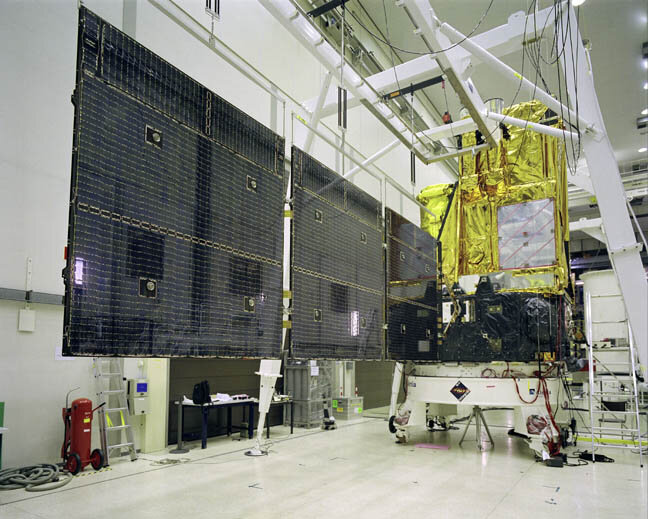
De lancering van ESA's International Gamma-Ray Astrophysics Laboratory, Integral, staat gepland voor 17 oktober dit jaar. De lancering vindt plaats met een Russische Proton raket vanaf lanceerbasis Baikonoer.
Integral gaat gammastraling uit de ruimte opsporen. Gammastraling komt vrij bij zeer heftige processen als explosies van sterren en vorming van zwarte gaten. Ook door Nederlandse sterrenkundigen wordt zeer veel onderzoek verricht naar de aard en herkomst van zogenaamde ‘gammaflitsers’, bronnen van gammastraling in de hemel die zeer plotseling opvlammen. Integral wordt het meest gevoelige gammastralingssatelliet die ooit is gelanceerd.
Verwacht wordt Integral zeer zwakke gammastralingsbronnen opspoort die aan het uiteinde van het zichtbare heelal liggen. Aan de hand daarvan zouden sterrenkundigen dan een beeld moeten krijgen van de processen die zich afspeelden tijdens het ontstaan van het heelal. Ook kunnen de waarnemingen antwoord geven op de vraag hoe het heelal zich zodanig ontwikkelde dat er later leven in kon ontstaan.


