Le nouveau satellite météorologique européen MetOp atteint son orbite polaire
ESA PR 38-2006. Voilà 28 ans que l’Europe exploite ses célèbres satellites météorologiques Météosat en orbite géostationnaire. Aujourd’hui se joint à eux le premier d’une toute nouvelle génération de satellites de météorologie, MetOp, qui surveillera l’atmosphère de plus près, en orbite terrestre basse, et fournira des données permettant d’améliorer les prévisions météorologiques dans le monde entier ainsi que notre compréhension du changement climatique.
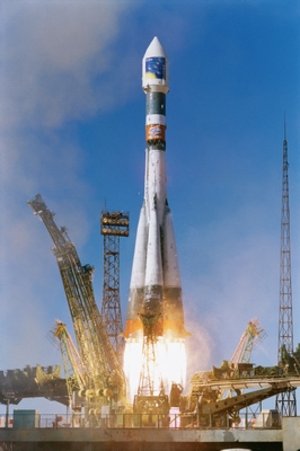
Premier d’une série de trois satellites qui ont été développés dans le cadre d’un programme mené conjointement par l’Agence spatiale européenne (ESA) et par l'Organisation européenne de satellites météorologiques (EUMETSAT), MetOp-A a décollé de Baïkonour (Kazakhstan) avec succès à bord d’un lanceur russe Soyouz 2/Frégate fourni par la société euro-russe Starsem.
Il s’agit de la première mission opérationnelle du lanceur Soyouz 2, qui a quitté la Terre à 18h28 heure de Paris (16h28 T.U.) emportant à son bord le satellite de 4 093 kg, protégé par une nouvelle coiffe de 4,1 m de diamètre, de forme et de taille similaire à celle d’Ariane 4. Ce dernier rejeton de la famille de fusées Semiorka, utilisées depuis bientôt 50 ans, devrait être exploité en Guyane française à compter de 2008.
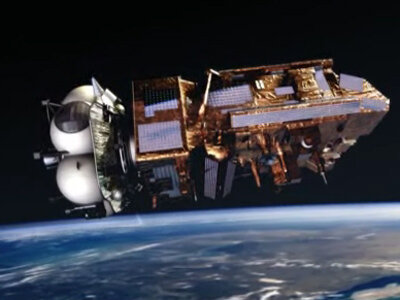
Environ 69 minutes après le lancement, l’étage supérieur Frégate a injecté le premier satellite MetOp sur une orbite circulaire, à 837 km d’altitude au-dessus de l’archipel des Kerguelen, dans le sud de l’océan Indien.
Cette orbite rétrograde inclinée de 98,7° permettra à MetOp-A de survoler le globe d’un pôle à l’autre et de franchir l’équateur toujours à la même heure locale, soit 9h30. Ce type d’orbite, appelé « héliosynchrone », permettra également une fréquence de survol quasi-quotidienne de presque tout point de la Terre dans des conditions d’illumination solaire similaires.
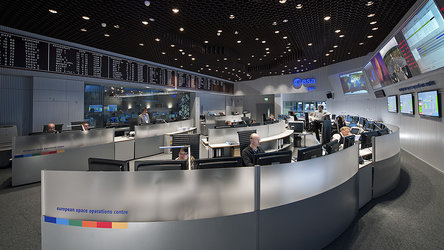
Placé sous le contrôle du Centre européen d’opérations spatiales (ESOC) de l’ESA à Darmstadt (Allemagne), le satellite a déployé ses panneaux solaires. Les jours à venir seront consacrés aux premières vérifications techniques des systèmes et au déploiement des antennes. Le transfert du satellite à EUMETSAT est prévu pour le 22 octobre en vue de sa mise en service proprement dite et des opérations courantes.
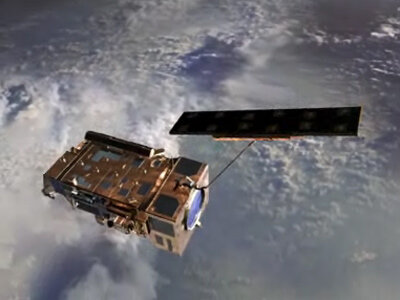
MetOp-A constituera le segment spatial du Système polaire d'EUMETSAT (EPS), destiné à recueillir des données sur l'atmosphère et l’environnement afin de compléter le suivi conduit par le système Météosat à l'échelle hémisphérique depuis l'orbite géostationnaire. L’EPS sera exploité en parallèle avec le système de satellites opérationnels d'observation de l'environnement en orbite polaire (POES) de l'Administration nationale américaine des océans et de l'atmosphère (NOAA). Tandis que les satellites de la NOAA fonctionnent sur « l'orbite de l'après-midi » (le franchissement de l'équateur ayant lieu l'après-midi, en heure locale), les satellites européens MetOp assureront le service de « l'orbite du matin ».
Jamais sonde atmosphérique n’avait été mieux pourvue
Afin de mener à bien son ambitieuse mission, MetOp-A est doté d’une charge utile de télédétection des plus complètes, composée d’un ensemble d’instruments européens de nouvelle génération ainsi que d’un groupe d’instruments éprouvés fournis par les États-Unis, équipant les actuels satellites de la NOAA.
L’interféromètre de sondage atmosphérique dans l'infrarouge (IASI) fourni par le CNES effectuera des mesures sur plus de 8 000 canaux afin d’établir des profils de température et de vapeur d’eau d’une précision inégalée, destinés à alimenter les modèles de prévision numérique du temps. Ses informations seront complétées par les données provenant des instruments américains et du sondeur hyperfréquence pour la détermination de l'humidité (MHS), un radiomètre à cinq canaux développé pour le compte d’EUMETSAT, mais qui devrait également être embarqué sur les futurs satellites de la NOAA.

Le modèle de deuxième génération de l’expérience de surveillance de l'ozone à l'échelle du globe (GOME-2), mis au point conjointement par l’ESA et EUMETSAT, est une version améliorée du spectromètre à balayage équipant déjà ERS-2. Sa mission est de sonder l’atmosphère afin d’établir les profils de concentration d’ozone et d’autres gaz à l’état de traces.
Le satellite sera muni d’un second instrument ESA/EUMETSAT hérité du programme ERS : le diffusiomètre de pointe (ASCAT). Ce radar en bande C perfectionné mesurera la vitesse et la direction des vents à la surface des océans pour alimenter les modèles de prévision numérique du temps. Il fournira en outre de précieuses informations concernant les glaces, la neige et l’humidité des sols.
S’y ajoute le récepteur GNSS de sondage atmosphérique (GRAS), nouvel instrument développé par l’ESA et EUMETSAT, qui déterminera les profils de température et d’humidité de l’atmosphère en se fondant sur l’occultation des signaux de navigation du satellite par le limbe atmosphérique.
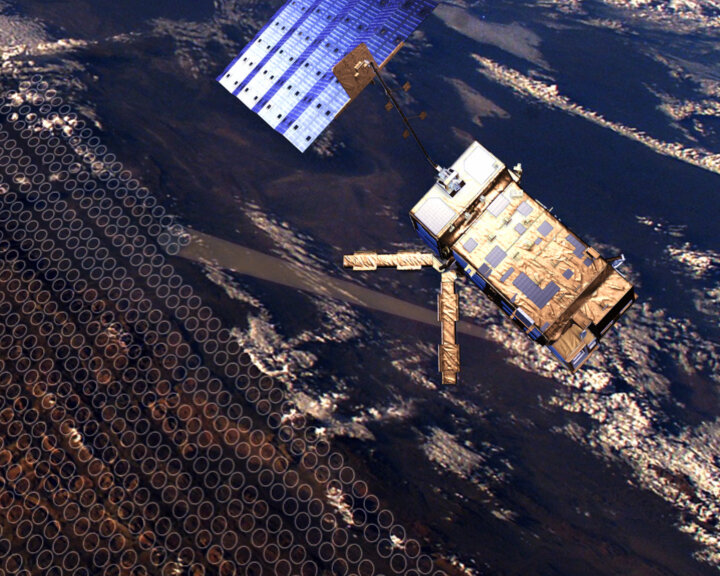
Les instruments fournis par la NOAA comprennent : le radiomètre de pointe à très haute résolution de troisième génération (AVHRR-3), qui acquerra des images de la couverture nuageuse et des surfaces océaniques et continentales à l’échelle du globe ; deux unités, à 15 canaux, du sondeur hyperfréquences de technologie avancée (AMSU/A), qui mesureront les profils de température de l’atmosphère ; le sondeur haute résolution du rayonnement infrarouge (HIRS) de quatrième génération , un équivalent de l’IASI avec 20 canaux, qui contribuera à la validation des données recueillies par les instruments européens, puis servira d’instrument de réserve.
MetOp-A est en outre équipé des instruments suivants : un système Argos de collecte des données de haute technologie, fourni par le CNES, qui permettra de localiser les stations automatiques fixes et mobiles et d’établir la communication avec elles ; deux charges utiles de recherche et sauvetage, fournies par l’Agence spatiale canadienne et le CNES en vue de soutenir le réseau international Cospas-Sarsat par la réception et la retransmission des signaux de détresse ; un instrument de surveillance de l'environnement spatial (SEM-2), spectromètre fourni par les États-Unis pour mesurer les flux de particules ionisées dans l'espace.
Une avancée majeure pour les prévisions météorologiques

Approuvé en 1992, MetOp est un programme de satellite opérationnel comme Météosat. La contribution de l’ESA, s’inscrivant dès le départ dans le cadre de la composante Surveillance de la Terre de son programme Planète vivante, couvre le développement et l’approvisionnement du satellite. L’ESA a financé à ce titre l’essentiel de la production du premier modèle de vol. EUMETSAT, responsable du système opérationnel, est chargé de financer le développement du segment sol et des autres satellites ainsi que les lanceurs et les activités d’exploitation.
Les trois modèles de vol ont été commandés à une équipe industrielle placée sous la conduite d’EADS Astrium. Les satellites, intégrés à Toulouse (France), reposent sur une plate-forme dérivée de celle des satellites Envisat de l’ESA et Spot-5 du CNES ; ils sont dotés d’équipements de pointe qui permettent une grande flexibilité de fonctionnement, assurent une autonomie supérieure à 36 heures et offrent une capacité de stockage de données de 24 Gbit.
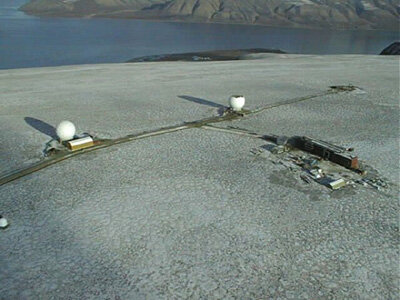
Les satellites MetOp feront chaque jour environ 14 fois le tour de la planète, collectant des données qui seront envoyées vers la station sol de contrôle et d’acquisition des données (CDA) du système EPS, implantée dans l’archipel de Svalbard, au nord de la Norvège. Située à une latitude élevée (78°N), la station CDA couvrira tous les passages de MetOp au-dessus de l’Arctique. Les données MetOp recueillies par la station seront ensuite transmises aux installations d’EUMETSAT à Darmstadt, où il sera procédé à leur traitement et à leur diffusion. Certaines données EPS en temps réel seront en outre directement diffusées aux organisations météorologiques régionales lorsque le satellite survolera leurs stations de réception.
Les équipements de pointe et les capacités de diffusion de MetOp lui permettront de détecter et de signaler l’émergence de phénomènes météorologiques critiques localisés, tels que les violents orages, qui ne peuvent être observés en orbite géostationnaire. Le satellite donnera ainsi la possibilité de diffuser des alertes météorologiques de manière beaucoup plus précoce qu’à l’heure actuelle.

« Je tiens à féliciter nos amis et partenaires d’EUMETSAT, de la NOAA, du CNES, de Starsem, de l’industrie spatiale européenne et de la communauté météorologique internationale pour le succès de ce lancement », a déclaré le Directeur général de l’ESA, Jean-Jacques Dordain. « Plus qu’un simple exemple de réussite de la coopération internationale, ce programme est, à l’instar des deux générations Météosat, la parfaite illustration des bienfaits inestimables que le secteur spatial peut apporter à chacun d’entre nous.
« Les données que recueilleront MetOp-A et ses successeurs confèreront une nouvelle dimension à notre connaissance de l’atmosphère et du climat de la Terre. Elles autoriseront non seulement des prévisions météorologiques beaucoup plus précises en Europe et dans le reste du monde, mais permettront également à la communauté scientifique d’établir des modèles plus complexes du climat de notre planète pour être à même de mieux cerner le changement climatique mondial en cours et d’orienter les politiques environnementales en conséquence. »
Pour tout complément d’information, veuillez contacter:
ESA Media Relations Division
Tél: +33(0)1.53.69.7155
Fax: +33(0)1.53.69.7690