La primera luz de Planck adelanta resultados prometedores
Los resultados preliminares de la misión Planck de la ESA que estudia los orígenes del universo indican que la calidad de los datos es excelente. Esto es una buena señal de cara al análisis de todo el cielo que acaba de comenzar.
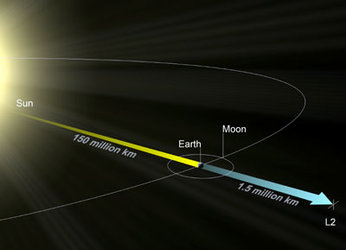
Planck comenzó a inspeccionar el cielo desde su posición avanzada en el segundo punto de Lagrange del sistema Sol-Tierra, L2, el pasado 13 de Agosto, cuando se terminó de ajustar sus instrumentos para obtener un óptimo rendimiento.
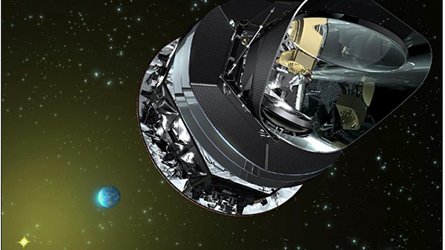
El observatorio de microondas de la ESA, Planck, es la primera misión europea diseñada para estudiar la Radiación Cósmica de Fondo de Microondas – la radiación fósil del Big Bang.
Tras su lanzamiento el pasado 14 de Mayo, comenzaron las comprobaciones de los diferentes subsistemas del satélite, a la vez que se enfriaban los detectores de sus instrumentos. Los detectores buscan variaciones en la temperatura de la Radiación Cósmica de Fondo, que son del orden de la millonésima parte de un grado – esto es comparable a medir desde la Tierra el calor que desprende un roedor sentado en la Luna. Para conseguir esto, los detectores de Planck deben permanecer a una temperatura extremadamente baja, en alguno de ellos incluso cerca del cero absoluto (-273.15°C, o cero Kelvin, 0K).
Tras completar las comprobaciones de los subsistemas y optimizar la puesta en servicio de los instrumentos, la calibración inicial terminó la segunda semana de Agosto.
La búsqueda de la ‘primera luz’, que comenzó el pasado 13 de Agosto, consistió en una observación continua del cielo durante dos semanas. Esta operación se llevó a cabo para verificar la estabilidad de los instrumentos y la capacidad de calibrarlos durante largos periodos para alcanzar la gran precisión requerida.
Esta primera búsqueda concluyó el pasado 27 de Agosto, ofreciendo mapas de una franja del cielo, uno para cada una de las nueve frecuencias que puede observar Planck. Cada mapa es un anillo, de unos 15° de ancho, que se extiende a lo largo de todo el cielo. Los análisis preliminares indican que la calidad de los datos es excelente.
Las operaciones rutinarias comenzaron nada más terminar la búsqueda de la primera luz, y continuarán sin interrupciones durante al menos los próximos 15 meses. En aproximadamente 6 meses se podrá ensamblar el primer mapa de todo el cielo.
Durante su vida operativa de 15 meses, Planck reunirá datos suficientes para realizar dos mapas completos del cielo. Para sacar el máximo partido a la gran sensibilidad de Planck, los datos necesitarán una serie de ajustes finos y un análisis muy delicado. Promete devolver un tesoro oculto que mantendrá ocupados a los cosmólogos y a los astrofísicos durante las próximas décadas.
Todas las entidades involucradas en el proyecto están listadas en este documento pdf sobre la Participación Internacional en los proyectos Herschel y Planck..
En los enlaces de la derecha puede encontrar una versión más detallada con más imágenes e información sobre las observaciones de Planck.