Satellitter skaffer vished om Himalayas gletsjere
For tiden raser der en debat om, hvor hurtigt gletsjerne i Himalaya smelter. I 2007 indledte ESA et program for overvågning af 20.000 gletsjere verden over. De første resultater er klar, og med tiden vil programmet givet et detaljeret grundlag for forskerne.
I de seneste dage har FN’s klimapanel IPCC, der rapporterer om den globale opvarmning, erkendt, at en vigtig rapport fra panelet i 2007 formentlig overvurderede, hvor hurtigt gletsjerne i Himalaya smelter. Fremover får verdens klimaforskere et langt bedre grundlag for at vurdere afsmeltningen fra gletsjere verden over.
I 2007 indledte den europæiske rumfartsorganisation ESA programmet GlobGlacier, som følger ca. 20.000 af de skønsmæssigt omkring 160.000 gletsjere, der findes i verden. For eksempel vil programmet skaffe data for ca. 1.000 gletsjere i Kashmir i den indiske del af Himalaya.
Med tiden vil observationerne gøre det muligt at beregne hastigheden af forandringerne i gletsjernes længde og omfang.
”Denne type data giver forskerne mulighed for at vurdere det overordnede mønster af ændringer i en region, så man bedre kan fastslå effekterne af klimaforandringer,” siger projektleder for GlobGlacier, Frank Paul, Zürich Universitet.
Animationen viser gletsjer-området Gangotri i Garwhal, en del af Himalaya. Animationen er baseret på data fra satellitten Landsats instrument Thematic Mapper (TM) 15. november 1990 samt fra instrumentet Enhanced Thematic Mapper Plus (ETM+) 1. august 2001. Man ser, hvilke forandringer, der er sket i gletsjernes omfang i den mellemliggende periode.
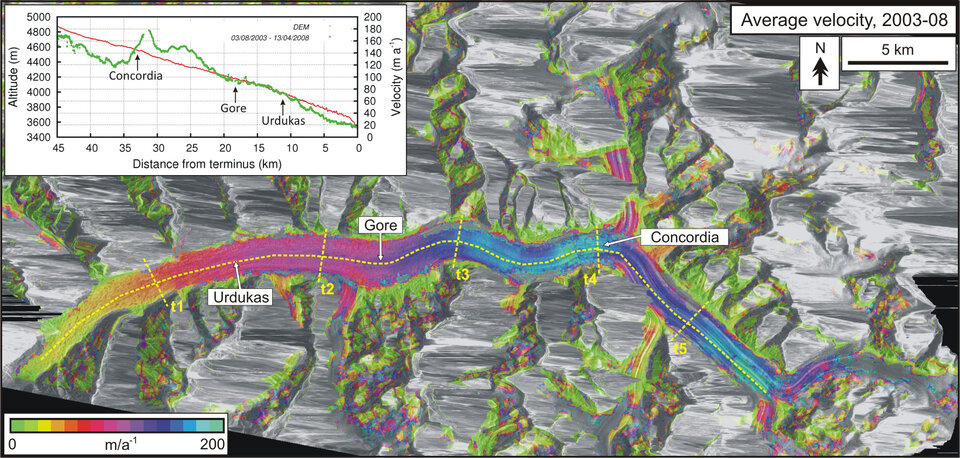
Det fremgår, at hovedparten af de mindre gletsjere i området er svundet betydeligt ind i perioden, mens de større gletsjere ikke er meget forandrede. Flere af de søer, der fødes af gletsjerne, er vokset. En god del af de lavt beliggende gletsjere er næsten fri for sne på billedet fra 2001 – et tegn på, at de er svundet ind det år.