

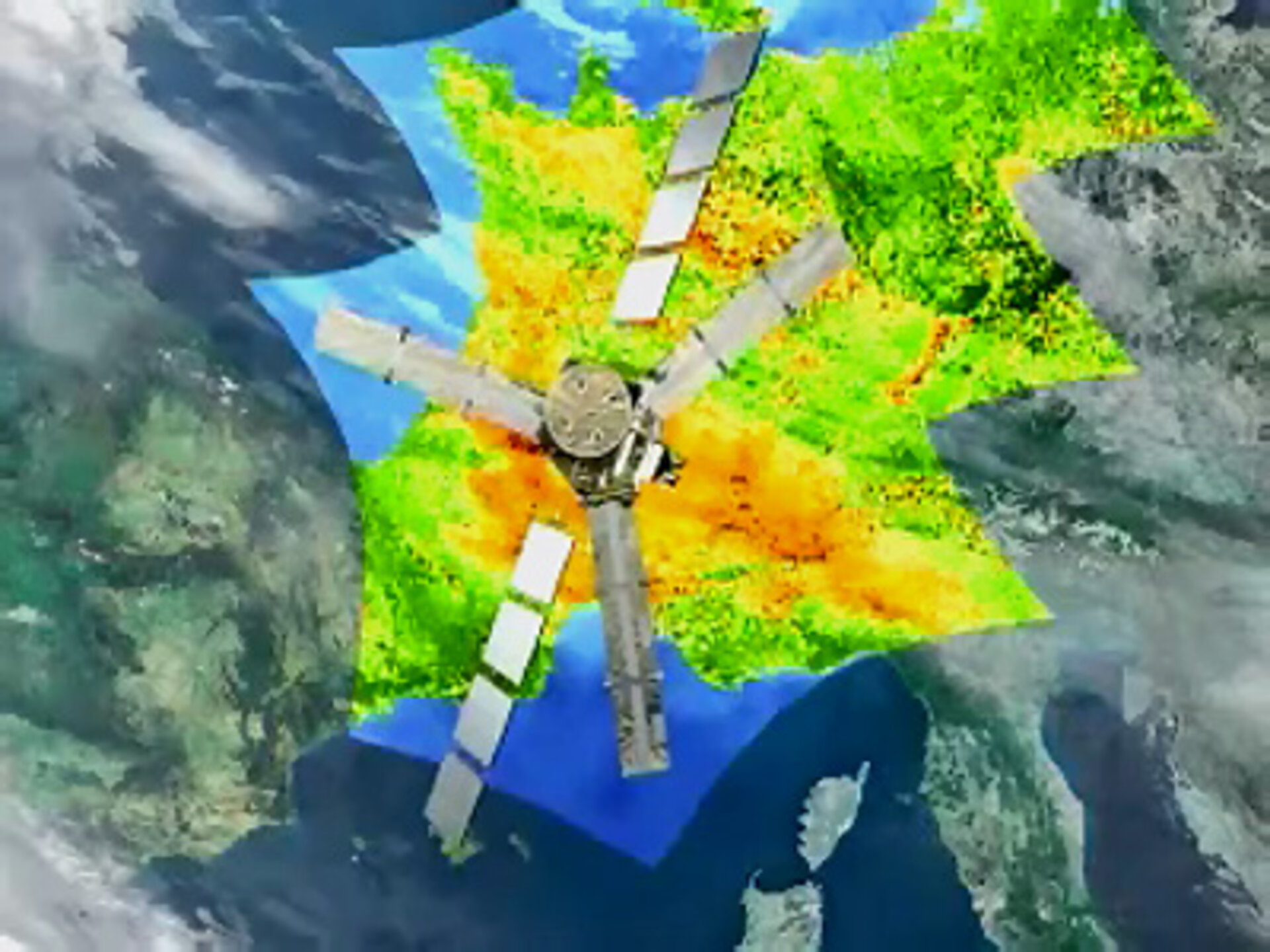
SMOS: Helping Europe respond to climate change
To help address climate change, 2008 will see the launch of Europe’s SMOS satellite. SMOS, which stands for soil moisture and ocean salinity, is designed to map these elements with unprecedented accuracy.

 Play now
Three-quarters of the globe is covered in water and its influence is felt everywhere. It’s not only oceans, rivers and lakes that affect the climate but water in all its forms, such as soil moisture and its evaporation.
SMOS, ESA’s water mission, will provide a uniform dataset for understanding better the water cycle, thus helping to forecast climate change and predict extreme weather conditions.
Circulating at a low orbit of around 750 km above the Earth, SMOS will be the first satellite to provide us with a global picture of ocean salinity levels. Understanding the salinity and temperature of the seas will help to predict more easily the zones where hurricanes intensify as they pass over the ocean. Salinity in the oceans has a big impact on ocean circulation, which plays a key role in driving the global climate.
The SMOS satellite will be launched into space in 2008 atop the Russian launcher ‘Rockot’.

