Gravity satellite GOCE arrives at ESA's test centre
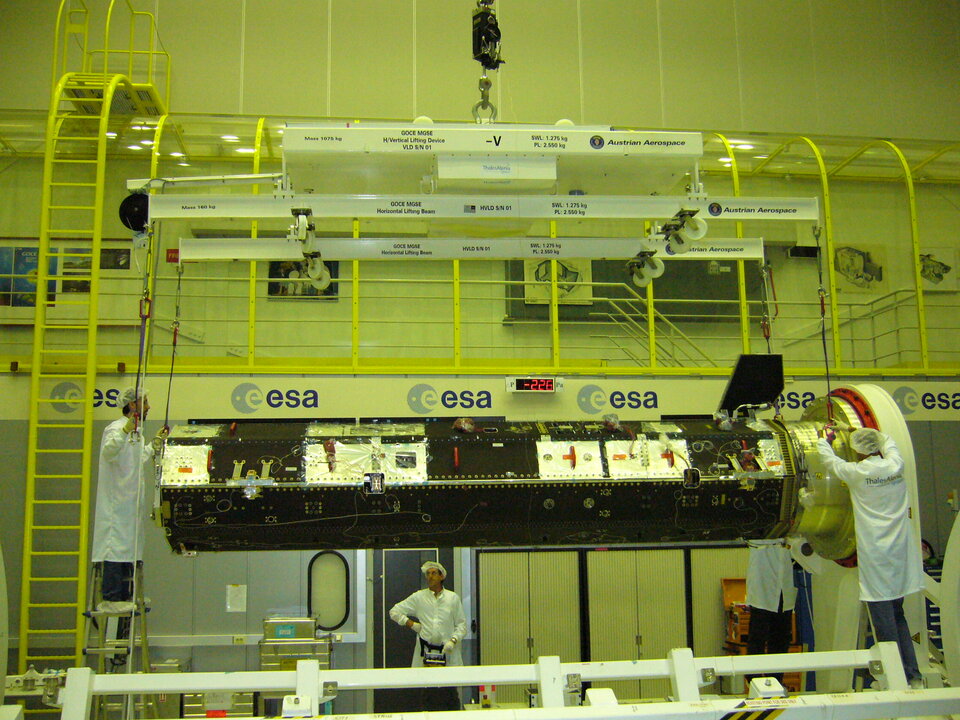
After a four-day road trip from Turin, Italy, ESA's GOCE satellite has arrived safely at the Agency's test facilities in the Netherlands. With lift-off scheduled for early 2008, the spacecraft is now being prepared for an intensive testing programme to ensure it will withstand the rigours of launch and the harsh environment of space.
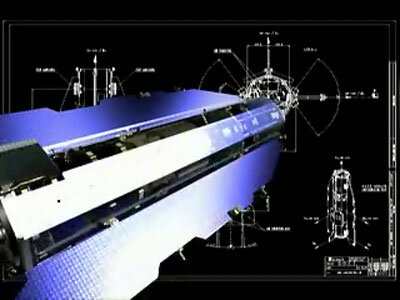
It took seven trucks to carry the five-metre long Gravity field and steady-state Ocean Circulation Explorer (GOCE) and support equipment from the prime contractor Thales Alenia Space in northern Italy, where the last subsystems had been integrated and tested over the last 11 months.
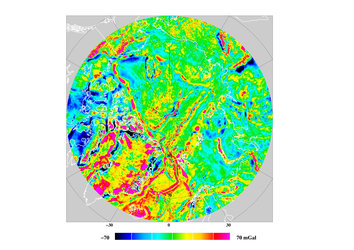
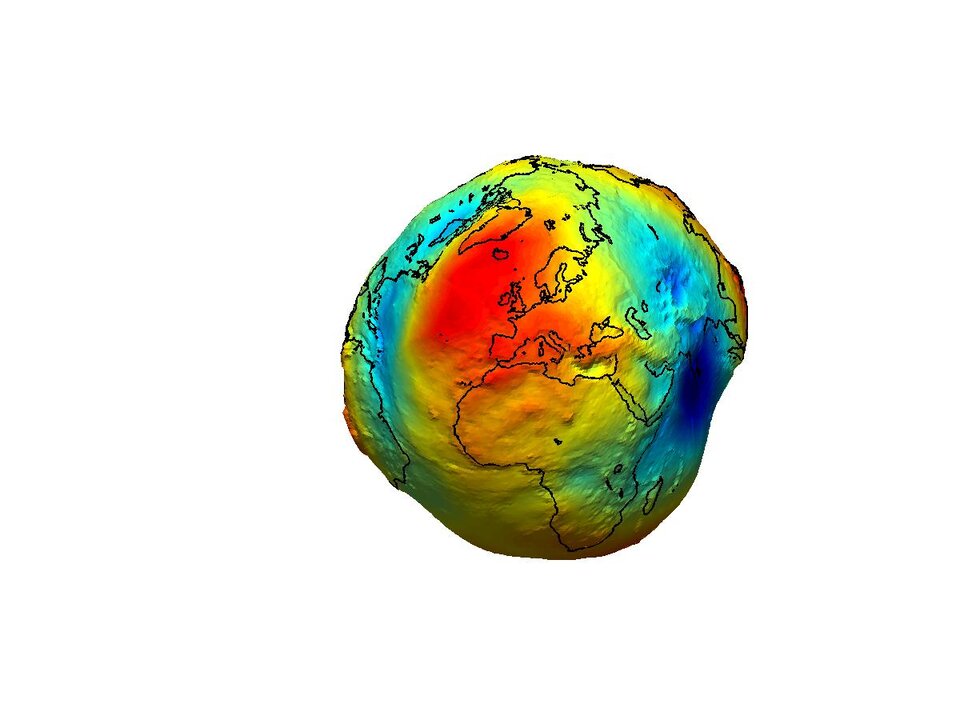
During its 20-month lifetime, orbiting just 250 km above the surface of the Earth, GOCE will provide an extremely accurate and unique picture of the Earth's gravity field and geoid. As such, ESA's first gravity mission will make significant advances to our understanding of ocean circulation, which plays a crucial role in regulating the climate, sea-level rise and processes occurring in the Earth's interior. GOCE data will also find applications in the field of geodesy and surveying.
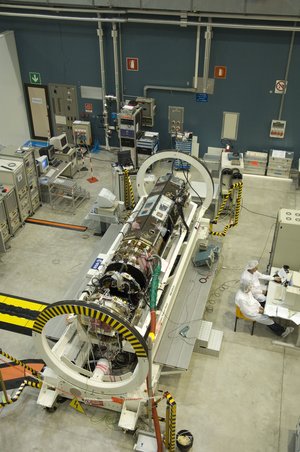
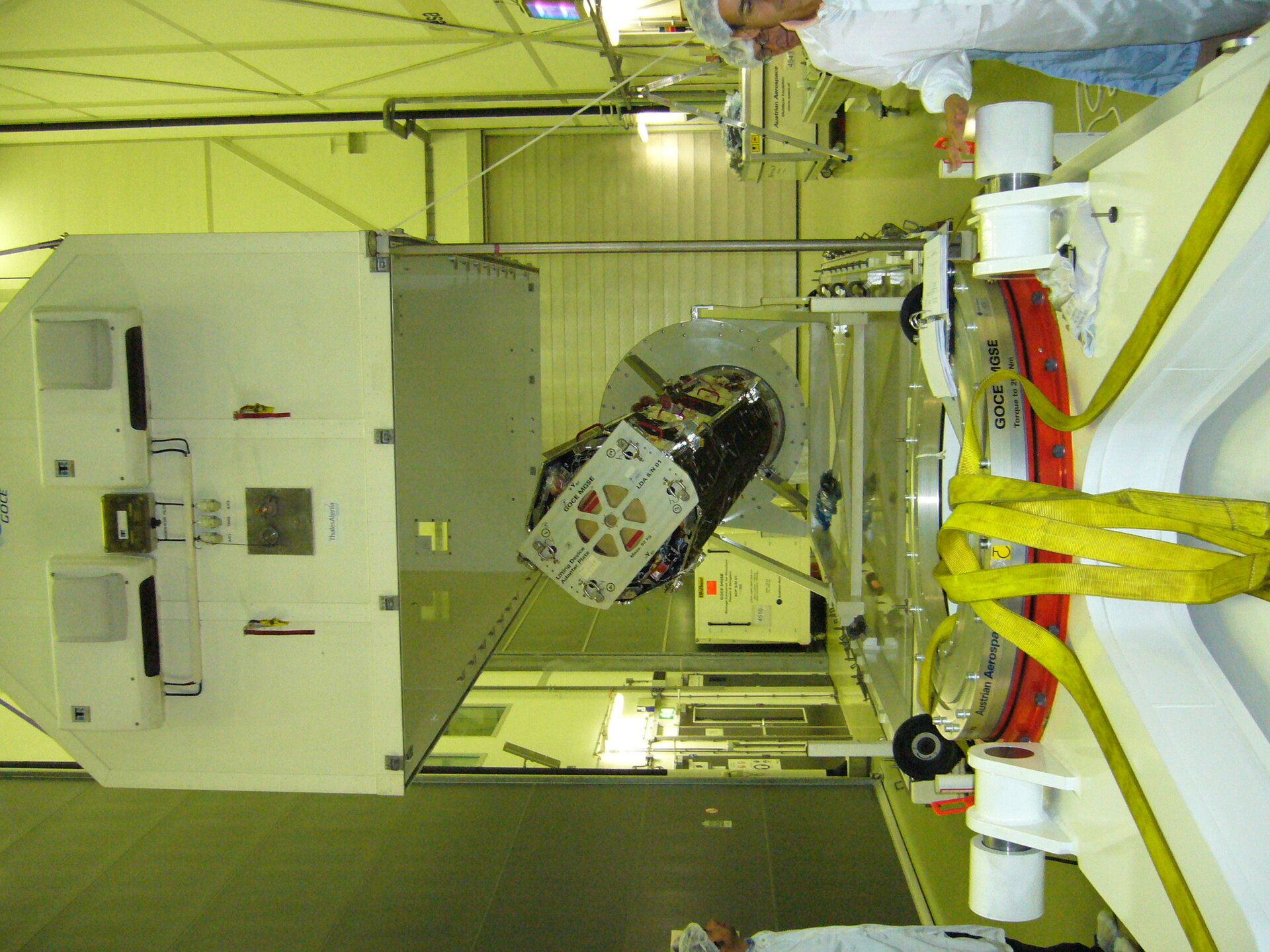
Over the weekend the cargo was unpacked and moved into the clean room at ESA's test centre in Noordwijk, the Netherlands. One of the first tasks on the list was to make sure that no damage had been incurred during transit, and since the satellite was transported fuelled with xenon, that there were no leakages. The solar wings had to be attached as well as other outer elements such as the antennae for very precise navigation by means of GPS.
As with any space mission, a crucial part of its development is to make sure that the spacecraft is fit for launch and orbit. Unlike many satellites, the ultra-sensitive GOCE satellite has no moving parts as it has to be extremely stable to acquire true gravity readings. Its stability is therefore crucial to the success of the mission, so testing that it will survive the noise and shaking during launch is critical.
Once launched, GOCE will orbit the Earth with one side of the spacecraft that faces the Sun - enduring temperatures of up to 140°C, with the other side that faces outer space - experiencing temperatures as low as -160°C. The so-called 'thermal balance and vacuum tests' should prove that the satellite is robust enough to withstand this harsh environment.
These thermal tests are first up in the main part of testing programme and are carried out 24 hours a day for two weeks. Equipped with 400 temperature sensors for the purposes of the tests, GOCE will be positioned at a range of angles in the Large Space Simulator (LSS) - a large tank about 10 m high and 9 m wide. Under vacuum, the extreme heat of the Sun will be simulated by lamps and mirrors, which reflect light into the tank, subjecting the satellite to 1400 W of power over each square metre of the side of the spacecraft that will face the Sun. The coldness of deep space is also simulated in this tank by a system of pipes carrying liquid nitrogen.
Towards the end of October, GOCE will undergo what is called an acoustic test to simulate the noise of the launch and the stress of the separation from the launch vehicle. These tests will be carried out over two weeks and entail the satellite being coupled to the top part of the launcher and positioned vertically in a concrete tank. The tank is equipped with speakers that emit
60-second bursts of pressure waves at various frequencies. To simulate the separation, the spacecraft is attached at the top of the ceiling in the clean room and – after separation - the top of the launcher drops by 40 cm.
The testing programme also includes several lengthy electrical tests, as well as two separate exercises to test the control links from ESA's Space Operations Centre in Darmstadt, Germany. The flight sensors of the gradiometer, which is the core instrument, will also be integrated into the spacecraft during the testing programme.
In February 2008, when all the tests have been successfully completed and GOCE is in full launch configuration it will be transported by plane from Amsterdam to Arkhangelsk (Archangel) in Russia, and from there by train to the launch site in Plesetsk where final testing will be performed prior to launch.