New launch date for CryoSat-2 confirmed
The technical issue with the second stage of the Dnepr rocket that delayed the launch of ESA's Earth Explorer CryoSat
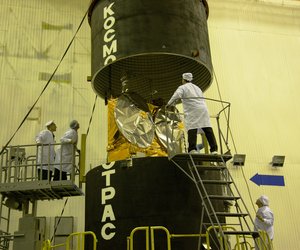
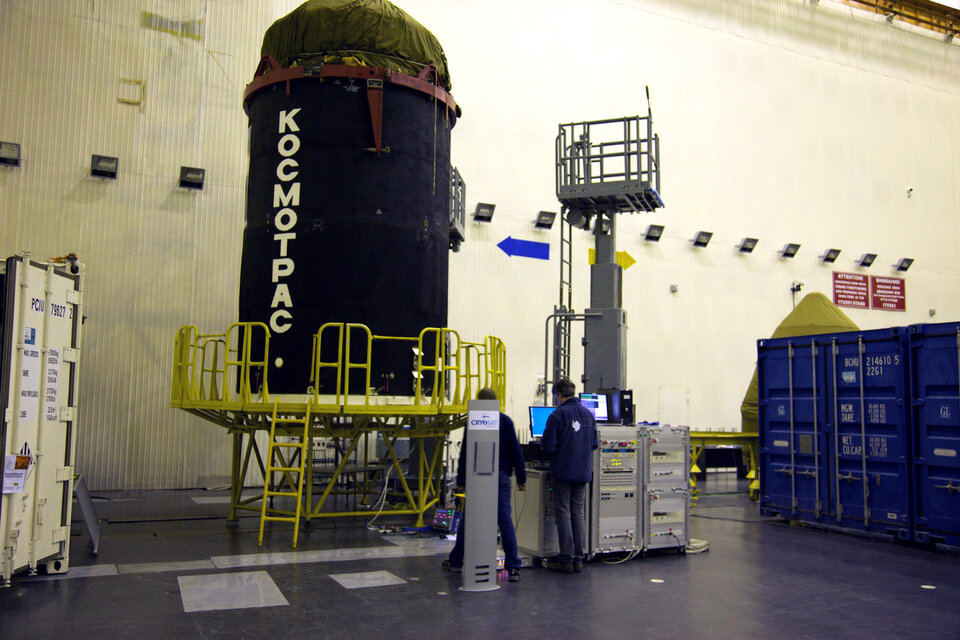
The launch of CryoSat-2 was originally scheduled to take place from the Baikonur Cosmodrome in Kazakhstan on 25 February, but had to be postponed owing to a problem with the fuel reserve in the launcher's second stage. The problem had surfaced a week before the scheduled launch date and after the 'space head module', encasing the CryoSat-2 satellite, had been mated to the rest of the rocket in the launch silo. Consequently, the space head was returned to the integration facilities pending an investigation and new launch date.
During the investigation, the Ukrainian company responsible for the overall design of the Dnepr launcher, Yuzhnoye SDO, and the company that develops the launcher's control system, Hartron-Arkos, confirmed that the ratio of fuel to oxidiser could be adjusted to improve the performance of the second stage engine. This small adjustment involved modifying the software that controls the fuel usage. The modifications have since been made and validated, and consequently the new launch date of 8 April at 15:57 CEST (13:57 UT) has been agreed with ESA.
Richard Francis, ESA's Project Manager for CryoSat-2, said, "When we visited Dnepropetrovsk in Ukraine we had a thorough briefing on the problem and solution from both Yuzhnoye SDO and Hartron-Arkos. We are confident that the change implemented increases reliability and has been properly validated."
CryoSat-2 is currently being 'babysat' in the integration facilities by two team members. However, the rest of the campaign team will return to Baikonur on
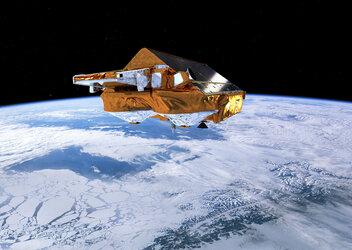
CryoSat is Europe's first mission dedicated to monitoring Earth's ice fields. The advanced observation techniques being employed by the CryoSat mission will provide precise measurements on variations in the thickness of floating marine ice as well as the vast ice sheets that overlie Antarctica and Greenland. This information will lead to a better understanding of the relationship between ice and climate change.