

Plan for global Earth monitoring agreed at Tokyo summit
Representatives from 47 countries and more than two dozen international organisations met in Tokyo last week, coming a significant step closer to achieving the goal of an integrated Earth monitoring network.
The Japanese capital was the location of the fourth Group on Earth Observations (GEO) summit. GEO is an intergovernmental working group charged with developing a plan for a co-ordinated global Earth Observation network providing data on environmental factors for both scientific and humanitarian purposes.
GEO was created during last July's Earth Observation Summit in Washington DC and was made responsible for producing a ten-year programme to co-ordinate space and ground based global monitoring systems, to be known as the Global Earth Observation System of Systems (GEOSS).

ESA and the European Union's Global Monitoring for Environment and Security (GMES) joint initiative serves as Europe's contribution to the worldwide GEOSS effort.
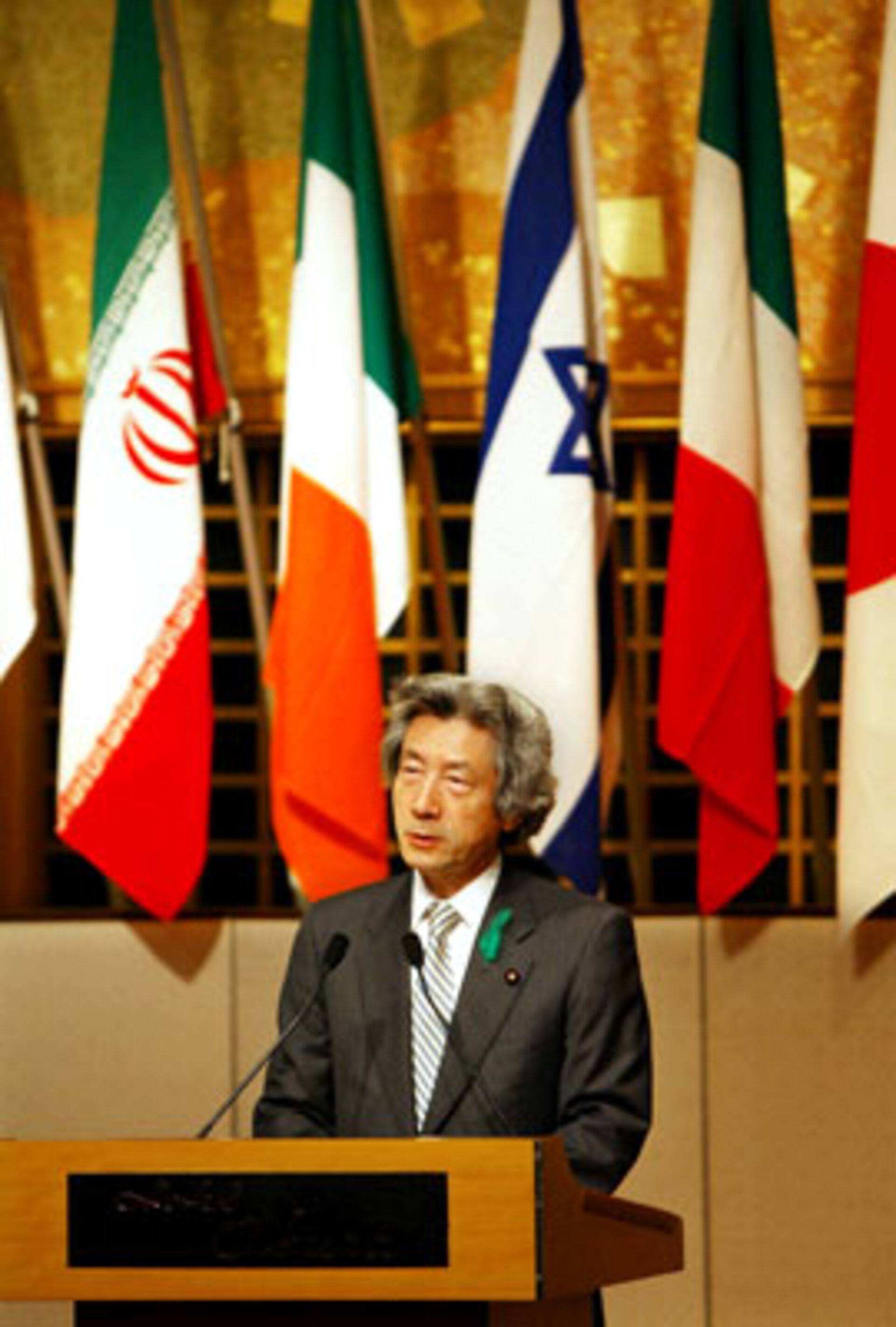
The 22-23 April Tokyo summit - the fourth such meeting and known as GEO-4 - is the successor to previous gatherings last year in Baverno, Italy and Cape Town, South Africa. The work done at GEO-4 saw the finalisation of a draft implementation plan, which was then approved by ministers gathering at the one-day Earth Observation Summit II immediately following GEO-4 on Sunday 25 April.

"Securing the draft implementation plan represents a useful step forward in turning the GEOSS idea into a reality," remarked ESA Earth Observation Director of Programmes José Achache. "And all participants from Europe were united in their support of GMES as its European component."
The aim behind GEOSS is to maximise the effectiveness of Earth Observation by minimising data gaps, building capacity and exchanging information as fully and quickly as possible.
Developed and developing nations alike will have access to all data gathered by the network, following the model of the World Meteorological Organisation's four-decade-old World Weather Watch, which co-ordinates the globe's weather satellites along with in-situ climate stations.
The increased knowledge of the environment that a similar global Earth Observation system would provide has the potential to be an invaluable resource for global decision makers.
"The feeling is that the summit has made an important contribution," Achache added. "It's about more than only improving weather forecasting and the study of climate change. GEOSS will be a tool for planetary management, a resource for more efficient development and a means of mitigating disasters."
This draft implementation plan will form the basis of additional work to be carried out by five separate GEO Subgroups dealing with the subjects of Architecture, Capacity Building, Data Utilisation, User Requirements and International Cooperation. ESA is a Co-Chair of the Architecture Sub-Group and also a member of the GEO Secretariat.
The finalised ten-year GEOSS implementation plan will be presented for acceptance to ministers at the Earth Observation Summit III, scheduled to take place in Brussels in February of next year.

