

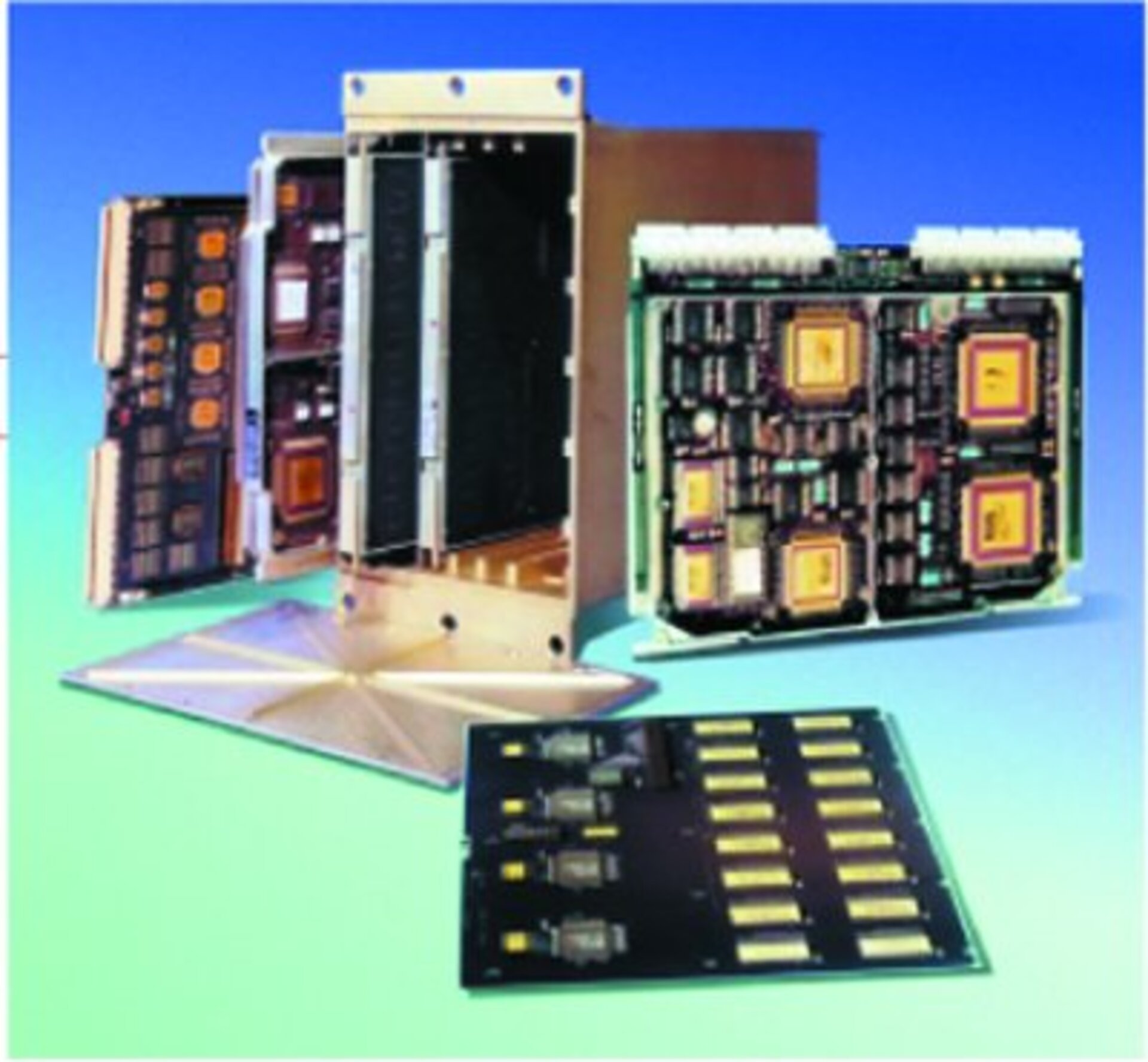
DMS-R: ESA's Data Management System
DMS-R, in the Russian Service Module Zvezda, is a set of computers, that provides for the overall control, mission and failure management of the entire Russian segment of the International Space Station.
The DMS-R performs functions as:
- Guidance, navigation and control for the entire International Space Station
- Onboard systems and subsystems control
- Mission management with supervisory control by the on-board and ground crews
- Failure management and recovery
- Time distribution, time tagging and synchronisation
- Data acquisition and control for on-board systems and experiments
- Exchange of data and commands with the other parts of the International Space Station
The ESA-provided on board units are:
- 2 Fault Tolerant Computers: a Control Computer and a Terminal Computer
- 2 Control Posts for command and control by the crew, for commanding experiments and ERA
The DMS-R was developed by ESA with an industrial team lead by Astrium in Bremen, Germany.
The application software for the on-board computers was developed by the Russian Zvezda contractor, RSC Energia, using an ESA-provided ground system - the hardware and software environment supporting software design, development, simulation, test and validation.
The Russian Service Module, with the ESA-developed D-MSR, was launched in July 2000.