ESA issues first Jules Verne payload list
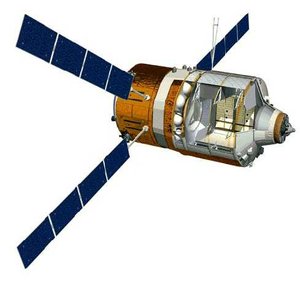
In 2007, with the launch of Jules Verne, the Automated Transfer Vehicle (ATV) will become the new European powerful automatic re-supply spaceship able to bring an indispensable payload to the International Space Station and its permanent crew. This first ATV will carry a mix of supplies depending on the Station’s needs and its own payload capacity.
ESA, NASA and Russian counterparts are already defining the priorities to accommodate the most appropriate combination of different supplies for this inaugural flight. The combination is quite flexible and can include different amounts of re-boost propellant, refuelling propellant for the Station’s own propulsion system, drinking water, air and dry cargo, which is stored in the 48 m3 pressurized section of the ATV.
In all Jules Verne will carry about seven tonnes of cargo to the orbiting outpost 400 km or so above the Earth thanks to the Ariane 5 launcher, which is capable of boosting up to 20.5 tonnes into low Earth orbit.
Payloads from different countries
Although ATV will dock to the Russian Zvezda module, it will carry most of its dry payload for the US elements of the ISS. At the launch site in Kourou, French Guiana, six weeks before flight, Jules Verne will be loaded with 1 300 kg of dry cargo out of the 5 500 kg maximum capacity.
Most of the dry cargo provided by NASA will be clothes, food, towels and wipes for the crew, logistics items such as batteries and spare parts for maintenance of the Station. This cargo will also include ESA experiments such as ANITA, which will constantly monitor the cabin air, and some Russian hardware to be added to the panels of the Station's Russian Service Module.
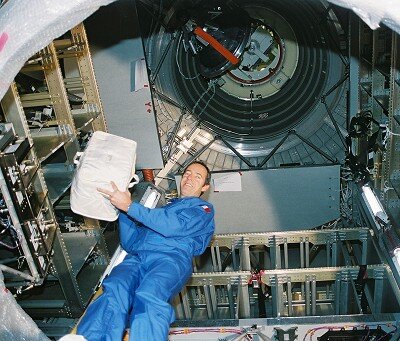
Contained in bags of different sizes, the cargo is loaded horizontally through the large opening at the aft end of the pressurized module, opposite the docking system at the front end. At this stage of the launch preparations in Kourou, the ATV service module, housing the avionics and the propulsion system, is not yet attached to the pressurized cargo section.
The bags are neatly tied down with an adjustable belt into six “racks” which are modular storage cargo elements and look like metal shelving. About 2.3 tonnes of such cargo configurable hardware including racks, pipes, tanks and bags are needed to store and carry contents to the Station.
To add flexibility in the re-supply capability of ATV, a small fraction of the dry cargo can be loaded through the docking hatch just eight days before launch when the spaceship is undergoing final launch preparations on top of the 50-metre Ariane 5, just before being enclosed in the white aerodynamically-shaped fairing.
Payload priority: Propellant
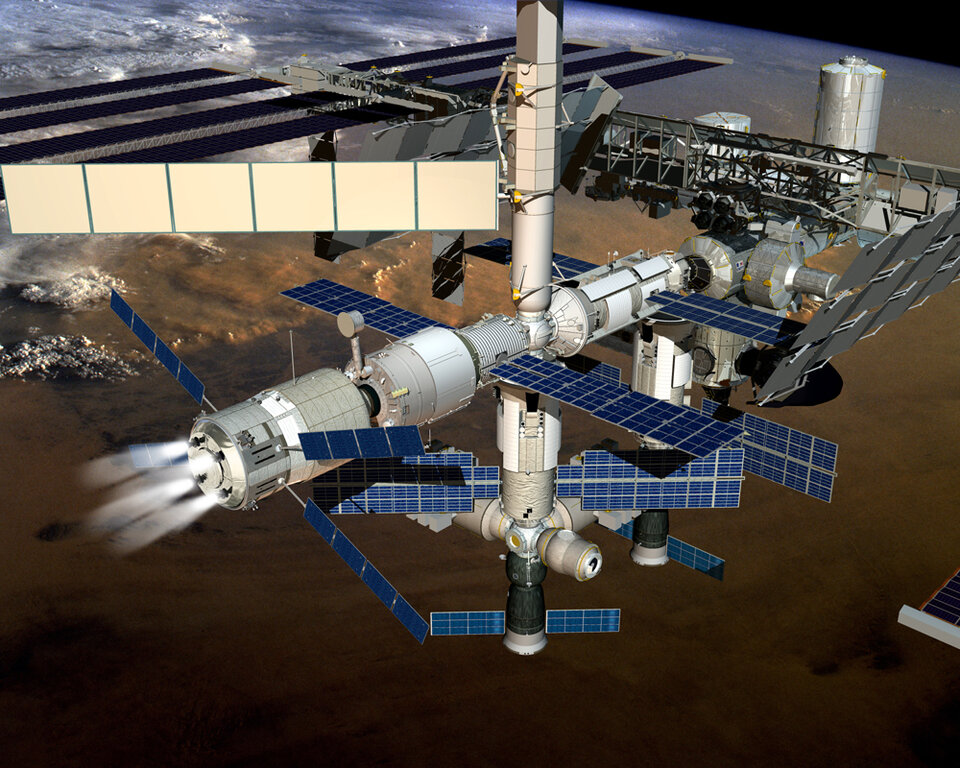
“Jules Verne’s mission will be much more complex than the future routine ATV missions since it will actually demonstrate that the ATV can automatically and safely handle any contingency plans designed to ensure the safety of the ISS crew, such as interrupting the rendezvous, stopping its motion and flying away from the ISS”, explains Alberto Novelli, ESA operations manager of the payload for the first ATV mission.
Novelli continues: “For the first ATV flight Jules Verne will use the full capacity of the cargo ship and will carry even more fuel than the following ATV missions. The extra fuel will allow this demonstration flight to test several scenarios and manoeuvres, including contingency situations, such as going back to a parking orbit and delaying the rendezvous until the following day. Such situations require a new docking manoeuvre and would take a lot of fuel – up to about 500 kg. Consequently, about one third of the payload will be fuel.”
The rest of Jules Verne's payload will be 860 kg of refuelling propellant for the Station’s own propulsion system, 280 kg of drinking water, 20 kg of oxygen and the large amount of re-boost propellant already mentioned.
After a nominal and complex mission in orbit up to the docking, Jules Verne will still carry two tonnes of propellant for re-boost of the Station. The extra fuel not consumed for unexpected scenarios during the free flight phase will automatically be used for extra re-boost of the Space Station during the attached phase. The purpose of the re-boost is to raise the ISS altitude, which naturally decreases with time due to the residual atmospheric drag.
Delivery of “Russian” type water
The ATV is able carry two types of water to the ISS in compliance with the different standards of NASA and the Russian state space agency, Roskosmos:
- The NASA standard requires its water to have low dry residue like the one produced – through reverse electrolyse process – by the fuel cells on board the NASA Space Shuttle. It is disinfected with iodine.
- The basis for Roskosmos standard water is to have some amount of minerals such as calcium, magnesium and fluoride. It is disinfected with silver obtained via electrolysis.
“For Jules Verne, the ISS partners have decided to bring only the Russian type of water. We will have the water ready for delivery less than three months before launch” says Cesare Lobascio, head of Environmental Control and Life Support for Space Vehicles at Alenia Spazio in Turin. The same Italian space firm builds the ATV's pressurized Integrated Cargo Carrier in its Turin plant.
The Integrated Cargo Carrier has a maximum capacity for water of 840 kg, divided over three water tanks, but on Jules Verne only one tank will be filled.
Waste removal from the ISS
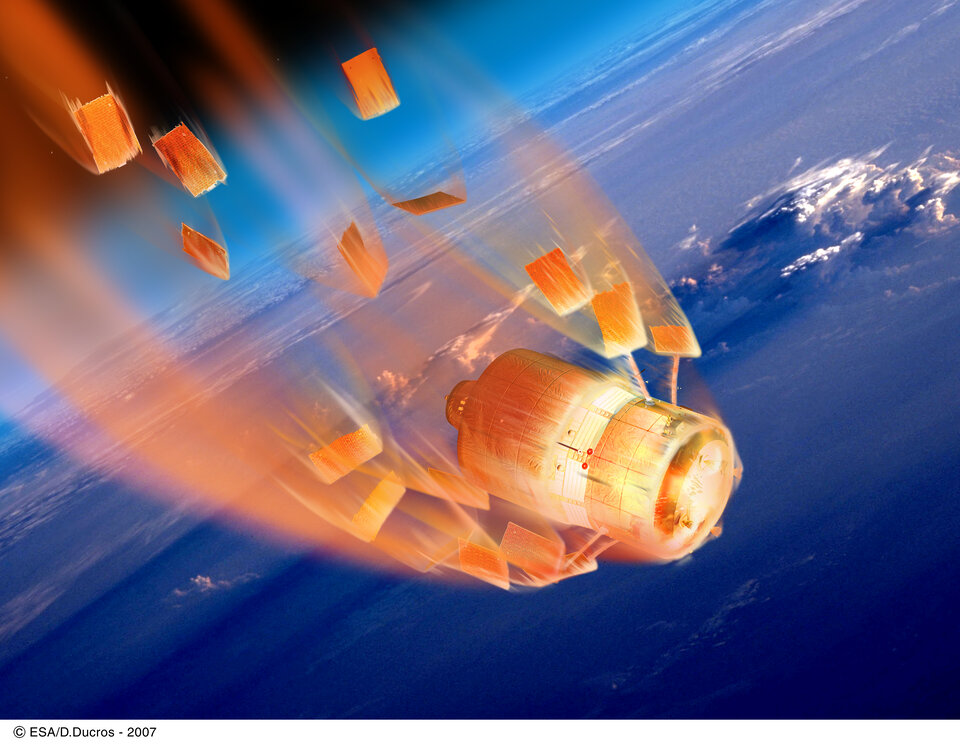
The ATV has about three times the payload capability of its Russian counterpart, the Progress-M cargo vehicle. At the end of its six-month mission, Jules Verne will offload solid waste and wastewater from the Station and burn up during atmospheric re-entry over the Pacific Ocean.
The offload payload has not yet been defined, but liquid waste (up to 840 kg) cannot exceed one sixth of the dry waste (up to 5 500 kg). The ISS crew will steadily fill the cargo section with unwanted material. Up to 6.3 tonnes of unwanted material can be removed from the Station using the ATV.