

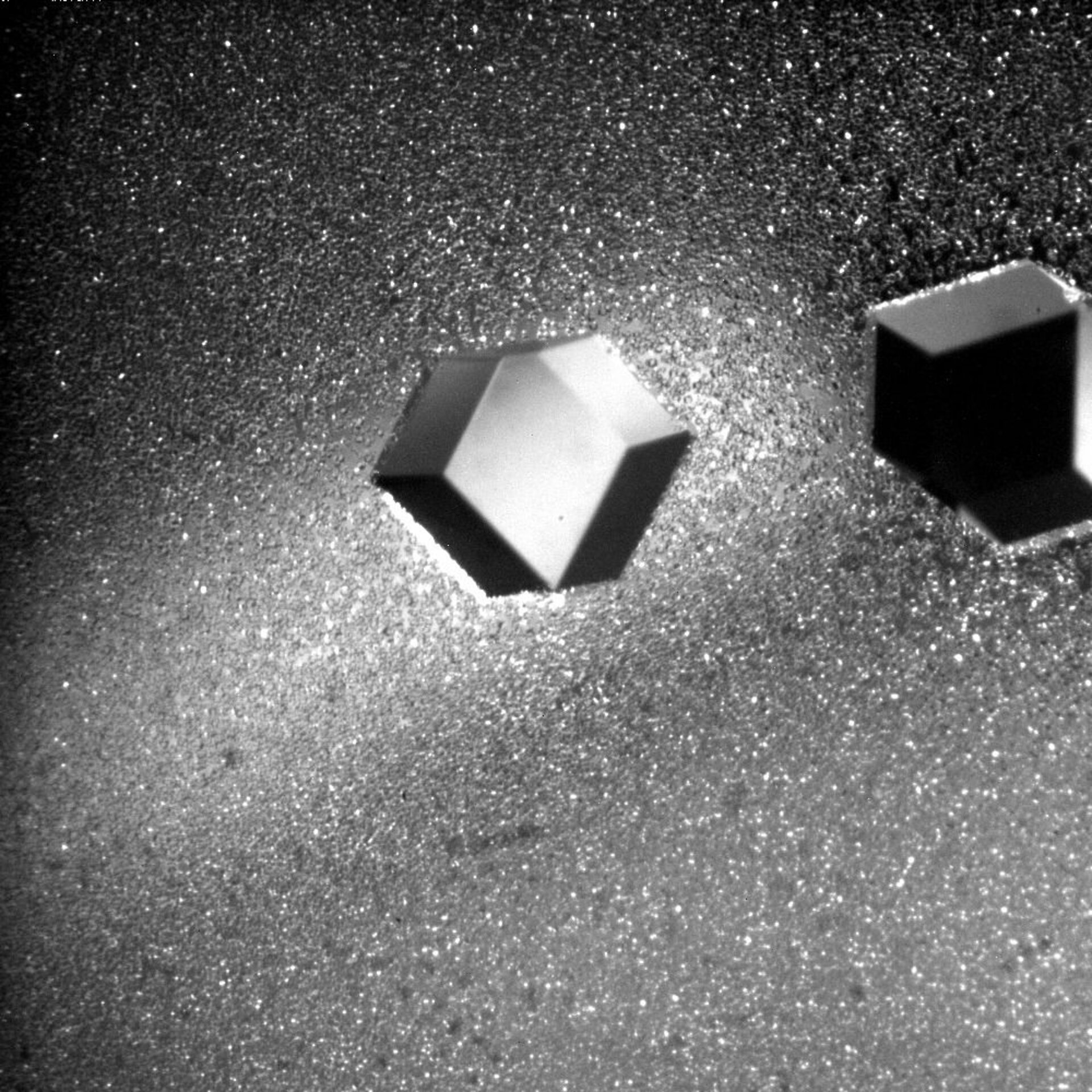
Protein experiment starts in Columbus laboratory
Launched on flight STS-119 with Space Shuttle Discovery, the Processing Unit for ESA's Protein Crystallisation Diagnostic Facility was installed inside the European Columbus laboratory last week. After initial commissioning of the facility, the first experiment is now underway.
The four reactors inside the Processing Unit contain a protein solution that will be observed for crystal growth over the coming months. Without the convection and sedimentation effects induced by Earth's gravity, the 'Protein' experiment will help to understand the fundamental processes that occur during crystallisation.
Understanding the process of protein crystallisation can help us to obtain better quality crystals. This in turn will help improve their function in various applications, such as in protein-based medicines where they are a means of controlling the release rate of an active compound, or of increasing shelf-life. The Protein experiment specifically aims to understand how the conditions in which crystals are grown affects their final crystalline quality.
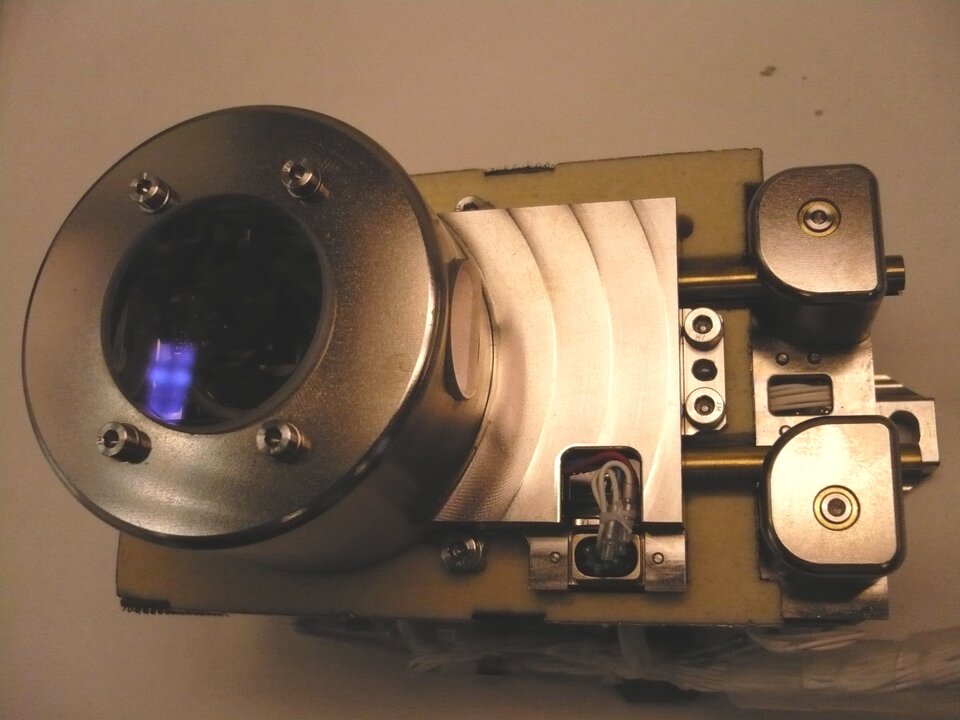
The Processing Unit was retrieved from the Shuttle middeck by the crew and transferred to its new location in the Columbus laboratory's European Drawer Rack (EDR). Mounted inside EDR by Japanese astronaut Koichi Wakata, the Processing Unit was then combined with the Protein Crystallisation Diagnostics Facility (PCDF) Electronics Unit which has been in orbit since arriving with the laboratory in February 2008.
The PCDF is equipped with telescience capabilities that allow the scientists to monitor and interact with their experiment from inside the Belgian User Support and Operations Centre, located in Ukkel, Belgium.
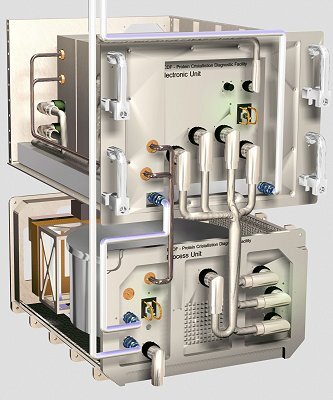
The Processing Unit will remain onboard the International Space Station (ISS) for around three months. During that time, three consecutive cycles of protein crystallisation will be performed. It will return to Earth with Space Shuttle Endeavour on flight STS-127, scheduled for next June.
The PCDF installation took place during the STS-119 mission to the Station, during which the fourth and final set of solar arrays were attached outside the orbital outpost. With the addition of the final set of solar arrays, which were deployed last Friday, the Station takes a major step in preparation for an increase of the ISS crew size from three to six.
The Protein experiment is undertaken by ESA's Directorate of Human Spaceflight in the context of its European Programme for Life and Physical Sciences (ELIPS). The ELIPS programme is intended to prepare and perform research in fundamental and applied life and physical sciences on the ISS and other carriers such as sounding rockets and unmanned orbital vehicles.
ELIPS ensures that Europe's investment in the development and exploitation of the ISS produces the best scientific results. To achieve this, ELIPS promotes global cooperation, international peer review of research proposals and European coordination in facility development and resource utilisation.


