

André Kuipers' diary - Part 13: Online chat, medical exam and farewell to my daughters
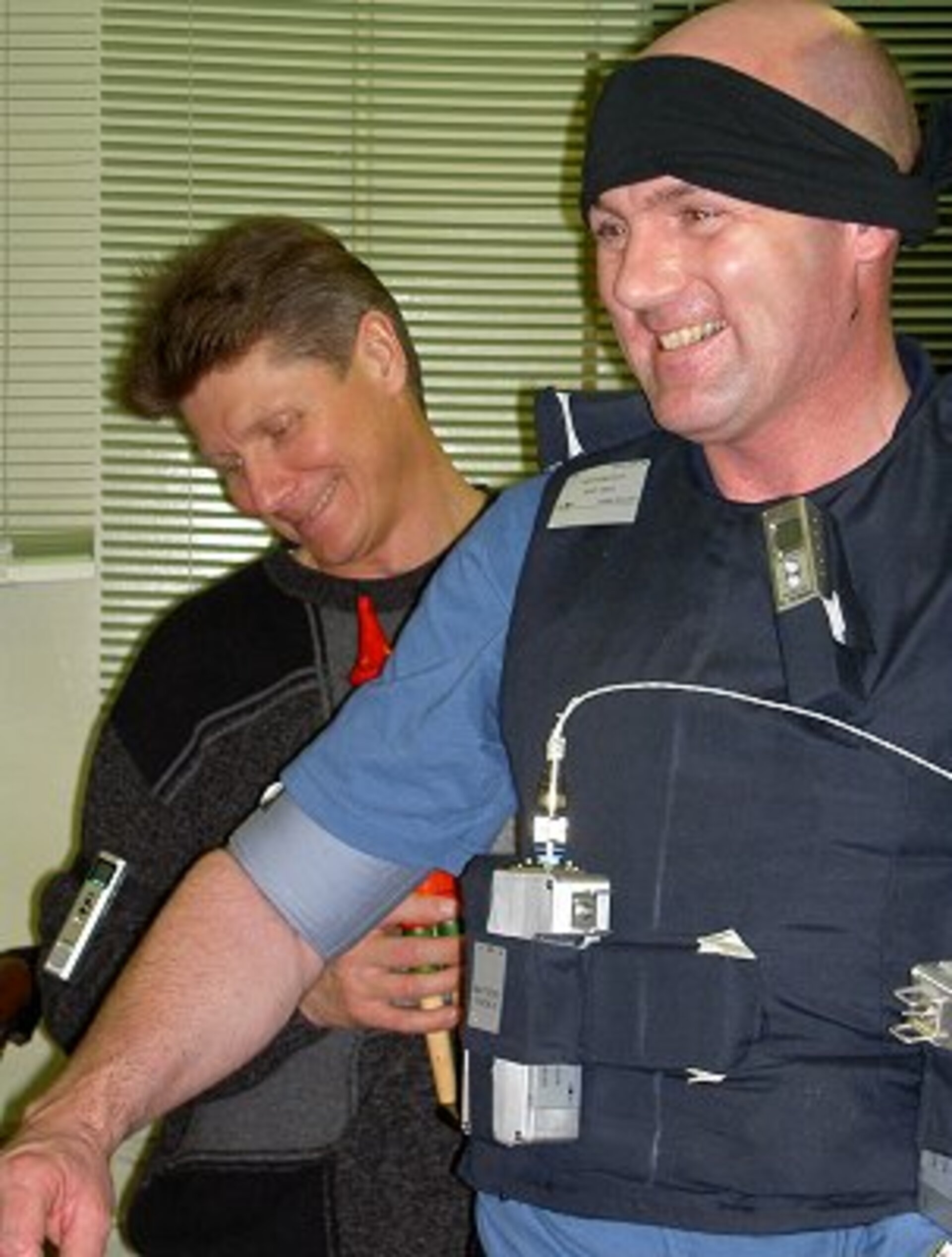
4 - 10 March During my stay in space, I will make an educational video about the physiological aspects of space travel. This will concern the effect of the weightless environment on the human body. My colleagues, Frank De Winne and Pedro Duque, have made similar videos; theirs were about the behaviour of liquids in space and Newton’s laws of physics.
It is up to me to show that more blood flows to your head in space, and that your neck gets wider but your legs get thinner. And that in space it is difficult to get your bearings with your eyes closed. This week, I ran through all the procedures and practised using the camera. When my video is ready it will be combined with the previous two to make an educational film for secondary school students.

Another training exercise was about the landing procedure. It was the first time that we had rehearsed it together as a full crew, fully kitted out in spacesuits. We went through the whole procedure twice. The first time, I sat in the left-hand seat that is reserved for the flight engineer. Then Michael Fincke took my place. After all, he will be staying in the Space Station when I return, and he also has to be able to fly back in the role of flight engineer in an emergency.
There was a break between the two practice sessions, which gave us the chance to practice for one of the traditional pre-launch ceremonies. Just like Yuri Gagarin, the first man in space, we will all pee against the rear wheel of the bus on our way to the launch platform. That is quite an art when you are wearing a spacesuit; laughing, we took advantage of this unscheduled opportunity to practice such a tricky manoeuvre!
Personal impressions
On Friday afternoon, I went to the ESA office in Moscow. I thought that I was just going there for lunch with the embassy staff from various countries of Europe. I was right about the lunch, but on arriving I was unexpectedly asked to address the assembly and tell them about the mission and the training. I spoke at some length about the details of the mission. In fact, there is so much to tell that I had to take care not to rattle on for three hours. So I mainly restricted myself to personal impressions and some explanation about the international cooperation between Europe and Russia. Many people have only a vague idea of what this involves.
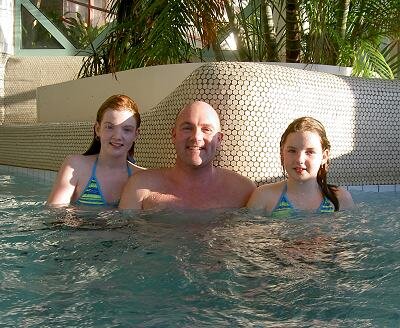
I spent the weekend with my two daughters, Robin and Megan. This was the last time that I would see them before the flight. Even at the launch from the Baikonur cosmodrome, I will probably not be able to pick them out in the crowd. We did all sorts of things together. I went horse riding with them, something that they really enjoy doing. We watched the last episode of Lord of the Rings at the cinema, visited an open air museum and relaxed at a sub-tropical swimming pool. We talked a bit about the flight, but not very much. After all, they already know all about it.
Radio ham
Back at Star City, we posed for the official crew photos. These were taken at a special studio, with the national flags in the background. Two individual photos were taken of me, one of them with the Dutch flag and the other with the ESA flag. I just had time to stick on the emblems with the DELTA logo and our Soyuz TMA-4 crew logo; these had only just arrived from the Netherlands.
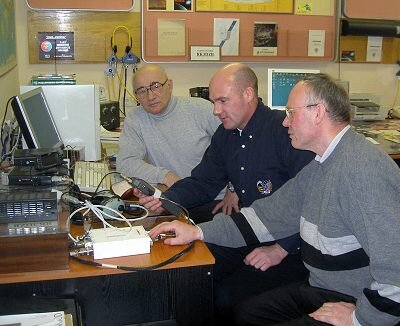
After that, I continued training for the amateur radio session. On board the Space Station, I will speak as a radio ‘ham’ with pupils and students in the Netherlands. We went through all the procedures. By way of practice, during a session in the Space Station simulator, I established real radio contact with the trainers and with two of my Dutch friends who are visiting Star City this week. One of them, Chris van den Berg, is very knowledgeable about space communications and has been listening to all the radio traffic between the ground and Russian spaceships for decades.
Internet chat
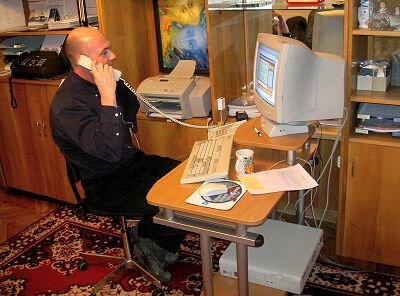
I was also in contact with Dutch children on Tuesday, but this time via the Internet during a chat session. Many children had assembled in various libraries throughout the Netherlands in order to ask me questions via the Internet. I was completely overwhelmed. In less than an hour, thousands of questions were fired at me. It was really fun, trying to answer as many of them as possible and as fast as I could.
There were some great questions among them. For example, whether I can see stars and planets from the Space Station (yes, and stars do not twinkle because there is no atmosphere). There were the inevitable questions about how I go to the toilet (an airflow ensures that everything ends up in the disposal system) and sleep (well buckled-in). But there were also questions about how fast you actually fly through space (28,000 kilometres per hour) and what you have to do if you have used up all your oxygen (make some more from water using electricity). It was a good session, even though I was unfortunately unable to answer all the questions. When I am back from space, we will do it again.
Medical examination
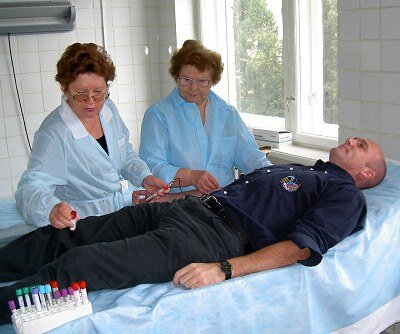
The next day, I was subjected to a medical examination. This one was very important, being so close to the flight. The Russian doctors really put me through the mill, examining me from top to toe. There was an optician, an ENT specialist, a surgeon, an internist and a neurologist. Much of what they did was similar: prodding, poking and measuring.
It all took about three or four hours. Of course, there was an electrocardiogram and I had to give a urine sample and numerous blood samples; scans were made of just about every organ in my body.

Medical examinations always make you feel a bit tense. You know that astronauts can fail such examinations just before they are due to go on their mission. This recently happened to my fellow crewmate, Bill McArthur. Fortunately, he can still look forward to another flight in the future, but it is a pretty drastic event if you are not allowed to go into space after so much preparation. In my case, everything will presumably go well. I feel well. Hopefully, I will not hear anything more about the examination. No reaction means that there is nothing wrong, and so ready for takeoff!

