Next step for ESA’s first Moon lander

23 September 2010
More than 50 years after the Space Age began, only two countries have soft-landed spacecraft on the Moon – the USA and Russia. This will soon change, however, with Europe and several other space powers aiming to join the exclusive club.
ESA is working to develop the first mission to visit the spectacular highlands that surround the Moon’s south pole. The plan is to build a spacecraft that will be able to land with pinpoint precision in the mountainous, cratered landscape. To reach the surface safely, the lander must be able to descend from orbit onto a mountain peak or crater rim. It must also steer away from boulders and steep slopes before making a gentle touch down in the lunar dust.
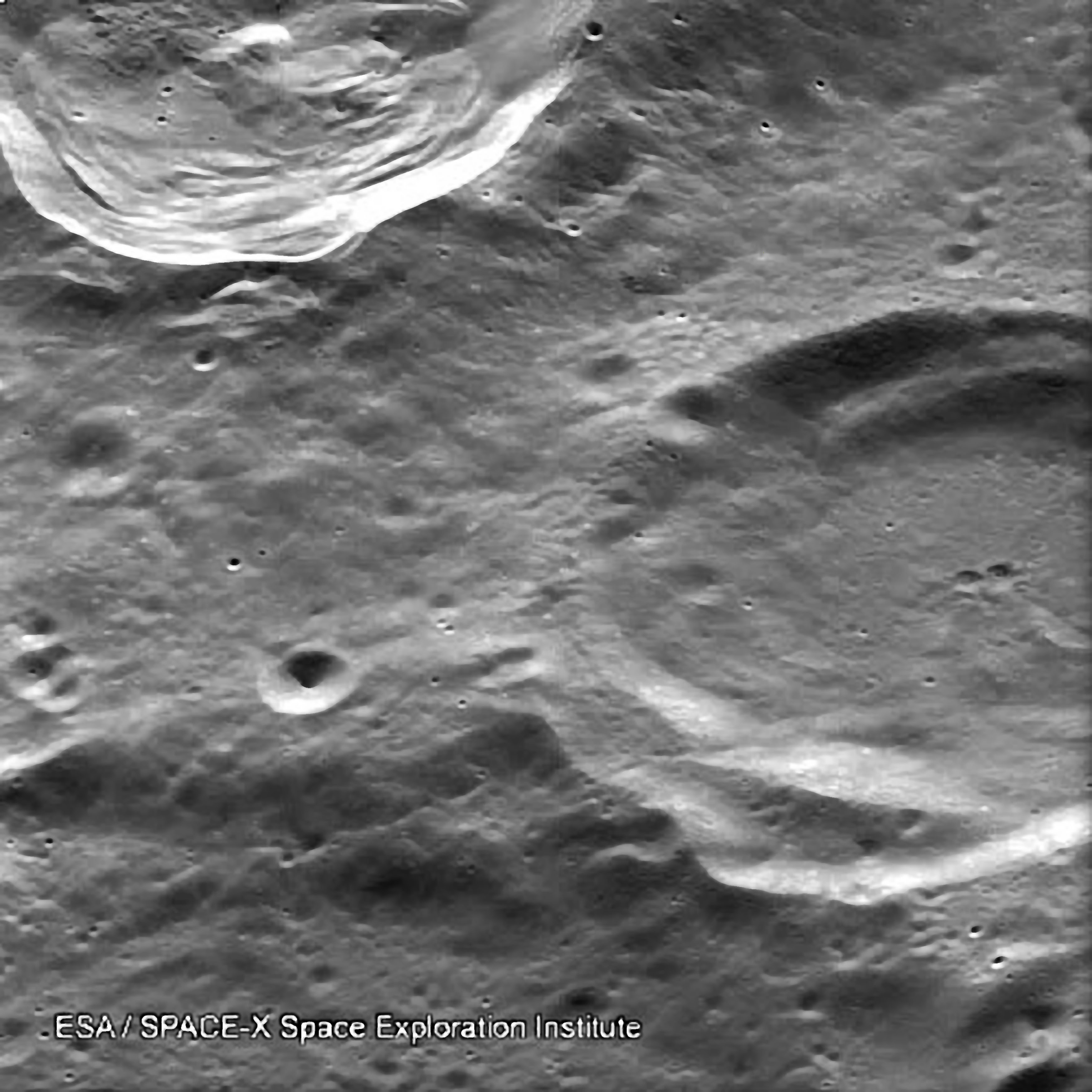
The Moon is a favoured target for the human exploration missions outlined in the ‘Global Exploration Strategy’ by 14 space agencies around the world. The lunar poles are seen as the key to future human exploration of the Moon. Some places on crater rims have almost continuous sunlight, from which electricity can be produced. Ice on the floors of nearby, shaded craters, may be used to make oxygen and water.
A contract for in-depth design studies was signed by ESA and EADS-Astrium of Germany on 16 September 2010. Over the next 18 months, some of the key technologies for the lunar lander will be developed and tested for the first time. If all goes according to plan, Europe's pathfinder will arrive safely at the Moon’s south pole in 2018.