

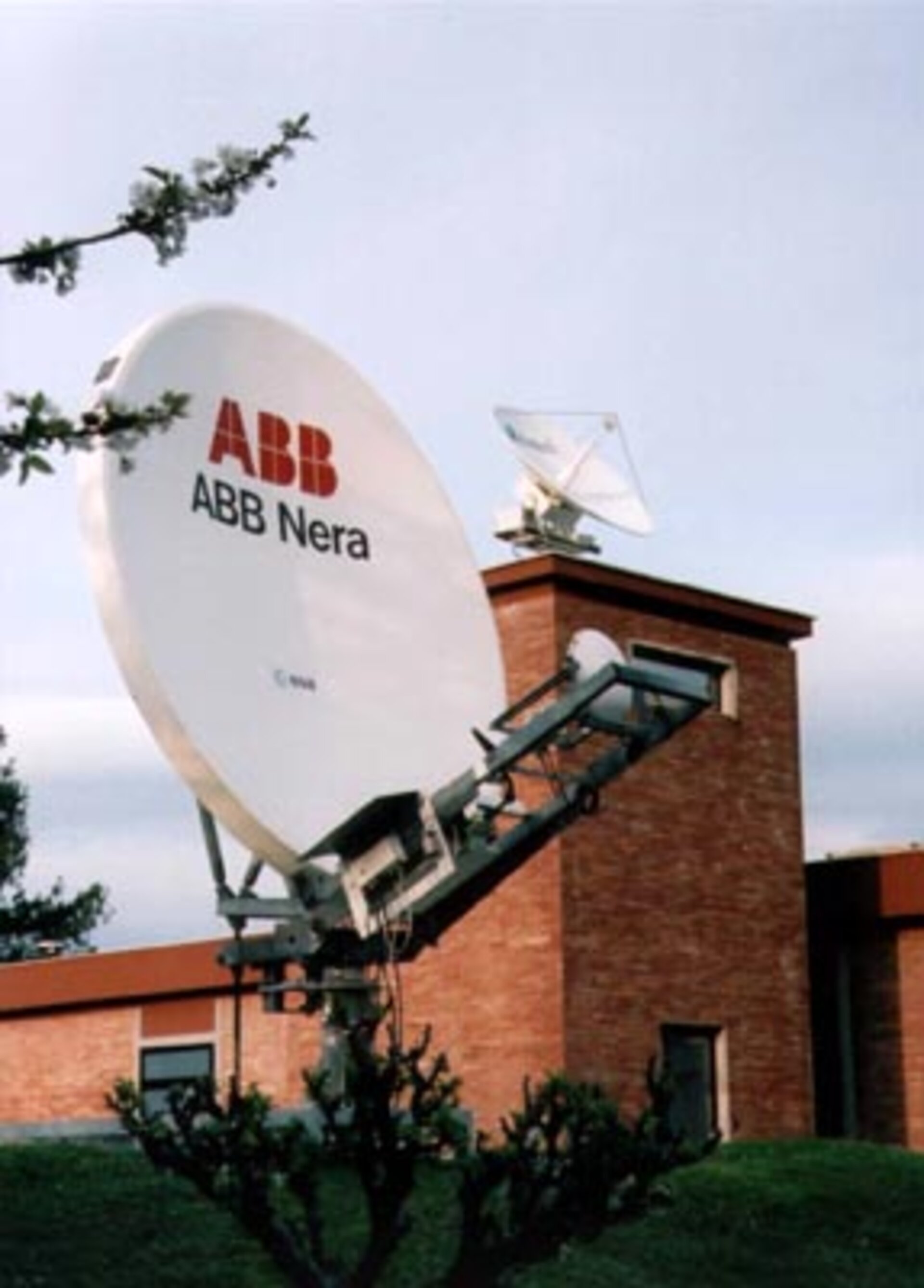
Telecom Lab
Telecommunications services provided via satellite have become part of our daily life; television, telephones and the Internet are just a few of the more obvious examples. New ways of using satellite telecommunications are constantly emerging and a small office of ESA’s Telecommunications Department has been set up at ESRIN to nurture projects trying to develop new applications.
Called today the ESRIN Telecom Lab, it was established at ESRIN in 2000. Its job: to support European companies and institutions developing new space applications by providing easier access to essential - but expensive - space telecommunications infrastructure. Among the innovative undertakings assisted to date are projects for telemedicine, tele-education, tele-tourism, e-commerce and support for civil protection authorities in Italy and France.

Small and medium-sized companies in particular can benefit from ESRIN’s telecommunication services. The on-site facilities provide projects funded under ARTES, ESA’s Advanced Research in Telecommunications Systems programme, with controlled access to a laboratory area with uplink facilities, while members of the small telecommunication’s team at ESRIN are on hand to offer their support.
All this gives companies easy access to complex and expensive infrastructure when they are struggling to handle the transition phase from development to pilot operations, freeing up both time and money to concentrate on developing and marketing their core business.
Organising workshops and demonstrations at ESRIN is another way of providing assistance. This gives ESA an opportunity to present and demonstrate the benefits of telecommunications applications, facilitate links between developers of specific applications and potential users, and foster the exchange of ideas. ESA’s support helps companies enter the market by bringing new applications to the attention of potential users and ensuring applications meet user’s requirements.
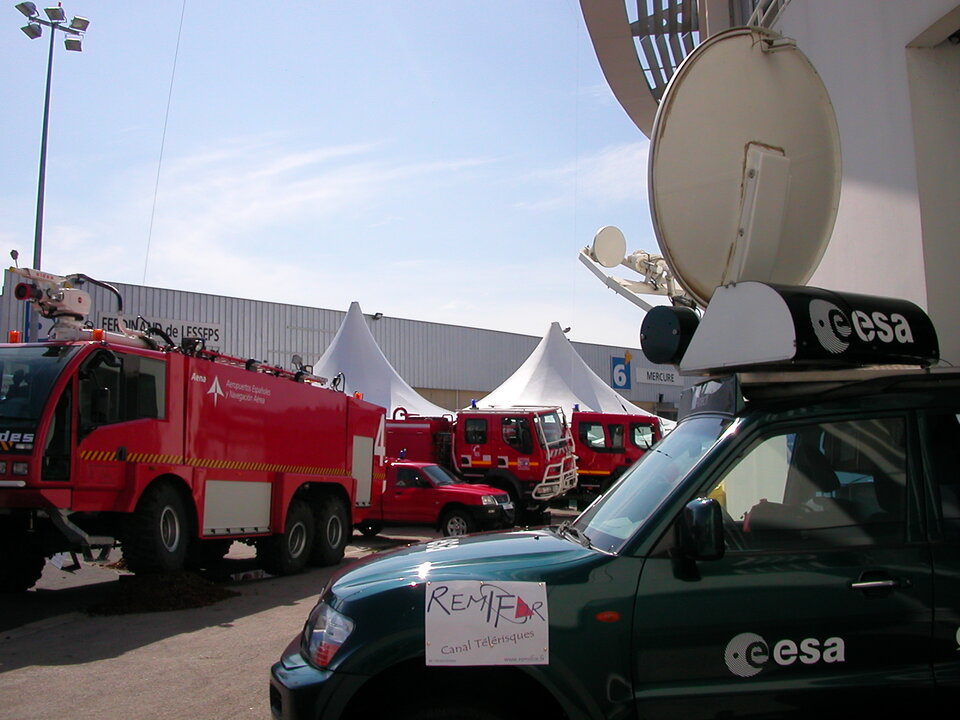
ESRIN’s facilities provide access to telecommunication satellites along with good connections to the internet and academic networks. They consist of:
- 7 Ku-band (two transportable) and one C-band uplink station
- 10 MHz on Sesat 1 satellite capacity
- various equipment, including modems and several DVB-IP satellite gateway
Within ESA these facilities are also used to support a number of Earth Observation projects for the exploitation of satellite data, including calls on the International Charter on Space and Major Disasters. Another example is the Tiger Initiative to use space technology to improve the management of water resources, particularly in Africa.
EGNOS, the European Geostationary Navigation Overlay Service, benefits from the telecommunications service at ESRIN, and support is also being given to pilot projects under an ESA-EC programme designed to reduce the digital divide between developed and developing countries.

