Conclusions
or Where to next?
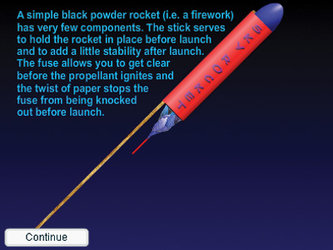
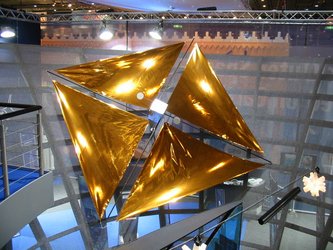
Over the last few pages you have found out about a wide range of propulsion methods, dating from over seven hundred years ago for black powder rockets, through current technology such as ion thrusters and on to ideas currently being researched for future use, such as electric sails. None of the ideas presented are science fiction (although in several cases the technologies found their way on to the pages of science fiction before they ever made it in to space). Importantly though the ideas behind the technologies presented are all within the scope of a pre-university physics course and so you should be able to understand the physics behind the propulsion systems even if you may not yet have the mathematical skills to design a working system.

At some time in your studies you will need to decide on your university courses and the degree that you will study for. By choosing physics, electronics or many of the branches of engineering you will be qualifying yourself to take up a career in space science. If the physical sciences are not your choice there are still many opportunities available in the life sciences, from designing life support systems for space craft through to studying the possibility of life on other planets in our Solar System. Software engineers and computer scientists are also needed to design the complex control systems needed in the space industry, from global positioning systems to training simulations for astronauts. The list of skills needed is seemingly endless.
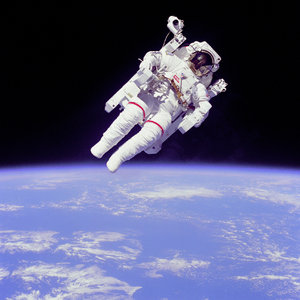
You may never become an astronaut yourself but by choosing a career in the space industry you will be working in space. Even before you take up your career you can become involved by taking part in the ESEO and ESMO student satellite programmes. And how many people can put their hand on their heart and honestly say,