Magnetic sails
Or Tacking in the solar wind

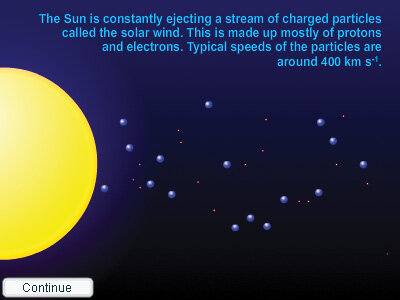
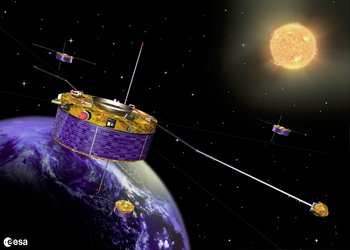
A related technology though, the electric sail, may beat magnetic sails in to space. The solar wind can also be deflected by an electric field which could in turn be produced by an electrical charge. The basic idea is that a thin wire would be given a large positive charge. This would repel the protons from the solar wind and so exert a force on the wire and so on to the spacecraft. The solar wind electrons would of course be attracted to the wires, neutralising the charge. However these carry far less momentum than the protons and the spacecraft can restore the charge to the wires by ejecting a stream of electrons from a cathode just as an ion thruster does.
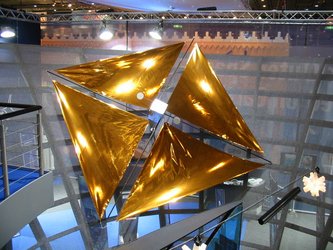
A fan of highly charged wires would effectively create a large sail that would be pushed directly away from the Sun. Unfortunately an electric sail cannot tack very effectively and so the direction of the thrust could not be varied greatly. However as superconductors would not be required the technology and materials needed could be ready long before the first magnetic sails are used.
Animation of a magnetic sail and solar electric sail: