First Galileo satellite touches down in French Guiana
The first Galileo navigation satellite has arrived in Europe’s Spaceport in French Guiana, ready to begin preparations for launch on 20 October.
Packed within its protective, air-conditioned container, the satellite landed at Cayenne Rochambeau Airport aboard an Antonov aircraft at 06:45 local time on Wednesday 7 September, having departed from Thales Alenia Space Italy’s Rome facility, where it was built.
A Thales and ESA team stood ready to receive it, having flown into French Guiana the previous week, along with all the testing and support equipment.
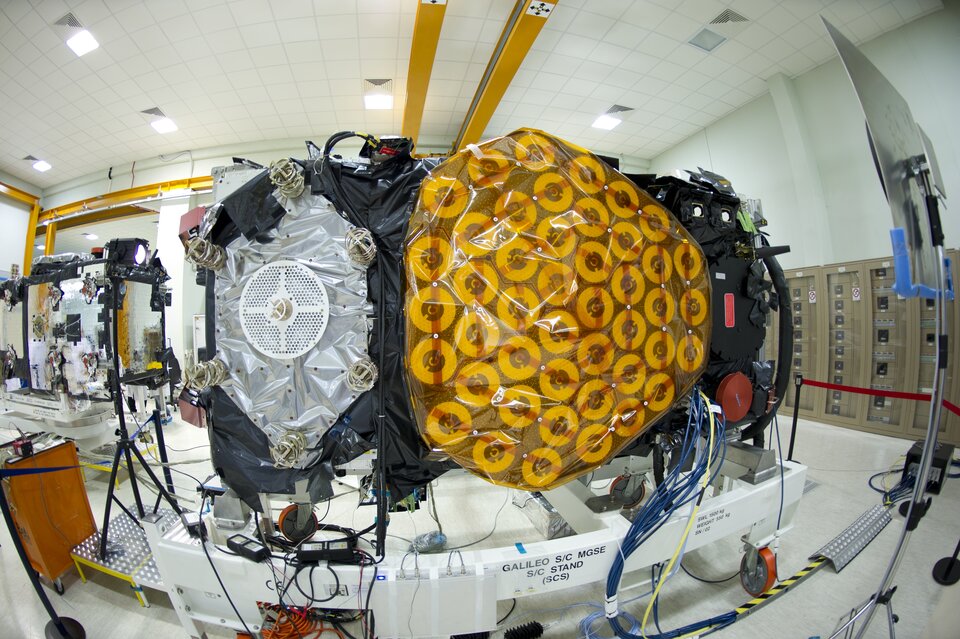
The team loaded the satellite container on a lorry for transport to the Guiana Space Centre, where it arrived at 10:00 local time and was moved into the preparation facility.
It stayed there overnight for the temperature to settle before it was taken out of its container the following morning.
The satellite is due to be launched aboard a Soyuz ST-B vehicle on 20 October, together with a second Galileo that is now being readied for its own flight to French Guiana.

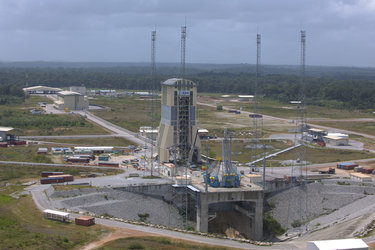
This will be the first launch of Russia’s workhorse Soyuz rocket from French Guiana. It will take place from a new facility 13 km northwest of the Ariane 5 launch site.
Next year, the second pair of satellites will join them in orbits at 23 222 km altitude, proving the design of the Galileo system in advance of the other 26 satellites destined to join them.

The two Soyuz ST-B launchers – the more powerful variant of the two configurations of the upgraded Soyuz-ST launcher operated by Arianespace from the CSG – plus the reignitable Fregat-MT upper stages that will guide the satellites into their final orbits reached French Guiana from Russia in June.
Final assembly of the three-stage Soyuz ST-B and the fuelling of the Fregat-MT upper stage will start next week, well in time for the launch date.
Soyuz from French Guiana

October’s launch will be historic: the first Soyuz launch from a spaceport outside of Baikonur in Kazakhstan or Plesetsk in Russia.
French Guiana is much closer to the equator, so each launch will benefit from Earth’s spin, increasing the maximum payload into geostationary transfer orbit from 1.7 tonnes to 3 tonnes.
As a medium-class launcher, Soyuz will complement Ariane and Vega to increase the flexibility and competitiveness of Europe’s launcher family.
Each three-stage rocket will be assembled horizontally in the traditional Russian manner, transferred to the pad and moved to the vertical so that its payload can be added from above.
The new mobile gantry also protects the satellites and the vehicle from the humid tropical environment.
Galileo
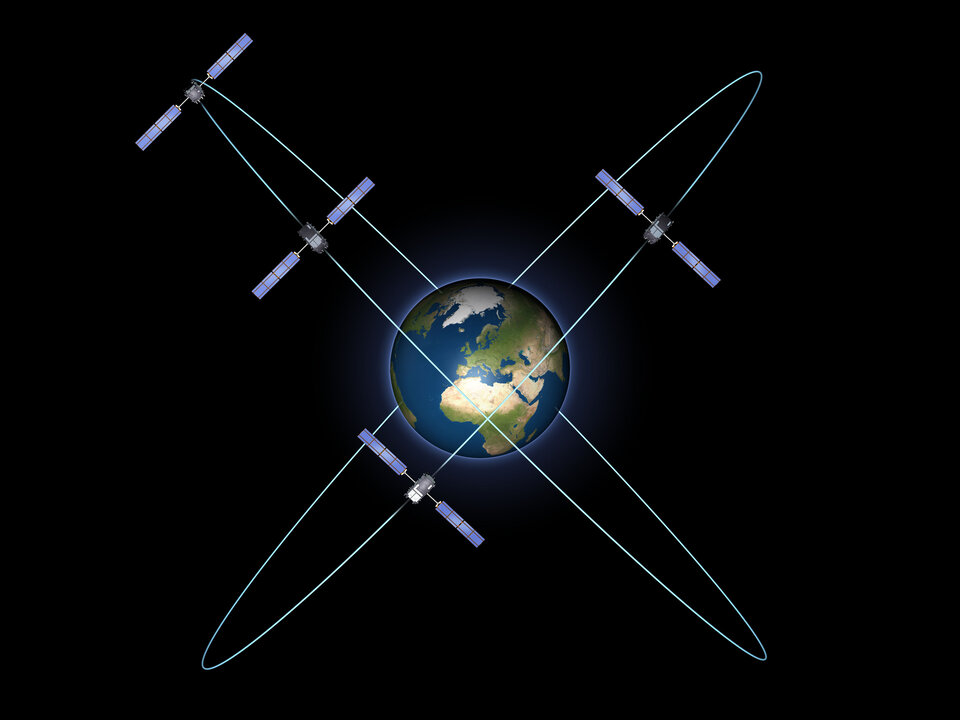
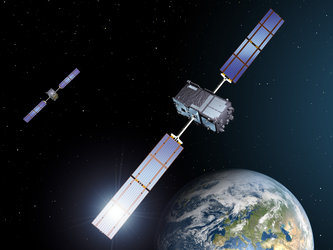
These first four Galileo satellites, built by a consortium led by EADS Astrium Germany, will form the operational nucleus of the full Galileo satnav constellation.
They combine the best atomic clock ever flown for navigation – accurate to one second in three million years – with a powerful transmitter to broadcast precise navigation data worldwide.