ESAHomeEGNOSGalileoApplications
   
Resources
Development FacilitiesNavigation applications helpdesk (email)
Multimedia
Image galleryVideo galleryRSS feedsScreensavers & Wallpapers
Media Centre
Press Releases
Services
CalendarSubscribe Bookmark and Share


News printer friendly page
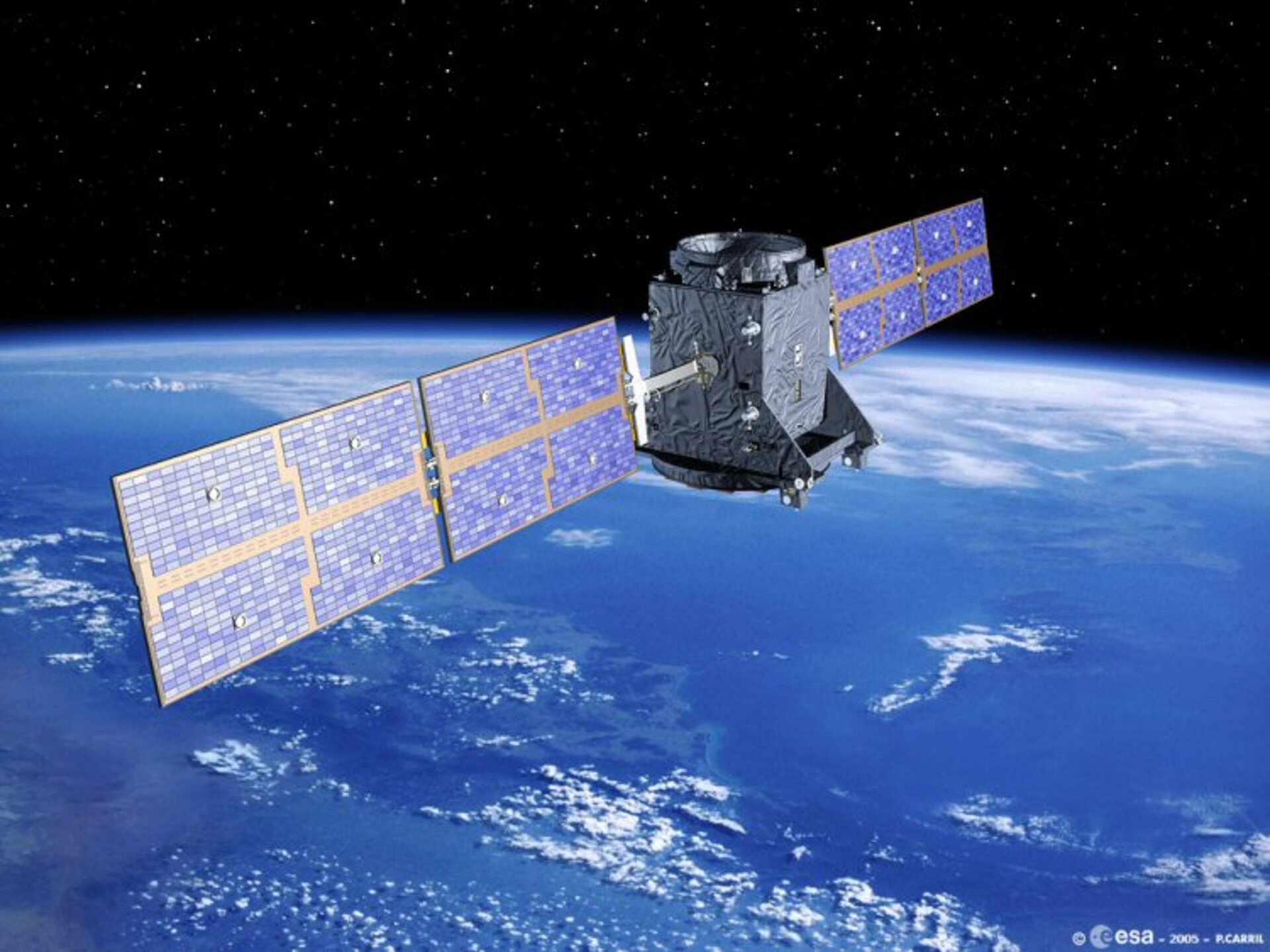
GIOVE-A satellite (artist's impression)
 
GIOVE-A satellite orbit raised
 
18 September 2009
GIOVE-A, the first Galileo test satellite in orbit, has been moved to a higher orbit to ensure that it does not cross the operational Galileo constellation’s orbits for more than 100 years.
 
Launched on 28 December 2005 from Baikonur, with an expected lifetime of two years, GIOVE-A is still in perfect condition after almost four years in space. During that time, it has achieved all of its objectives. GIOVE-A has validated key technologies, such as the new rubidium clocks, and all elements are working largely as expected.
 
GIOVE-A has secured the Galileo frequency filings with the International Telecommunication Union (ITU), facilitated the experimental reception of navigation signals from Medium Earth Orbit (MEO) – using two transmission channels in parallel – and transmitted data to characterise the MEO environment using two different radiation-monitoring instruments.
 
Together with GIOVE-B, a real-time test of the expected Galileo mission performance has been possible, using a worldwide network of sensor stations and a Galileo processing centre at ESA’s European Space Research and Technology Centre (ESTEC), in Noordwijk, the Netherlands.
 
A series of slow manoeuvres was made during July and August, repositioning the satellite 113 km above the operational Galileo orbits. This is standard procedure for navigation satellites, to avoid interference with operational spacecraft. GIOVE-A has resumed its navigation signal transmissions and still has a significant amount of propellant.
 
GIOVE-A was developed, manufactured and operated by Surrey Satellite Technology Ltd (UK).
 
GIOVE-A and GIOVE-B are fully operational, waiting for the launches of the four Galileo In-Orbit Validation satellites, scheduled for late 2010 or early 2011.  



Related links
Galileo website (European Commission)European GNSS Supervisory Authority (GSA)SSTL


   Copyright 2000 - 2010 © European Space Agency. All rights reserved.