Exosat overview
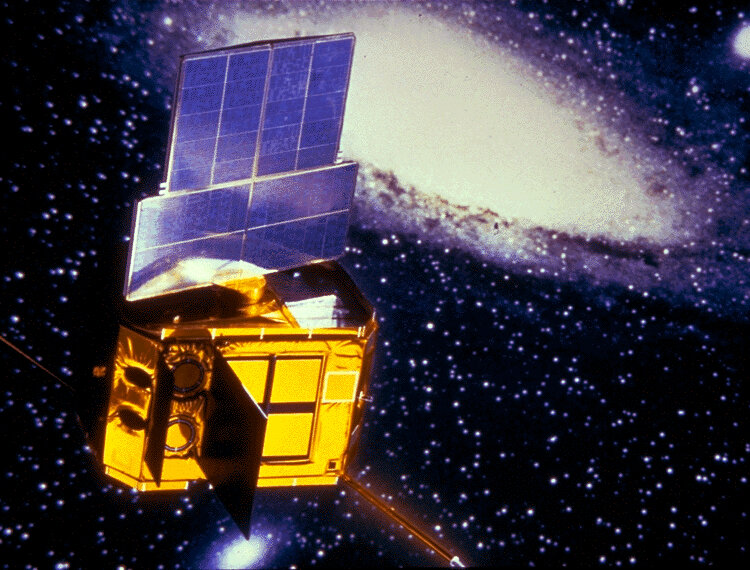
Name: Exosat (European X-ray Observatory SATellite)
Launched: 26 May 1983
Status: Completed (1986)
Objective
Designed to observe and detect high-energy sources, Exosat was the first ESA mission to study the Universe at X-ray wavelengths, and one of the first uncrewed satellites to feature an onboard computer.
Mission
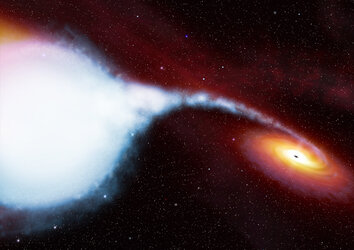
Exosat was the first ESA mission entirely devoted to study the Universe at X-ray wavelengths. It observed a wide variety of objects, including active galactic nuclei, X-ray binary systems, supernova remnants, and clusters of galaxies.
What's special?
The results that Exosat obtained were very useful to scientists, and led to several new discoveries. The most important of these was probably the discovery of quasi-periodic oscillations in low-mass X-ray binary stars and X-ray pulsars, a phenomenon unknown before Exosat. All the data that Exosat retrieved are still available for study, and are still leading to new discoveries.
The Exosat project was also the forerunner of later X-ray telescopes such as on ESA’s XMM-Newton and NASA’s Chandra missions. These satellites work on very similar principles to Exosat, and due to new technology, are able to take more accurate and insightful readings. The world of X-ray observation is constantly expanding, and there are still many mysteries to solve, but Exosat allowed for a greater understanding of how much of this world works.
Spacecraft
Exosat’s payload consisted of three instruments:
- Two low-energy telescopes
- The medium-energy proportional counter
- A gas scintillation proportional counter
Exosat was also unusual at the time because it featured an on-board computer. This not only processed much of the data before returning it to Earth, but also allowed scientists to alter the on-board data handling programs after launch. Exosat was much more flexible because of this. Scientists now had more freedom to investigate results that had not been expected at the time of the launch.
Journey
By placing the satellite in an elliptical orbit, scientists were able to operate the instruments for 76 hours of each revolution, allowing long continuous observations. Exosat was actively making observations until April 1986 but the natural decay of the orbit caused the satellite to enter the Earth’s atmosphere on 6 May 1986.
History
The Exosat mission was approved in 1973, when the intention was to take very simple readings of X-ray sources - at that time a relatively small number of positions were known.
By 1977, when the mission was funded, missions such as Uhuru, Copernicus, Ariel V, ANS, SAS 3 and HEAO 1 had changed the priority, since positions were being determined much more accurately. It was decided to include X-ray imaging.
X-ray imager and X-ray telescopes were also being developed by then, for example, for a few other missions like NASA’s Einstein Observatory.
Partnerships
Exosat's instruments were funded and managed by ESA and scientific institutes from the United Kingdom, the Netherlands, Germany, and Italy.
Development of the Exosat archive and database system has involved ESA, NASA, and the Institute of Astronomy at Cambridge, United Kingdom. However databases continue to be developed by other groups of researchers.