Why do we observe gamma rays?
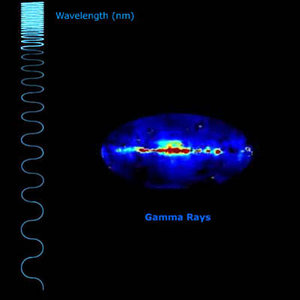
Light, or electromagnetic radiation, comes in many forms. There are radio waves, microwaves, infrared light, visible light, ultraviolet light, X-rays and gamma rays, all of which form what is known as the 'electromagnetic spectrum'.

Oddly enough, visible light – to which human eyes are sensitive – is the smallest band of radiation. To our eyes, what we see seems like the entire Universe; yet there is much more out there.
Different types of objects in the Universe emit different types of radiation. Our Sun is a rather obvious source of visible light. But it also glows in radio waves, infrared, ultraviolet light and X-rays. Some objects emit only radio waves or only X-rays. This is why it is important to study the Universe with various kinds of space observatories.
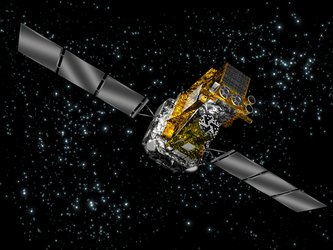
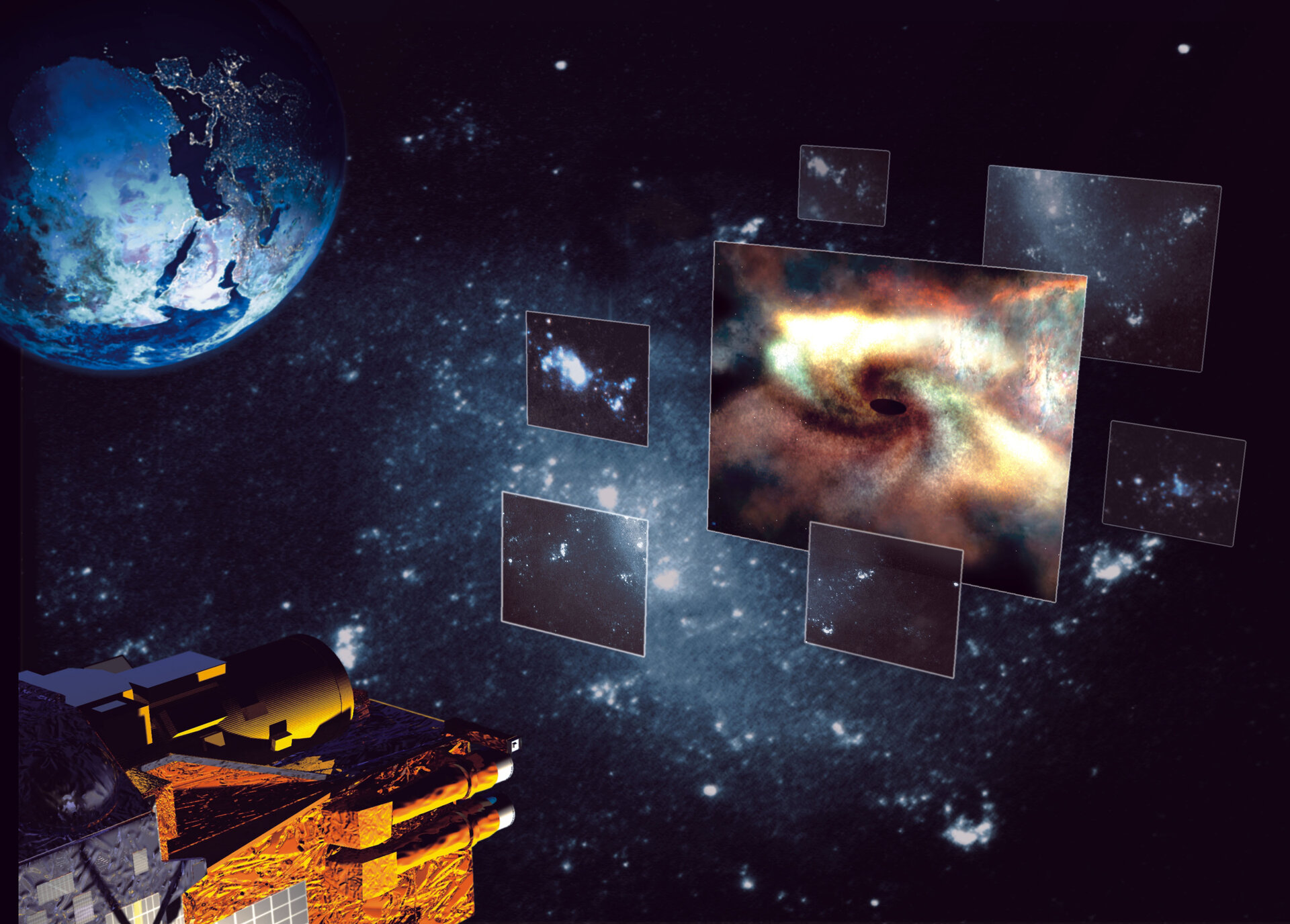
For 22 years ESA’s Integral satellite looked at the Universe, mainly concentrating on gamma rays. These are produced by spectacular events in the Universe such as stars exploding, matter falling into black holes and celestial objects colliding. By collecting gamma rays, astronomers are able to see these violent events and can judge exactly how they shape the Universe.

For example, some chemical elements are created during explosions in which individual stars blow themselves to pieces. The new chemicals leave gamma-ray fingerprints in the fireball for astronomers to find. By studying these, Integral is piecing together how these chemicals are created.
Integral also studied the mysterious blasts known as gamma-ray bursts. These explode at random in distant realms of the Universe and are probably caused by the collision of neutron stars (the hearts of dead stars) or may be the explosion of very massive stars.

Integral was designed to capture not just gamma rays but also X-rays and visible light. This complementary data helps astronomers identify the celestial object that is releasing the gamma rays and allow it to be more fully analysed.
In 1999, ESA launched XMM-Newton, which is looking at the Universe in X-ray wavelengths. In May 2009, ESA launched Herschel to observe the infrared, and Planck to observe the microwave region of the spectrum.