16 June
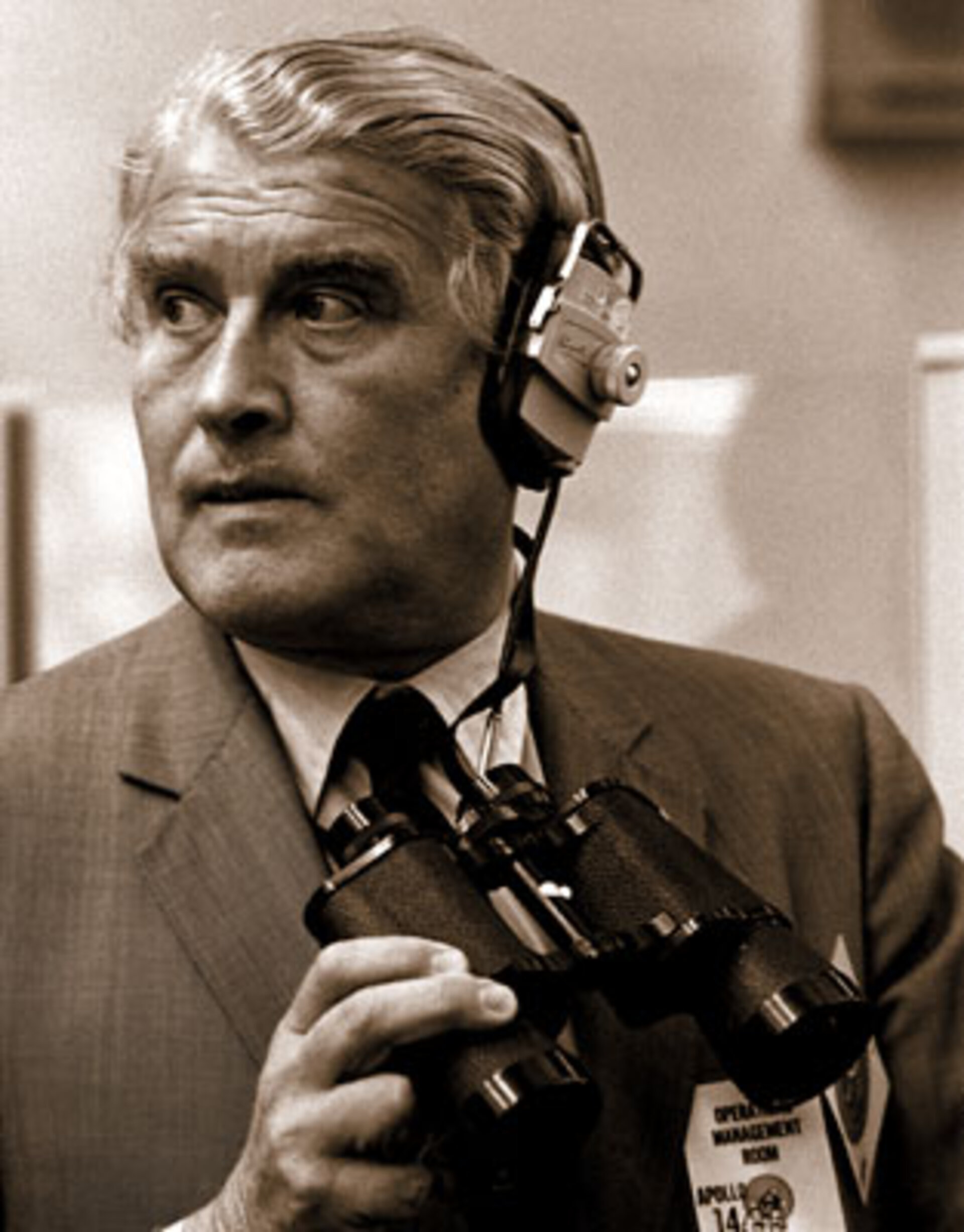
1977: On 16 June 1977, Wernher von Braun died.
Born in 1912, Dr Wernher von Braun was a German-born engineer who played a prominent role in all aspects of rocketry and space exploration, first in Germany and, after World War II, in the United States.
When he was 19, von Braun joined the Verein für Raumschiffahrt (VfR), a group of German scientists interested in developing ballistic rocketry. In 1936, von Braun was involved with Germany’s military rocket development programme, where was forced to build weapons for the Third Reich. When the first V-2 hit London he remarked to some of his colleagues: "The rocket worked perfectly except for landing on the wrong planet."
In May 1945, the German rocket team surrendered to US forces. In 1950, the team moved to Huntsville, Alabama where he and his colleagues became known as the 'Huntsville gang' and started to develop the US satellite programme.
Von Braun’s team formed the nucleus of the NASA Marshall Space Center (also in Huntsville) from 1960 onwards. Von Braun continued the development of larger rockets - the Saturn I, the largest rocket at the time, the Saturn IB, the rocket that launched the Apollo spacecraft and the Saturn V, the rocket that put men on the Moon.
Von Braun received the National Medal of Science from President Gerald Ford in 1977. Wernher von Braun was a visionary in his time and without him, the Americans probably would not have made it to the Moon in the short time they did.