

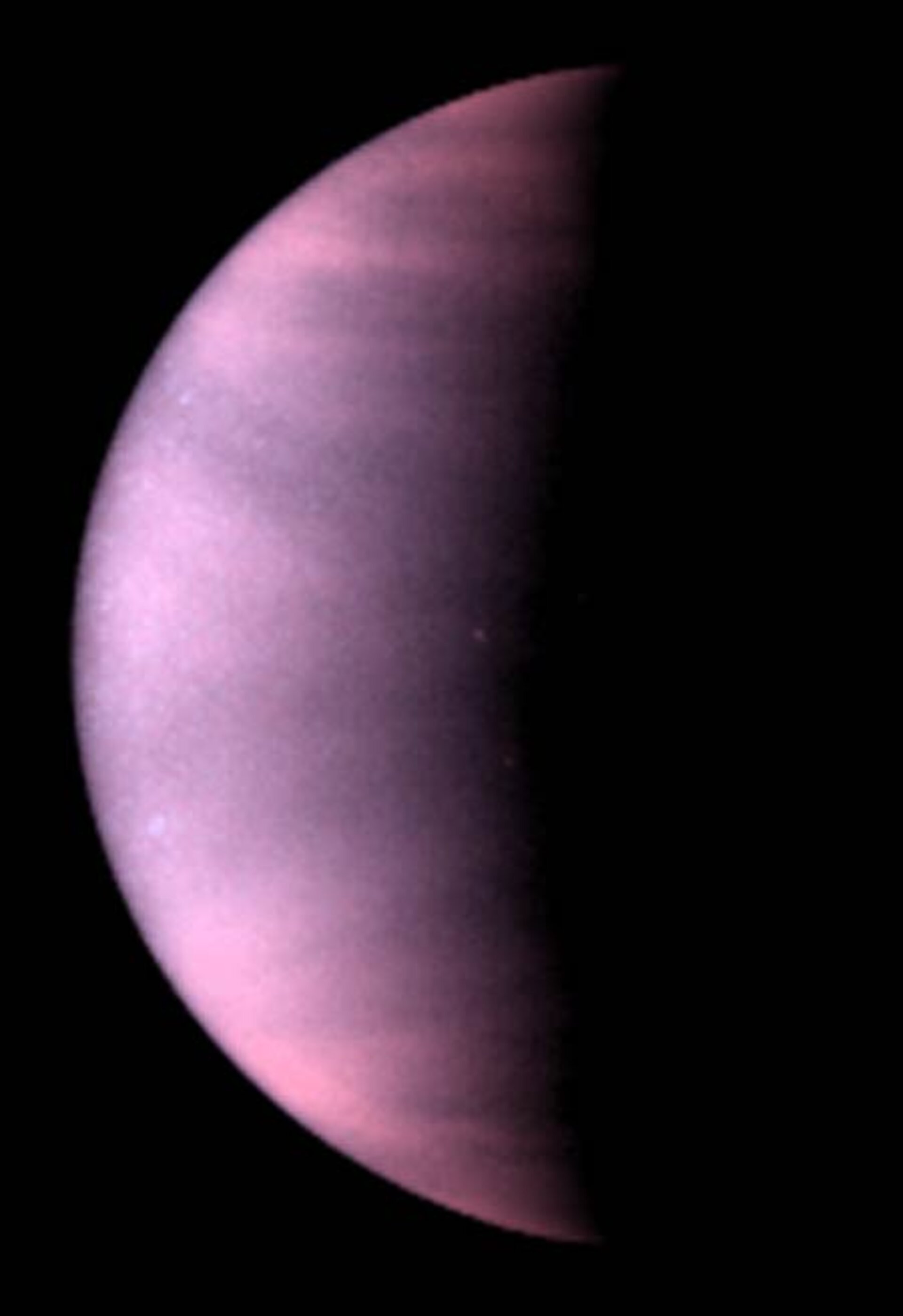
Observing the Universe in ultraviolet light
Hot gases called plasmas produce ultraviolet light most efficiently. There are a lot of places in the Universe where such plasmas are created, for example in the atmosphere of the Sun. Ultraviolet astronomy is the science that studies this region.
The Sun is an active producer of ultraviolet light, as many sufferers of sunburn will know. Mostly it comes from the gaseous region surrounding the Sun, known as the chromosphere, the transition zone and the corona. However, ultraviolet light can also be produced by solar flares and other transitory events, making the quantity of ultraviolet radiation released by the Sun vary much more than its steady output of visible light.
Elsewhere within the Solar System, ultraviolet light can be a useful tool. Fast- moving particles released by the Sun cause ultraviolet aurorae when they strike planetary atmospheres. The behaviour of gas released by comets can also be effectively monitored using ultraviolet wavelengths.
In the wider Universe, ultraviolet provides some of the best insights into the behaviour of gases in the interstellar space, showing regions where dust has absorbed the interstellar gas to form icy coats around the individual grains.
The largest stars emit most of their radiation at ultraviolet wavelengths and it is this radiation that excites gas atoms in emission nebulae to give off visible light. Since the largest stars are the shortest lived, with a maximum lifespan of a few million years, collecting the ultraviolet radiation being emitted by a distant galaxy is a good way to measure how much star formation is taking place within it.
Many binary star systems emit ultraviolet light if one star grows large enough to spill material onto the other. During the transfer of matter, the gas is often heated enough to give off ultraviolet rays.
The gaseous debris from ancient supernovae shows up in ultraviolet. Ultraviolet astronomy has shown that the Solar System resides in an enormous cavity known as the 'local bubble'. We think this was created by a supernova around 4500 million years ago. Perhaps it was the same one whose shock waves are believed to have begun the formation of our Solar System, before sweeping the region largely clear of matter.