Hubble science highlights
Expanding the frontiers of the visible Universe
Hubble’s unprecedented capabilities made it one of the most powerful science instruments ever conceived. Since it was launched on 24 April 1990, its discoveries have revolutionised nearly all areas of astronomy, from planetary science to cosmology. And its pictures are unmistakably out of this world.
With more than 19,000 peer-reviewed scientific publications attributed to its data, Hubble is by some measures the most productive scientific instrument ever built. Below are just a few highlights.

- The Hubble Deep Fields: Prior to Webb, Hubble had observed the furthest away galaxies and the most ancient starlight ever seen by humankind
- Age and size of the Universe: Hubble has calculated the age of the cosmos to be 13.8 billion years and discovered the Universe is expanding at an ever faster rate
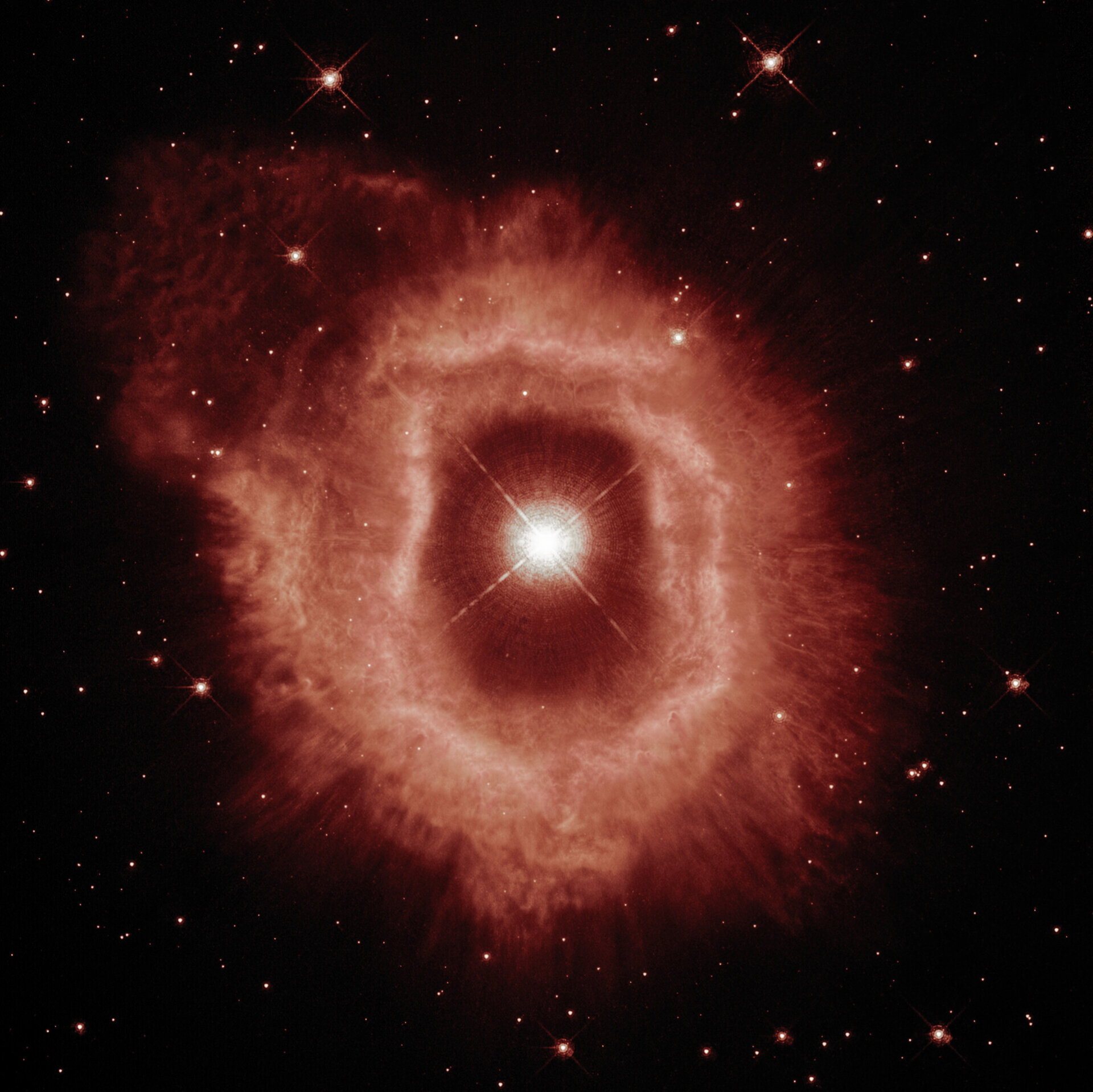
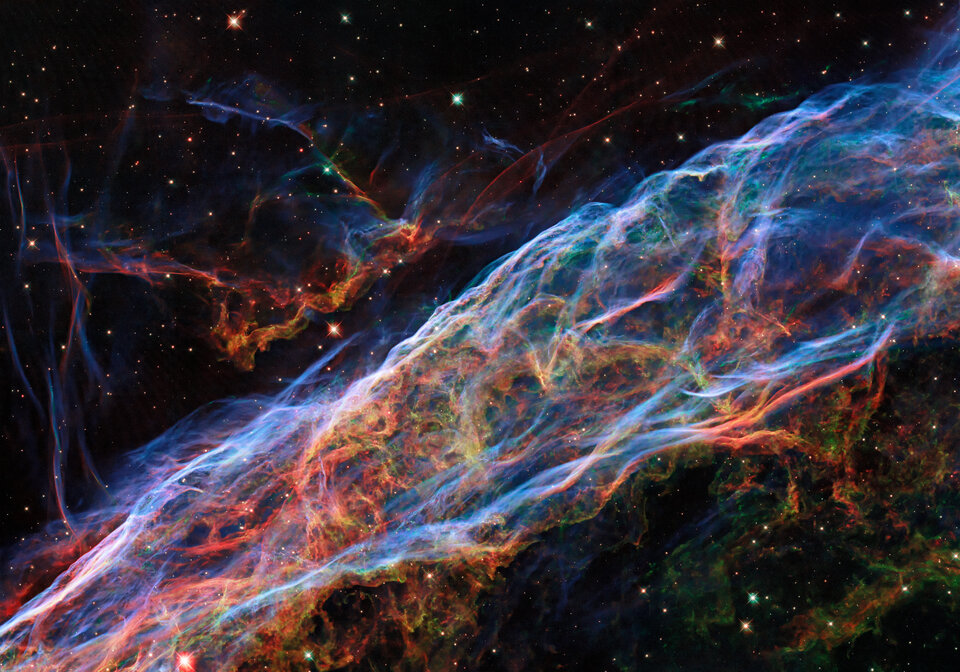
- The lives of stars: Hubble has revolutionised our understanding of the birth and death of stars
- The solar neighbourhood: Hubble has taught us about planets, asteroids and comets in our own Solar System
- Exoplanets and proto-planetary discs: Hubble made the first ever image of an exoplanet in visible light, and spotted planetary systems as they form
- Black Holes, Quasars, and Active Galaxies: Hubble found black holes at the heart of all large galaxies
- Formation of stars: Hubble observes stars as they form from huge dust clouds
- Composition of the Universe: Hubble studied what the Universe is made of and made some significant findings, including the discovery of the long-sought signature of helium in the early Universe – an important piece of supporting evidence for the Big Bang theory.
- Gravitational lenses: Hubble's sensitivity and high resolution allow it to see faint and distant gravitational lenses that cannot be detected with ground-based telescopes whose images are blurred by the Earth's atmosphere.
- Multi-messenger astronomy: Visible detections of gravitational wave sources.


30 Years of Science with the Hubble Space Telescope (2020)
Access the video
Access the video