

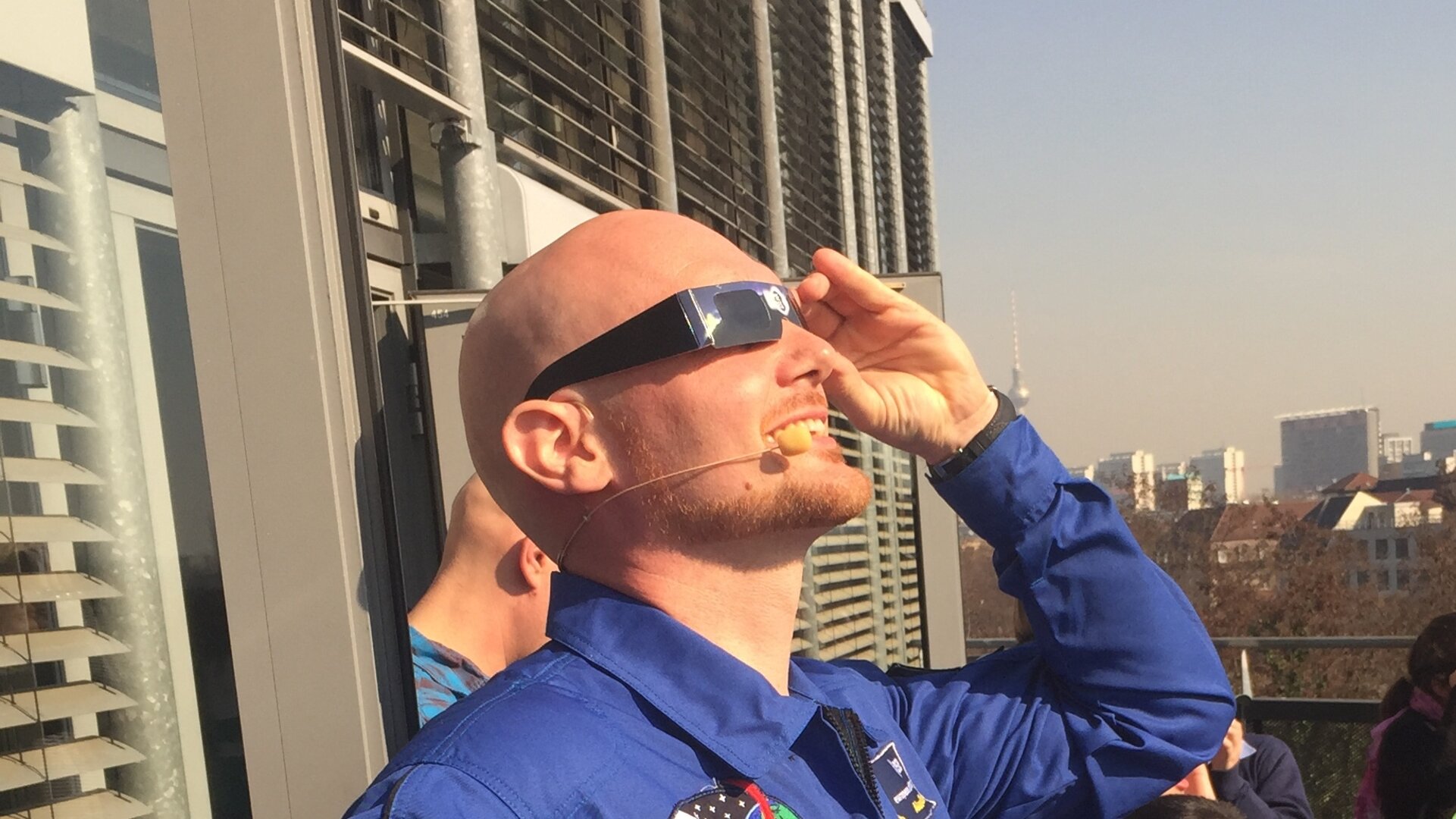
Safety tips for observing the Sun
If you are thinking of viewing the Sun, your first concern should always be eye safety. Serious eye damage can result from even a brief glimpse of our nearest star.
Never look directly at the Sun with the naked eye or with any unfiltered optical device, such as binoculars or a telescope.

Galileo looked at the Sun through a telescope 400 years ago and suffered permanent eye damage. If it happened to the great Galileo, it can happen to you!
One safe way to observe the Sun is to project an image of it through a telescope or binoculars onto a white screen or any other plain surface. If you do this with a telescope, be sure that any small finder telescope is capped. If you're using binoculars, keep the cover on one of the two tubes.
On the screen you project on, the disc of the Sun should appear as a bright circle of light. Adjust the distance between the screen and the telescope until the disk is about the size of a small plate. The image will probably be blurred; focus your telescope until the circle becomes sharp. Using this method you can see considerable detail, including sunspots.
During a solar eclipse, you should still be wary of looking at the Sun directly. Unless the Sun is fully eclipsed, you will need an appropriate type of welder’s glass or special Mylar glasses to safely observe it. Never use normal sunglasses!

