2 January


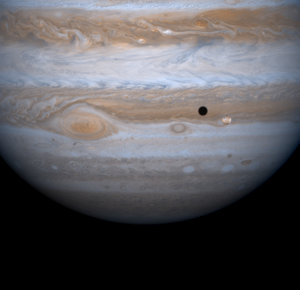
 |  | Elara, a moon of Jupiter
| | 1905: On 2 January 1905, Argentinian astronomer Charles Perrine discovered Elara, then the twelfth of Jupiter's known satellites. It orbits 11 737 000 kilometres from Jupiter and has a diameter of 76 kilometres.
Leda, Himalia, Lysithea and Elara may be the remnants of a single asteroid that was captured by Jupiter and broken up. In mythology, Elara was the mother by Zeus of the giant Tityus.
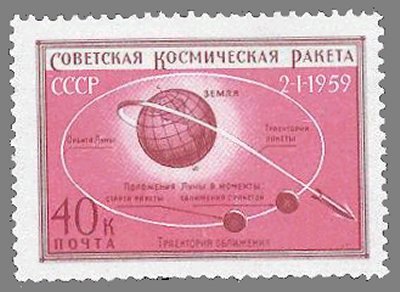
 |  | | | Lunik I stamp
| 1959: On 2 January 1959, the USSR launched Lunik I in an attempt to hit the Moon. The spacecraft missed the Moon and was flung out into space by the Moon's gravity. It became the first man-made object to achieve an orbit around the Sun. Last update: 6 January 2005

 |  |  Today in space history

| | | 1 January (http://www.esa.int/esaSC/SEM1ABXLDMD_index_0.html) |  | | | 31 December (http://www.esa.int/esaSC/SEMO9BXLDMD_index_0.html) |  | | | 30 December (http://www.esa.int/esaSC/SEMD9BXLDMD_index_0.html) |  | | | 29 December (http://www.esa.int/esaSC/SEMQ8BXLDMD_index_0.html) |  | | | 28 December (http://www.esa.int/esaSC/SEMF8BXLDMD_index_0.html) |  | | | 27 December (http://www.esa.int/esaSC/SEM48BXLDMD_index_0.html) |  | | | 26 December (http://www.esa.int/esaSC/SEMI7BXLDMD_index_0.html) |  |  Related links

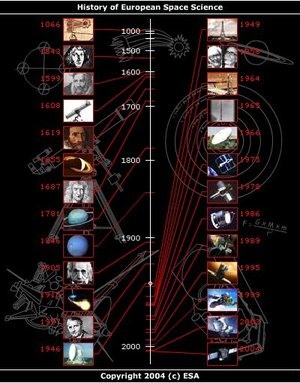
| | | A history of European space science (http://www.esa.int/esaSC/SEMJCC67ESD_index_0.html) |  |

|