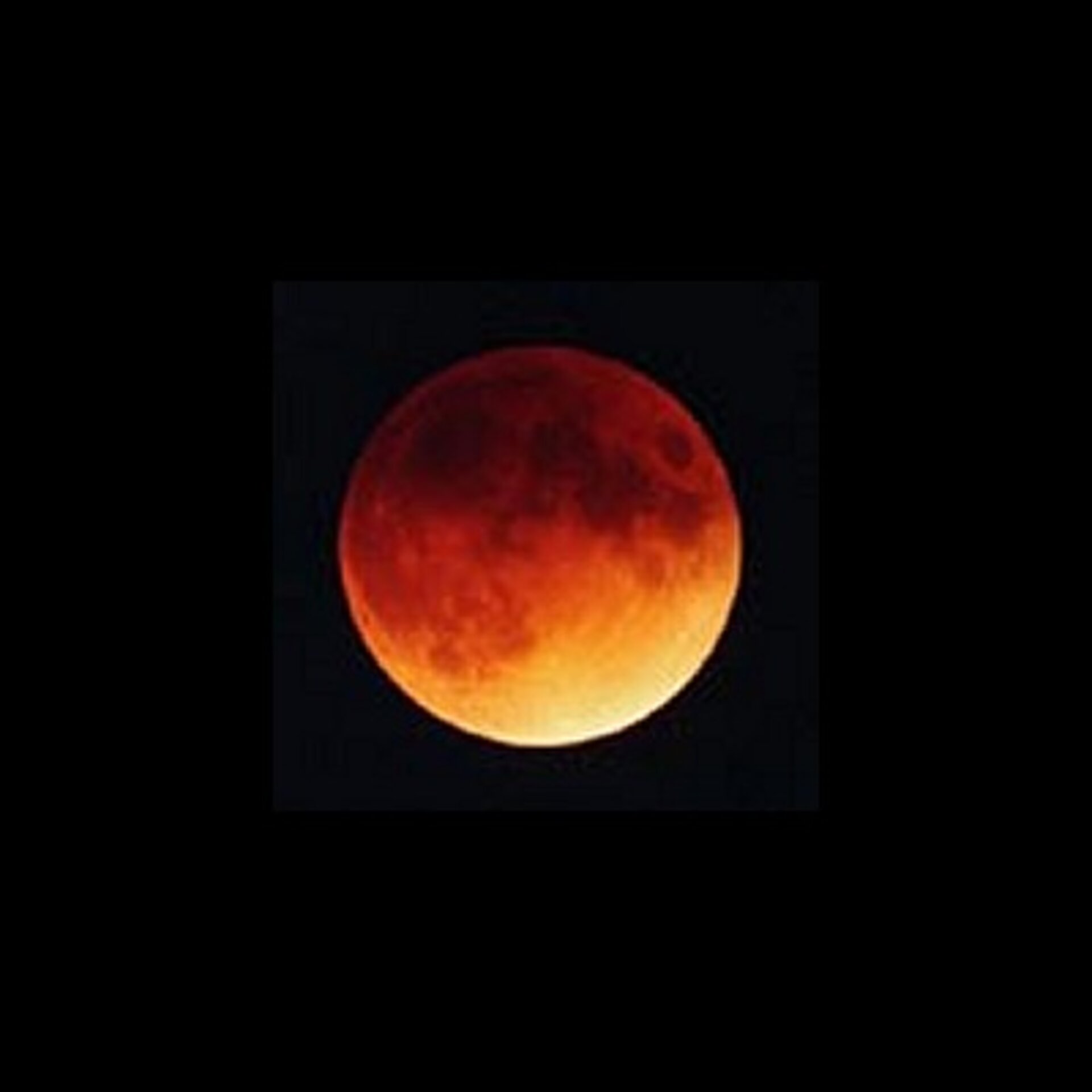
Bad moon rising...
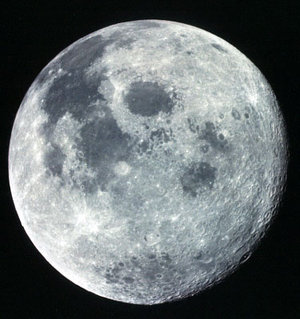
In folklore, October's full Moon is often called the 'Hunter's Moon' or the 'Blood Moon', getting its name from the days when ancient hunters tracked their prey by autumn moonlight, stockpiling food for the coming winter.
In the early hours of Thursday morning, 28 October 2004, the full Moon will pass through the Earth's shadow, producing a total lunar eclipse for skywatchers everywhere but the Far East and Australia.
A total lunar eclipse occurs when the Sun, Earth and Moon form a near-straight line in space, so that the full Moon passes through Earth’s shadow. Unlike a solar eclipse, which requires special equipment to observe safely, you can watch a lunar eclipse with unaided eyes.
The most impressive part starts when the Moon's leading edge first enters the main shadow, or umbra, and the partial eclipse begins. Over the next hour or so, the Moon will slip into darkness. The total eclipse begins when the Moon is fully inside the umbra, but it won't be completely blacked out.
The totally eclipsed Moon should still be visible as a dark gray or brown-red disk in the sky, and this colour is caused by sunlight scattered in our atmosphere. Its brightness depends on the amount of dust in the Earth's upper atmosphere at the time, which influences how much sunlight filters through.
Timetable for eclipse, 28 October 2004
03:14 Moon enters Earth umbra
04:23 Total eclipse starts
05:45 Total eclipse ends
06:54 Moon leaves Earth umbra
Time is CEST, Central European Summer Time
Europe goes to the Moon with SMART-1

Earth’s natural satellite is the target for SMART-1, ESA’s mission to continue the exploration of Moon. Launched in 2003, SMART-1 is testing pioneering technologies on its 18-month trip to our nearest neighbour in the Solar System, including a solar-electric ‘ion’ engine as its main propulsion.