ESAHome
   
Space Science
About Space ScienceESA's 'Cosmic Vision'Science & Technology in-depth
Multimedia
Science imagesScience videosAnimationsDownloadsSounds from space
Media centre
Press ReleasesPress kitsESA Television
Resources
Reference sectionGlossaryFAQs
Science missions
Services
HelpLegal disclaimerCommentsSubscribe
Follow us
RSS feedsESA Sci on Twitter


Bookmark and Share


 printer friendly page
Typical orbits for inner Solar System asteroids
15 April
 
2002: On 15 April 2002, the European Space Agency reported that two asteroids had passed close by Earth, at distances of 1.2 and 3 times the distance to the Moon.

By monitoring known asteroids, astronomers can predict which may collide with Earth. ESA continues to study ways in which its missions can assist in monitoring unseen but potentially hazardous asteroids.

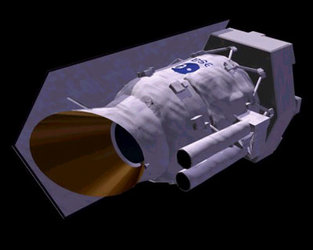
A discovery, made using data from ESA's Infrared Space Observatory (ISO), showed that there could be nearly two million asteroids larger than one kilometre in the main asteroid belt, between Mars and Jupiter.

When the asteroids remain in the main-belt, they pose no danger to Earth. However, they can be thrown into different orbits by collisions with other asteroids or by the influence of Jupiter's gravitational field. If their new orbits cross the Earth's orbit, they could one day collide with our planet.


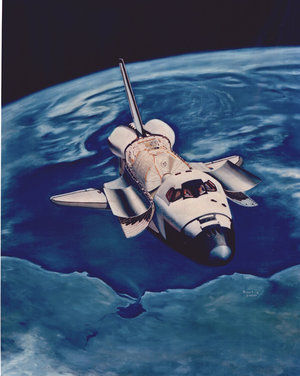
 
 
STS-82 EVA to service Hubble
Hubble servicing mission
1990: On 15 April 1990, the NASA/ESA Hubble Space Telescope was deployed from the Space Shuttle Discovery into an orbit over 500 kilometres above Earth.

It was the first major orbiting observatory, carrying a large primary mirror along with several instrument packages and cameras able to record various parts of the electromagnetic spectrum.

There were initial problems due to a design flaw in the mirror, but a correcting optics were installed in December 1993.


Today in space history
14 April13 April12 April11 April10 April9 April8 April
Related links
Gaia overviewHubble overviewISO overviewEuropean Space Agency to probe asteroid blind spot


   Copyright 2000 - 2012 © European Space Agency. All rights reserved.