ESAHome
   
Space Science
About Space ScienceESA's 'Cosmic Vision'Science & Technology in-depth
Multimedia
Science imagesScience videosAnimationsDownloadsSounds from space
Media centre
Press ReleasesPress kitsESA Television
Resources
Reference sectionGlossaryFAQs
Science missions
Services
HelpLegal disclaimerCommentsSubscribe
Follow us
RSS feedsESA Sci on Twitter


Bookmark and Share


Article Images
Press images - page 1
 
19 September 2007


Herschel
Download:
 HI-RES JPEG (Size: 4522 kb)
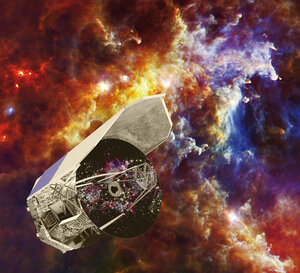
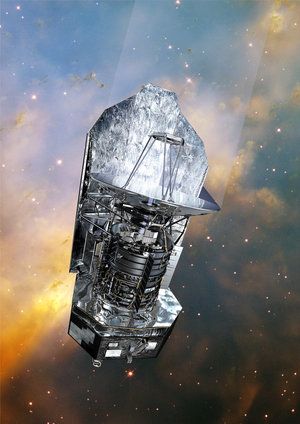
Herschel will have an unprecedented view of the cold universe, bridging the gap in the spectrum between what can be observed from ground and earlier space missions of this kind. Infrared radiation can penetrate the gas and dust clouds that hide objects from optical telescopes, looking deep into star-forming regions, galactic centres and planetary systems. Cooler objects, such as tiny stars and molecular clouds, even galaxies enshrouded in dust, barely emitting optical light, are visible in the infrared. Observing in the infrared provides us with a complementary view of the universe.

Credits: ESA (Image by AOES Medialab); background: Hubble Space Telescope, NASA/ ESA/ STScI
 
 
Herschel operating at the second Lagrange point (L2). It points to a target object for observations, then slews to target another object.

Credits: ESA (animation by AOES Medialab)
 
 
Herschel
Download:
 HI-RES JPEG (Size: 3111 kb)
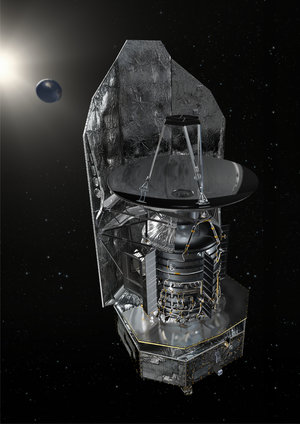
Herschel will carry the largest space telescope ever launched to date. From a point in space called the 2nd Lagrangian Point (or L2), its 3.5-m diameter mirror will collect long-wavelength infrared radiation from some of the coolest and most distant objects in the Universe. Herschel will be the only space observatory to cover the range from far-infrared to sub-millimetre wavelengths. The mission is to be launched in July 2008, in tandem with ESA's Planck spacecraft, by an Ariane-5 rocket from Europe's Spaceport in Kourou (French Guiana).

Credits: ESA (Image by AOES Medialab)
 
 
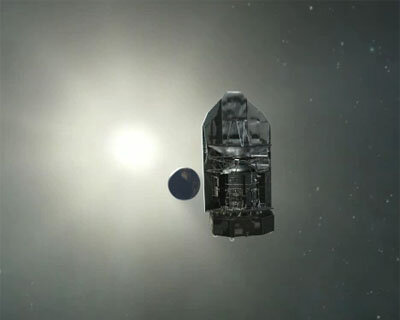
Herschel on its way to its final orbit at the second Lagrange point (L2). Sun, Earth and the spacecraft are aligned.

Credits: ESA/AOES Medialab
 
 
Inside Herschel
Download:
 HI-RES JPEG (Size: 3544 kb)
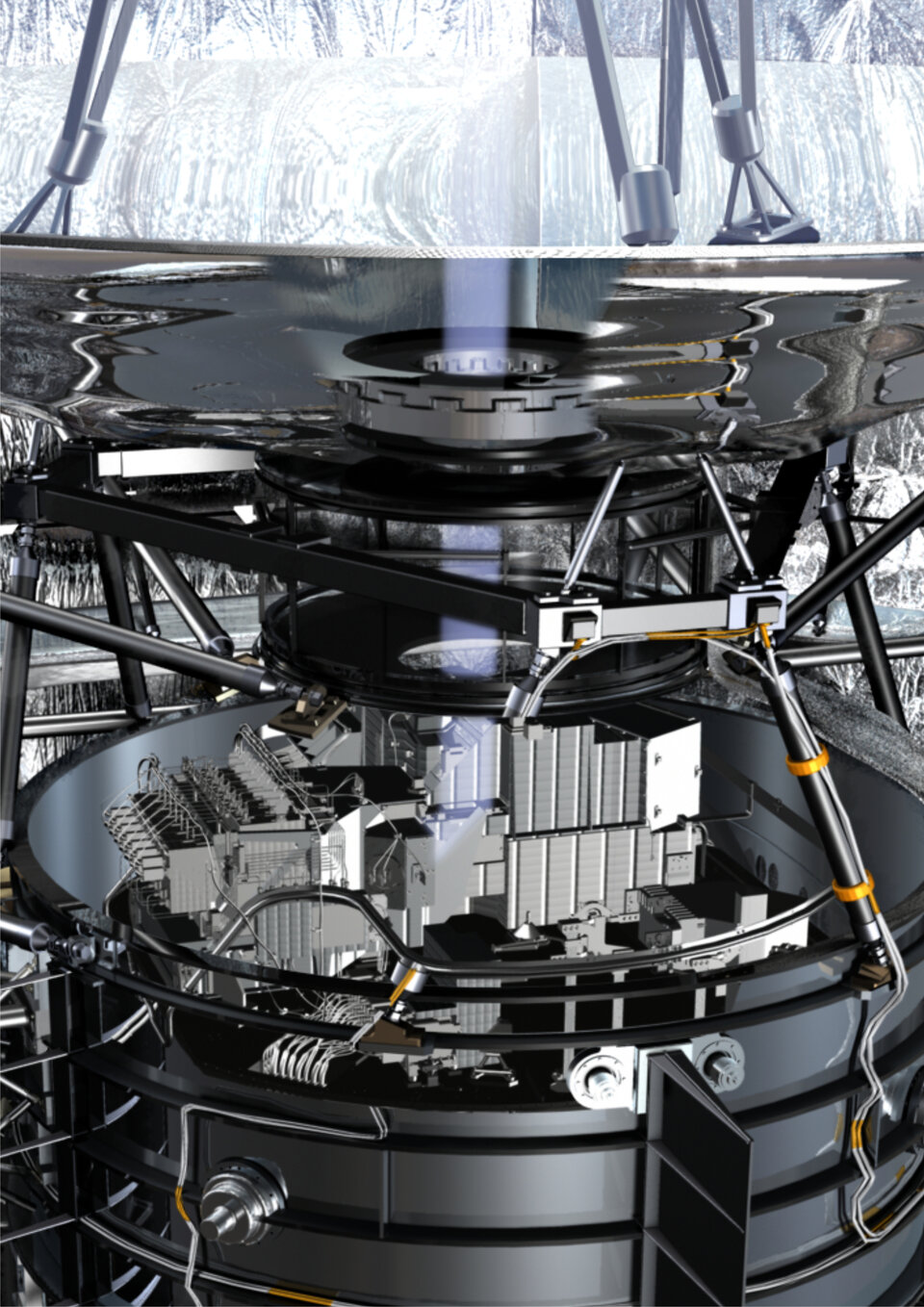
This picture shows an artist's impression of the view inside Herschel.

To protect the sensitive instruments from heat generated during operations and to achieve its challenging objectives, the satellite must operate at very low temperatures. This is why the spacecraft’s brain – or its payload module – hosts a cryostat, a cryogenic module inside which the cold components of the scientific instruments are mounted.

Inside the cryostat the sensitive instrument detectors are cooled down to about -273 ºC (0.3 degrees above absolute zero). This low temperature is achieved using superfluid helium (at about -271 ºC) and an additional cooling stage inside the focal plane units.

The service module is the spacecraft’s heart, which keeps the spacecraft going by caring for all its vital functions. It also carries the ‘warm’ components of the instruments – those that do not require cooling with the cryostat.

Credits: ESA (Image by AOES Medialab)


Herschel in space, close up on its mirror.

Credits: ESA (Animation by AOES Medialab)
 
 
Latest Herschel multimedia
ESA multimedia gallery
Related links
HerschelHerschel fact sheetISO overviewPlanck overview
For the media
‘Heart’ of Herschel to be presented to mediaHerschel media pagePress images - page 2Press images - page 3
Related articles
Herschel's heart and brain mated


   Copyright 2000 - 2012 © European Space Agency. All rights reserved.