Gaia
ESA's billion star surveyor

The mission
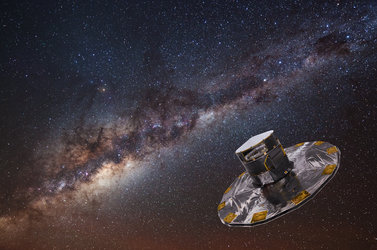
From 27 July 2014 to 15 January 2025, Gaia has made more than three trillion observations of two billion stars and other objects throughout our Milky Way galaxy and beyond, mapping their motions, luminosity, temperature and composition. Gaia's extraordinarily precise three-dimensional map will provide the data needed to tackle an enormous range of important questions related to the origin, structure and evolutionary history of our galaxy.
- Launch: 19 December 2013
- Orbit: L2 Lagrange point
- End of science observations: 15 January 2025
-
Upcoming data releases:
Data Release 4 (based on 66 months of data): expected December 2026
Data Release 5 (based on all mission data): not before the end of 2030 -
Previous data releases:
Data Release 1: 14 September 2016
Data Release 2: 25 April 2018
Early Data Release 3: 3 December 2020
Data Release 3: 13 June 2022
Focused Product Release: 10 October 2023
- 1 billion pixel camera
- 10 m sunshield
- >2000 million objects
Latest




-
ImageScience & Exploration
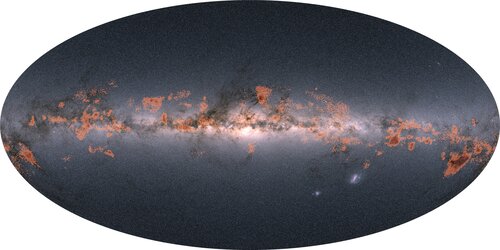
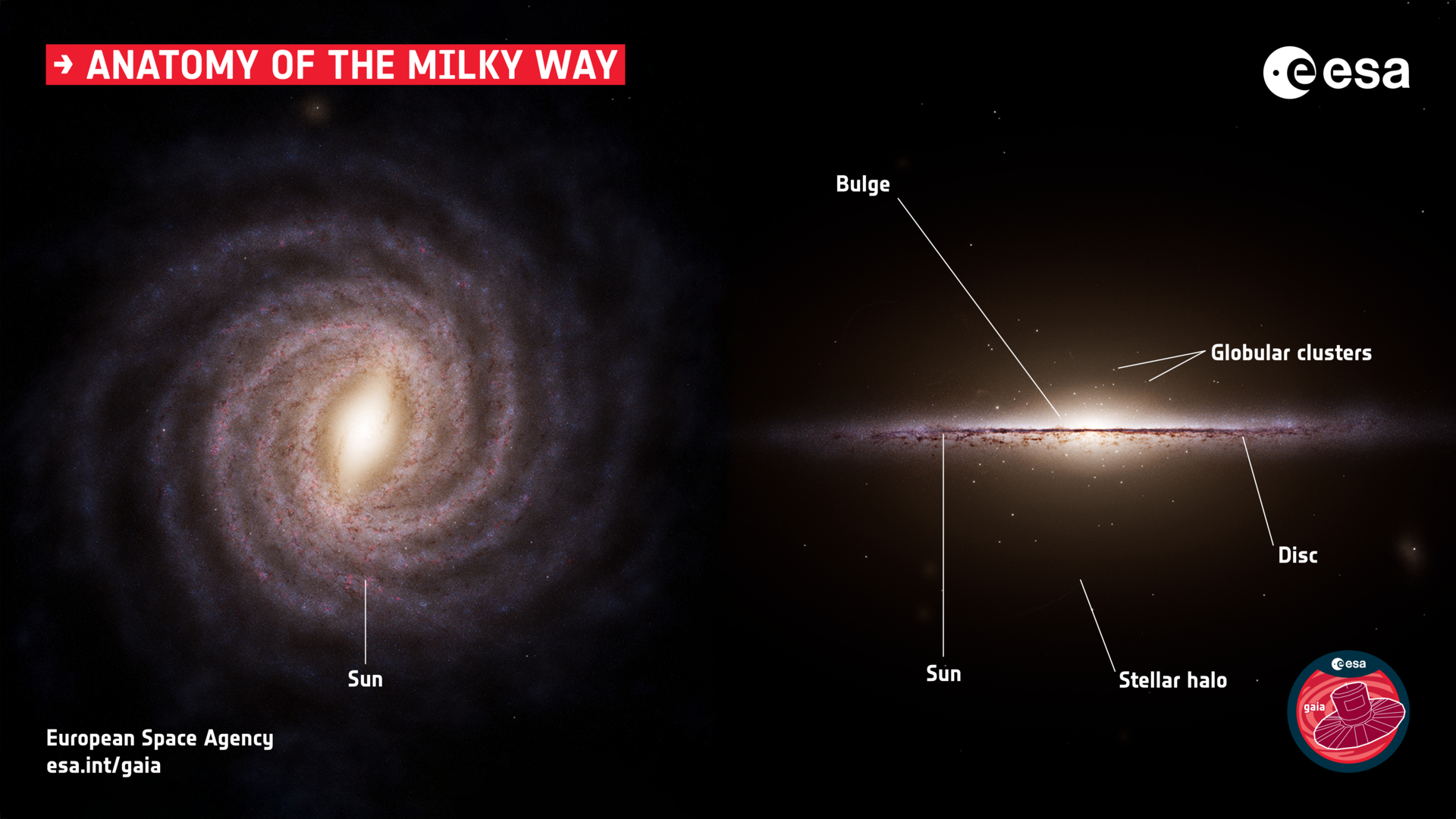
Anatomy of the Milky Way

-
ImageScience & Exploration
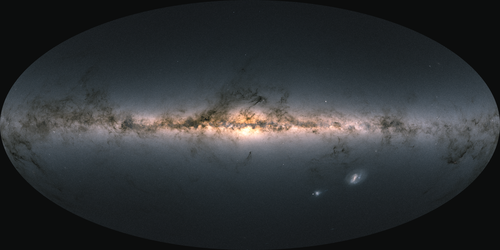
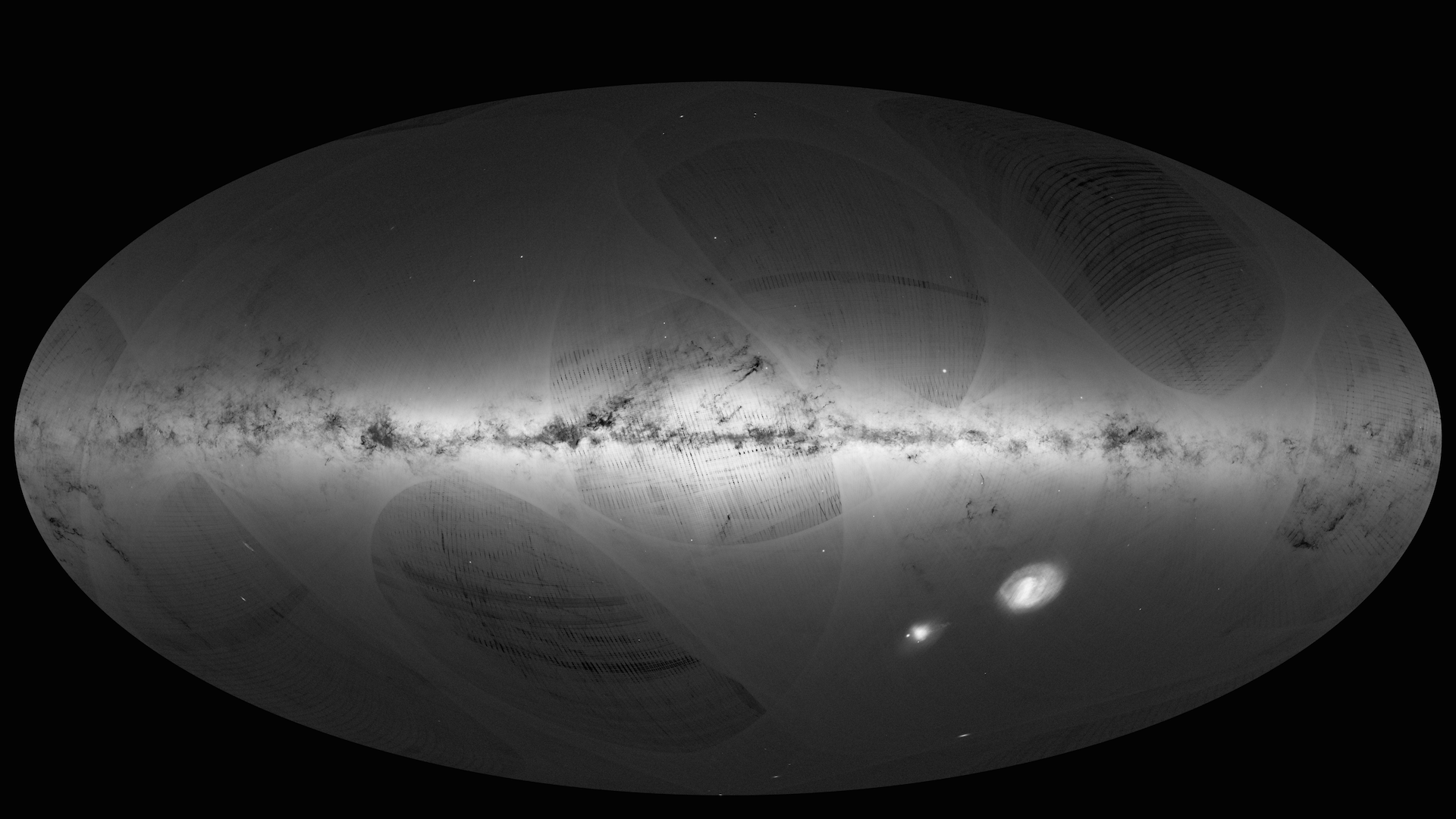
Interactive map of the sky from Gaia’s Early Data Release 3