Saturn's rings
The rings of Saturn have puzzled astronomers ever since they were first seen by Galileo in 1610, during the first telescopic observations of this planet.
Although he saw the rings first, Galileo did not know what they were. They appeared to him as 'ears' or lobes either side of the planet. It was Christaan Huygens who first proposed that Saturn was surrounded by a solid ring in 1655.

The puzzles have only increased since NASA's Voyager 1 and 2 missions imaged the ring system extensively in 1980 and 1981.
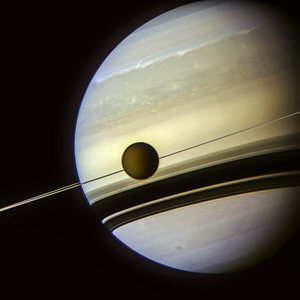
The rings have been given letter names in the order of their discovery. The main rings are, working outward from the planet, known as C, B, and A.
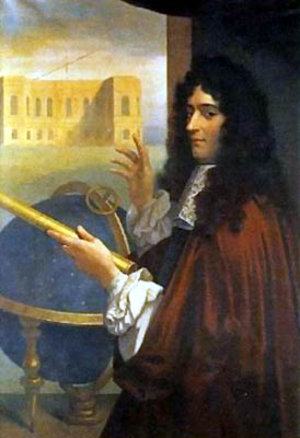
The 'Cassini Division' is the largest gap in the rings and separates Rings B and A (named after Jean-Domenique Cassini who discovered the gap in 1676).
In addition a number of fainter rings have been discovered more recently. The D Ring is exceedingly faint and closest to the planet. The F Ring is a narrow feature just outside the A Ring. Beyond that are two far fainter rings named G and E.
The particles in Saturn's rings are composed primarily of water ice and range from microns to metres in size. The rings show a tremendous amount of structure on all scales; features like spokes and irregular ripples, are puzzling.
Some of them might be signs of asteroids plunging through the ring system, or others might be caused by tiny moonlets, as yet undiscovered, very close to Saturn's rings.
Some of this structure is related to gravitational perturbations by Saturn's many moons, but much of it remains unexplained.
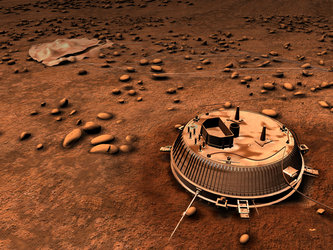
The Cassini-Huygens mission explored the rings intensively to throw light on these mysteries.