Astronauts seen and heard: satcoms for the Space Station
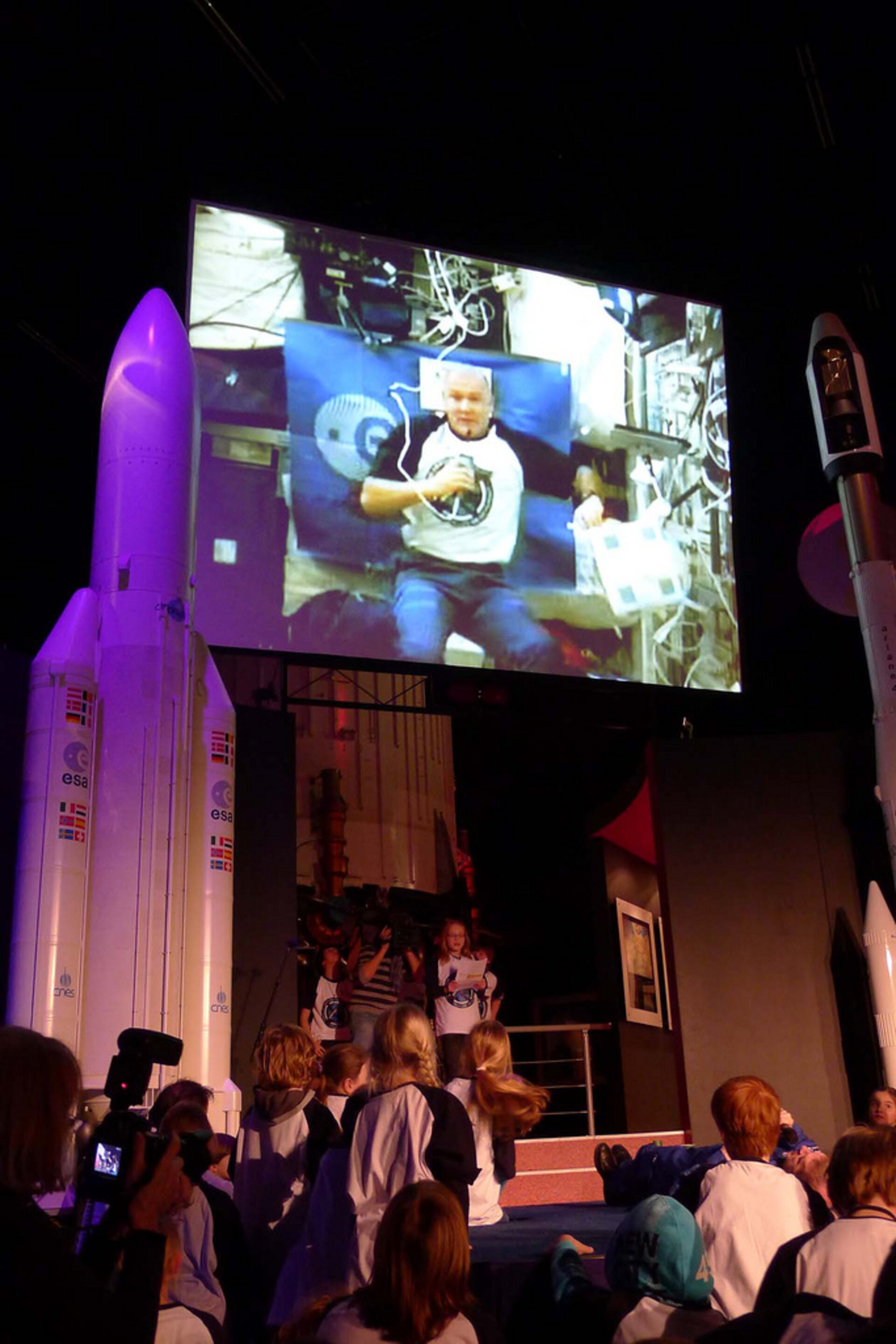
Seeing ESA astronaut André Kuipers on the International Space Station is a regular occurrence these days. You turn on your TV or check Twitter and there he is. Since there are no cables trailing from the Station to Earth, just how does this happen?
The answer, of course, is via satellite. While the answer may be simple, the process is more complicated.
Behind André’s smiling face is a complex system of jargon-filled amplifiers, multiplexers, antennas, nodes and signal modulation.
Thanks to satcoms, the crew can directly receive emails on the Space Station, they can make private calls via IP phones, and we can see them during televised video conferences.
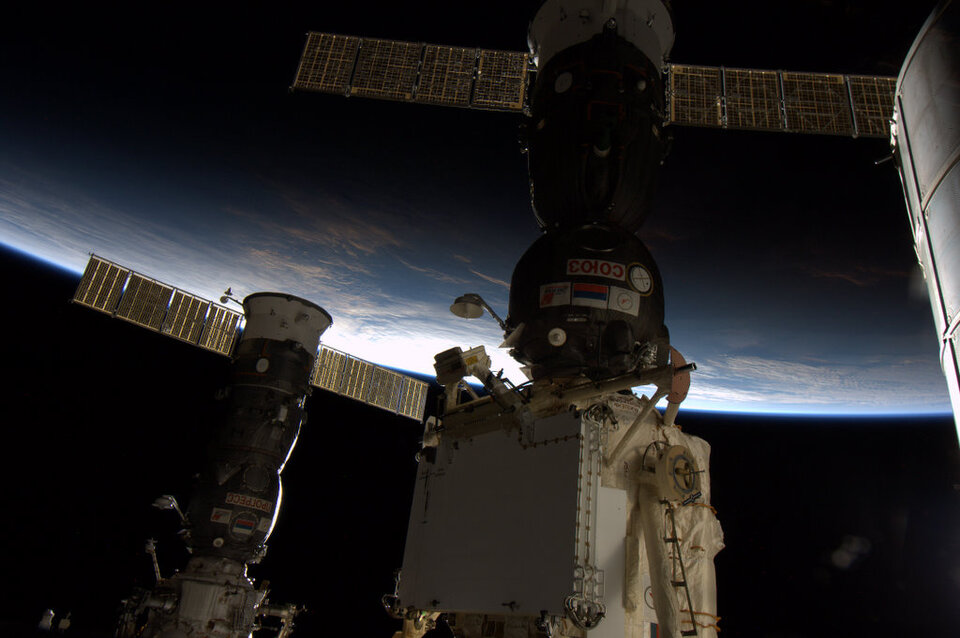
The Station is flying in a low orbit – around 400 km up – which means that direct communications can happen only when it passes over a ground station.
Instead, signals from the Station are first sent to ‘geostationary’ satellites hovering 36 000 km above the equator.
Geostationary satellites take exactly a day to circle Earth, making them appear motionless in our skies. This allows continuous contact with ground stations, enabling them to relay the Station’s signals to a central ground station on Earth more often.
The process is reversed when sites such as the Columbus control centre in Munich, Germany, send signals up to the Station.
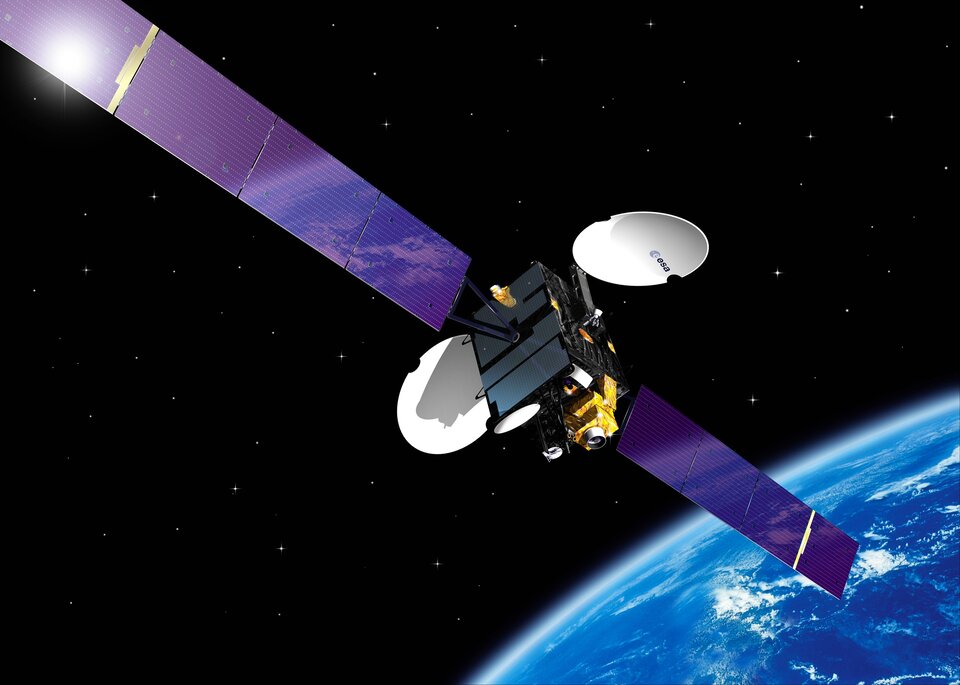
ESA’s Artemis satellite provides a similar data-relay service for Europe’s Automated Transfer Vehicle as the cargo ferry flies up to dock with the Station.
The European Data Relay System now being developed by ESA will follow the same process to create a telecommunications network that will provide realtime data from European satellites on demand. European astronauts use US communications assets on the Station.
When André on the Station heard his little girl sing to him as the world watched, they were linked using ‘Ku-band’ frequencies, which often deliver TV programmes directly to our home satellite dishes.
Ku-band is also used when André emails or tweets photos to his many followers on Earth.
A lower frequency, S-band, is used for commanding the Station, for key telemetry and for voice-only communications.
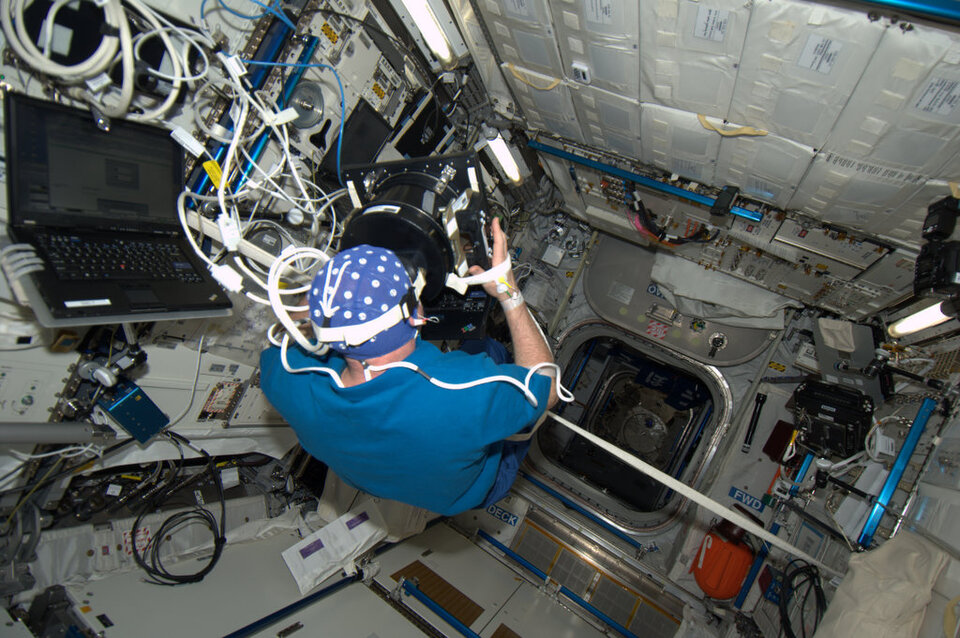
Video links via satcoms have also been very helpful as André works in the Columbus research module. He is seen live by his colleagues at the Columbus control centre, helping them to work together.
Ground specialists can see what he is doing to check that he is doing a job as planned and using the right tools.
You can follow André’s communications via satellite by going on Twitter, visiting ESA’s YouTube channel or checking out ESA’s Flickr page. See the links in the column to the right.