


International cooperation
By its very nature, planetary monitoring is a field that requires consideration on a global scale. International co-operation is a significant means of leveraging the effectiveness of ESA Earth observation activities.
ESA was a founder member of the Committee on Earth Observing Satellites (CEOS), an international co-ordinating mechanism charged with co-ordinating international spaceborne missions designed to observe and study planet Earth. First created in 1984, CEOS is today comprised of 23 members – mostly space agencies – and 21 associated nations and international organisations.
CEOS works to optimise the benefits of global Earth observation missions through co-operation between members in terms of mission planning and developing compatible data products, services and policies.
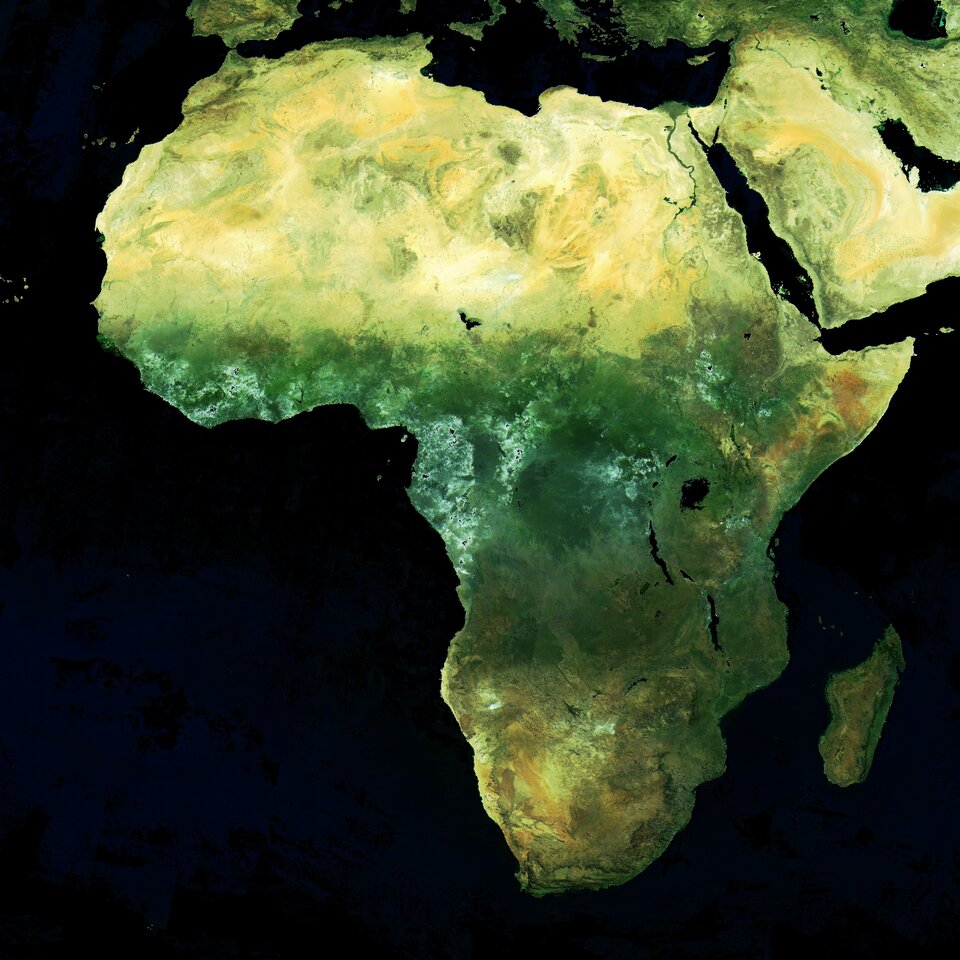
ESA also carries out its own international co-operation initiatives. Following the World Summit on Sustainable Development in Johannesburg in 2002, ESA began the international TIGER Initiative with the aim of providing Earth observation data to assist in managing water resources, primarily in Africa.
The focus of TIGER is to encourage the principle of sustainable development in the management of water resources, with the project driven by the needs of local populations. At the request of African water authorities at the First African Water Week held in 2008 in Tunis, ESA kicked off the second phase of its TIGER initiative, TIGER II, which will take place from 2009 to 2011.
Lack of clean water for drinking, sanitation, agriculture and industry puts a brake on economic and social development. The United Nations considers the average person needs 50 litres of water a day to meet their water and sanitation needs, but people living in 13 countries – nine of them in Africa – have to get by on less than 10 litres a day.
The intention is that the use of Earth observation can improve current water management practices, enabling the identification and sustainable exploitation of underground aquifers, better management of wetlands, and enhancing food security as well as epidemiology research into how disease outbreaks are linked to environmental factors.
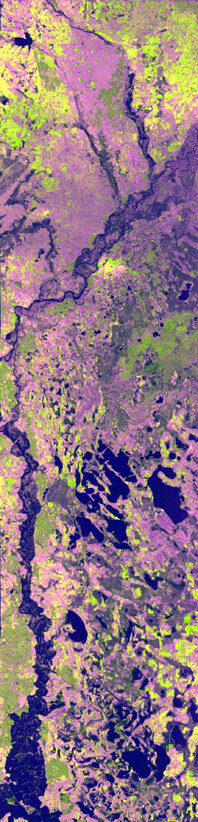
Access to relevant Earth observation data is being facilitated and relevant technology is being transferred, with the final aim that satellite data becomes integrated into long-term planning within the participating countries.
ESA is also participating in the Dragon Programme, a joint initiative in the field of Earth observation between the Agency and China. The aim of Dragon is to encourage joint European and Chinese research across a range of thematic areas, concentrating on the vast 9.6 million sq km of Chinese territory.
Subjects include agricultural and forest monitoring, water resource assessment, terrain measurement, desertification, the ocean environment, atmospheric chemistry and climate change.
The intention is to demonstrate the potential of Earth observation as a territorial management tool, enabling improved development planning, resource mapping and the mitigation of natural hazards.

