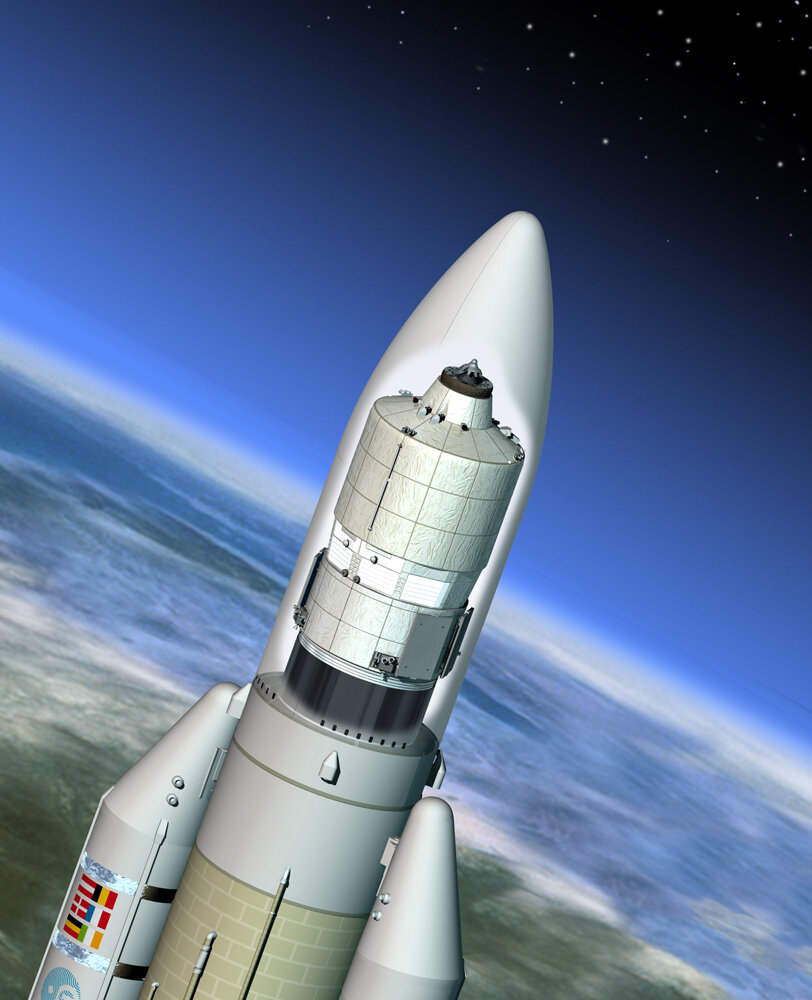
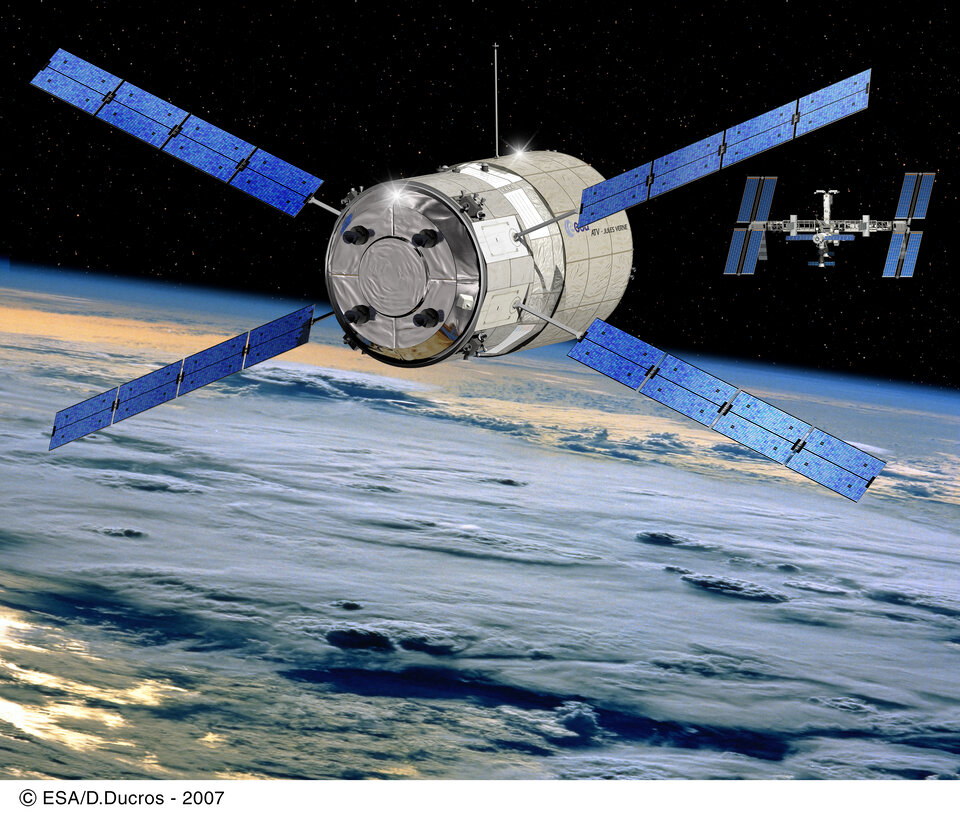
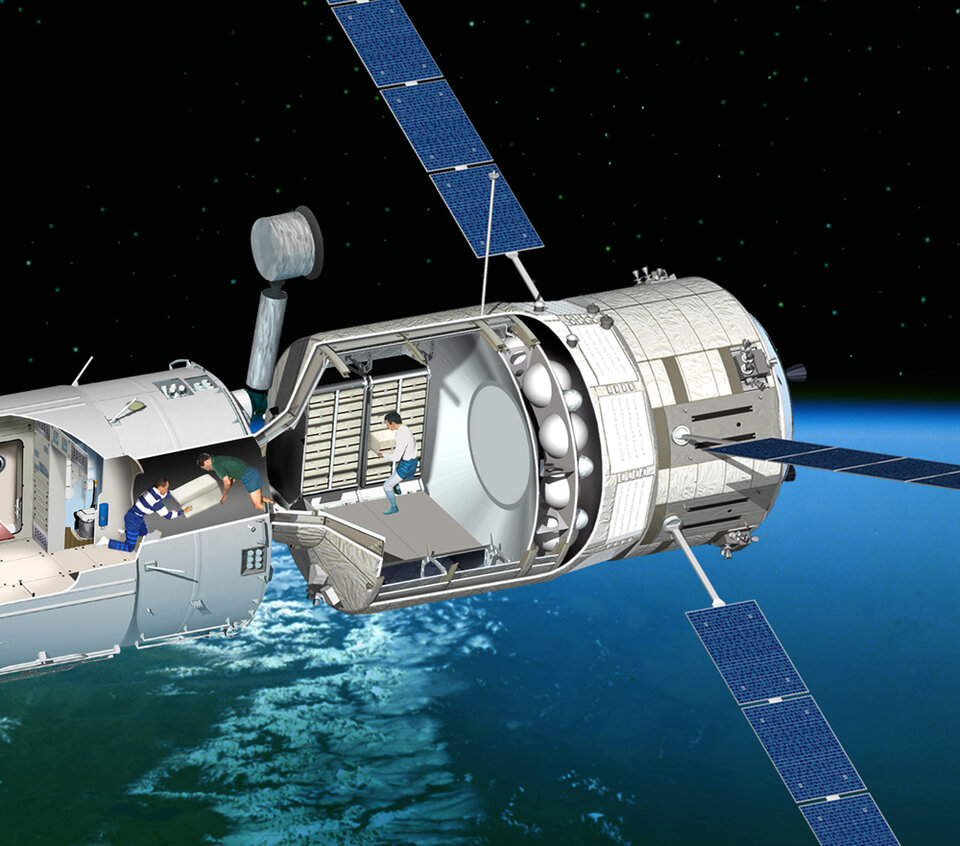
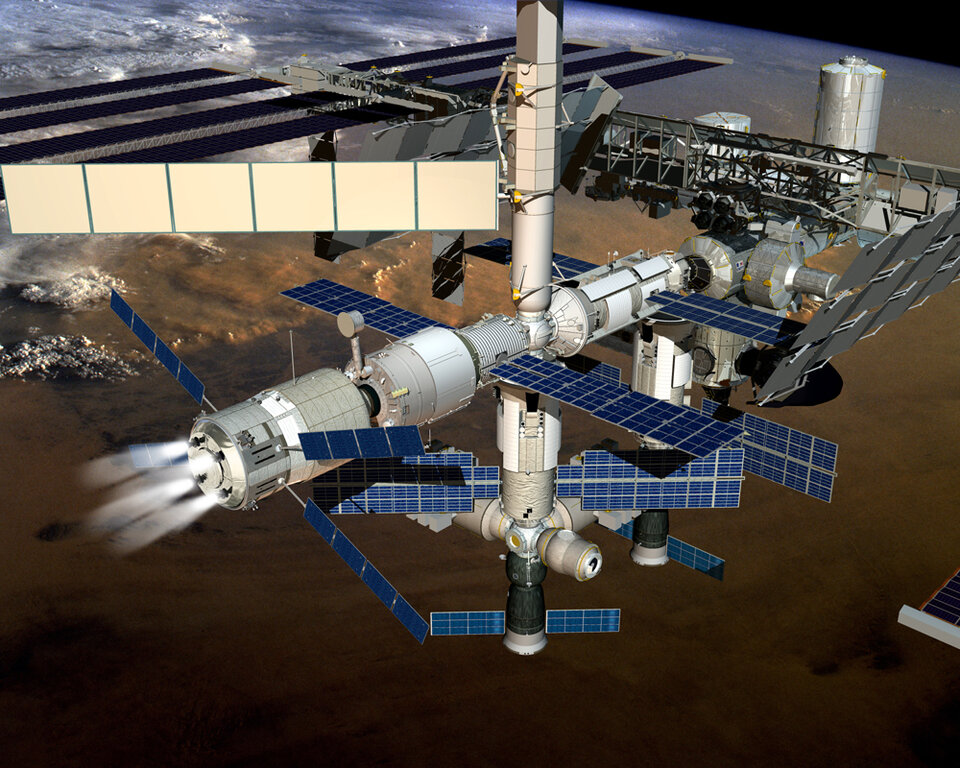
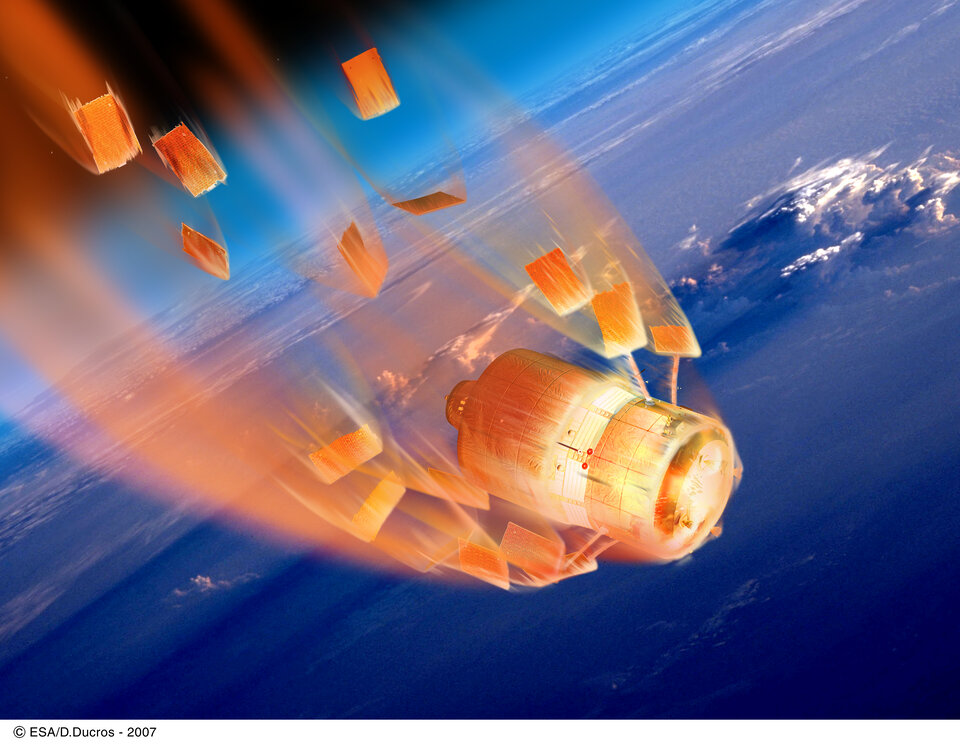
Science & Exploration ATV mission scenario - picture report 2519 views 3 likes ESA / Science & Exploration / Human and Robotic Exploration / ATV ATV, weighing more than 20 tonnes, is well protected at the top of Ariane 5 during the three minutes of high pressure aerodynamic ascent 100 minutes after liftoff, ATV becomes a fully automatic spaceship navigating towards the International Space Station. Three days after launch, ATV uses its eye-like rendezvous sensors to dock precisely and safely with the Space Station. ATV becomes an extension of the station. The 45 m³ pressurised module delivers up to 6.6 tonnes of equipment, fuel, food, water and air for the crew. ATV can use up to 4 tonnes of propellant to raise the International Space Station's altitude which naturally decreases over time. After six months ATV, loaded with 6.5 tonnes of waste, separates from the Space Station and burns up during a controlled reentry high over the Pacific. Like Thank you for liking You have already liked this page, you can only like it once!