 |  |  |  |  |
| |  | |  | |
 |
Space Science About Space ScienceESA's 'Cosmic Vision'Science & Technology in-depthMultimedia Science imagesScience videosAnimationsDownloadsSounds from spaceMedia centre Press ReleasesPress kitsESA TelevisionResources Reference sectionGlossaryFAQs Science missions Services HelpLegal disclaimerCommentsSubscribeFollow us RSS feeds ESA Sci on Twitter
|  |  |  |  | | | Giotto factsheet
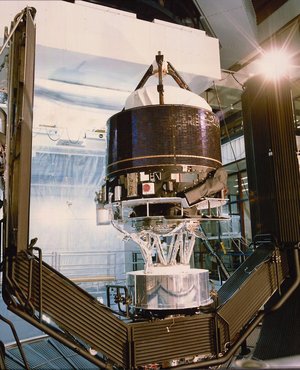
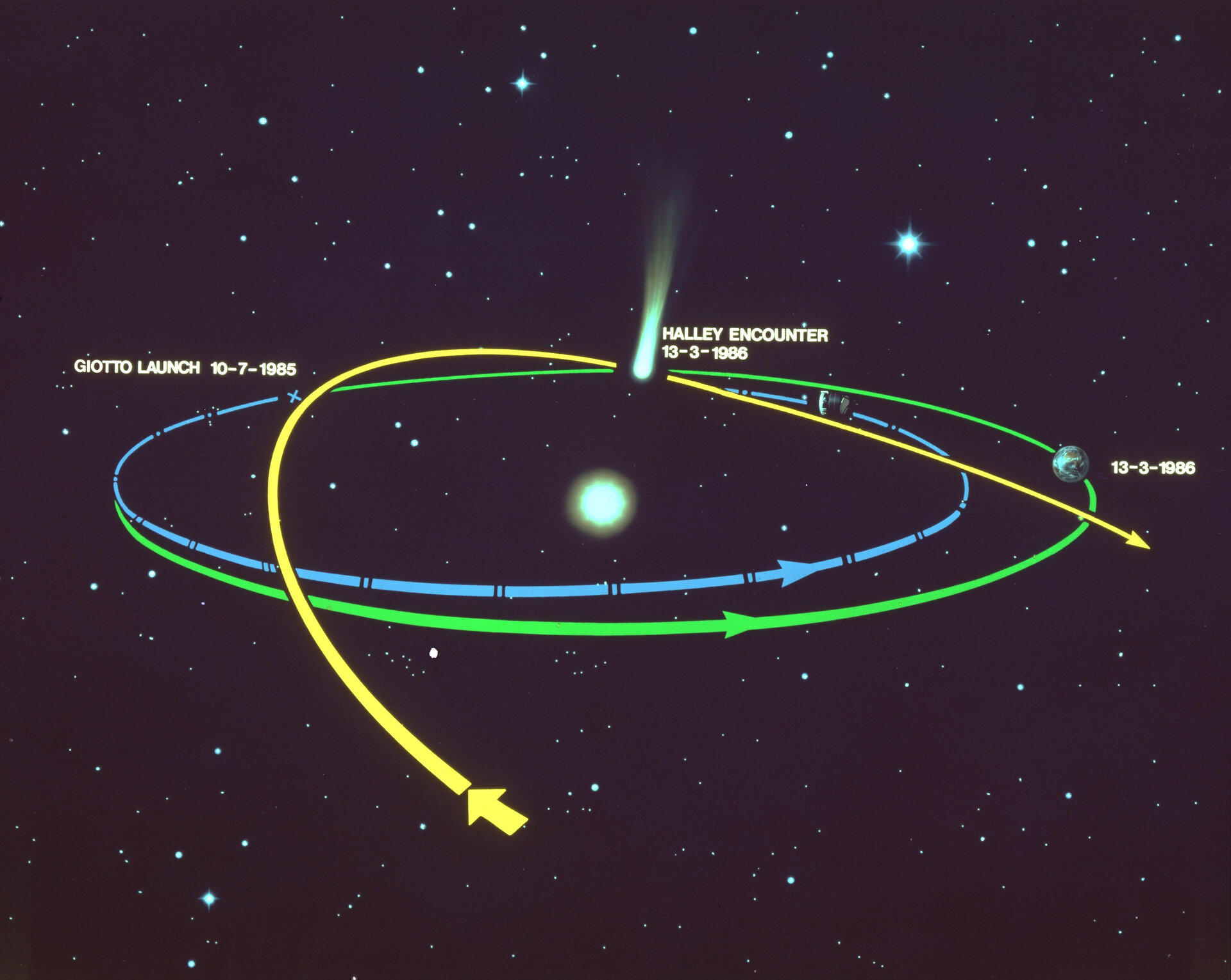
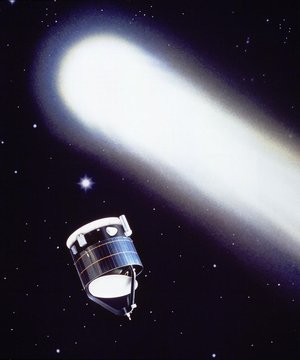
Encounters with Comets Halley and Grigg-Skjellerup Name Named after the famous medieval Italian painter, Giotto di Bondone (1266-1337). Probably inspired by the reappearance of Comet Halley in 1301, Giotto transformed the Star of Bethlehem into a golden comet. He did this in his 1304 fresco 'Adoration of the Magi'. You can see the fresco in the Scrovegni chapel in Padua, Italy. Description Giotto was ESA's first deep-space mission. In 1986, it passed closest to the nucleus of a comet, Halley. Its images showed for the first time the shape of a comet nucleus and found the first evidences of organic material in a comet. In 1992, after a long cruise through space, scientists directed Giotto to Comet Grigg-Skjellerup. It sent back a lot of information, passing just 200 kilometres from the nucleus. Launch 2 July 1985 (Ariane-1 at Kourou, French Guiana). Status Completed. Journey Giotto was initially injected into a geostationary transfer orbit. After three revolutions in Earth orbit, the on-board motor was fired to inject into an interplanetary orbit. After a cruise phase of 8 months, Giotto encountered Comet Halley on 14 March 1986. For its (initially unscheduled) visit to the second comet, Grigg-Skjellerup, it was redirected back to the direction of Earth and used a gravity assist to reach its new target. Notes Giotto was ESA's first deep-space mission, part of an ambitious international effort to solve the mysteries surrounding Comet Halley.
Giotto took the first ever close-up images of a comet nucleus.
It was the first deep-space mission to change orbit by returning to Earth from an interplanetary trajectory for a gravity-assist.
Giotto discovered the size and shape of Comet Halley's nucleus, found that its surface is very dark (the blackest object in the solar system) and that it emitted jets of gas and dust.
Giotto made the closest comet fly-by to date by any spacecraft (about 200 kilometres from Comet Grigg-Skjellerup).
Last update: 24 September 2004 | |
|  | More about... Giotto overviewOther comet missions Rosetta factsheetScience missions with Ariane launches Darwin factsheetHerschel fact sheetHipparcos factsheetISO factsheetPlanck in a nutshellRosetta factsheetSMART-1 factsheetXEUS factsheetXMM-Newton factsheet
|