Poster - The Columbus laboratory
The Columbus laboratory, launched in February 2008, is one of ESA's main contributions to the ISS.
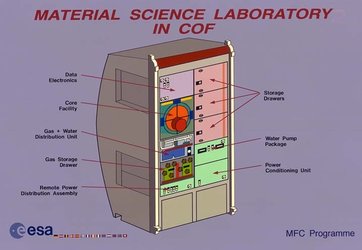
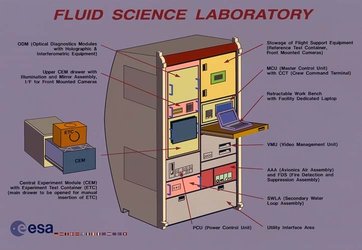
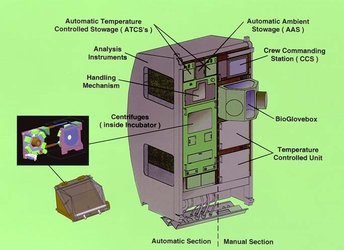
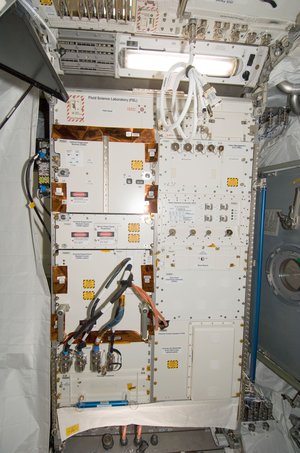
This multi-purpose science and technology laboratory, about 7 metres long and with a diameter of 4.5 metres, is permanently attached to the Station to provide facilities for studies to be carried out in material sciences, fluid physics and life science. Such studies may help to throw light on everything from the causes, prevention and treatment of disease to the introduction of new manufacturing processes on Earth.
External platforms attached to Columbus host experiments and applications in the fields of space science and technology. For example, scientists can investigate how living organisms survive in space in extreme conditions of temperature and pressure. An unhindered view of the Sun also allows studies of the irradiance of the Sun.
Columbus serves as a classroom for educational experiments and activities inspiring the younger generation to participate in science studies and encouraging them to take up professional careers in science and engineering.