LOOKING DEEP INTO THE UNIVERSE
Europe has developed a series of powerful space observatories to analyse light in the whole electromagnetic spectrum. Space-based telescopes, such as Hubble, and ESA’s
XMM-Newton and Integral are studying the Universe beyond the visible light, observing how stars evolve and monitoring galaxies and celestial objects, such as black holes.
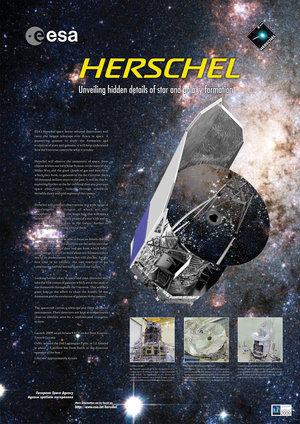
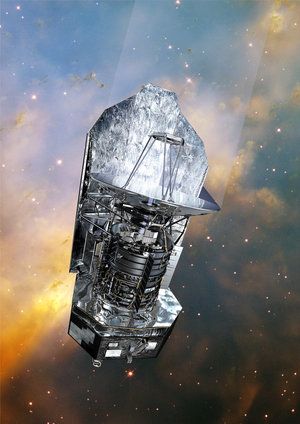
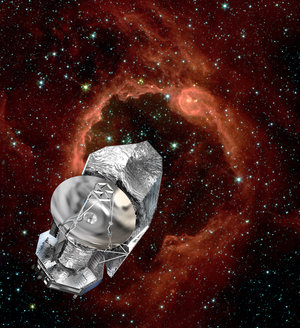
Herschel, launched in May 2009, is investigating how stars and galaxies are born using long-wavelengths never covered before.
Planck, launched, together with Herschel, is observing fossil radiation in the early Universe to improve our knowledge about its origins and evolution.
As of 2012 Gaia will allow astronomers to chart the most accurate three-dimensional map of our Galaxy, revolutionising our knowledge of the Milky Way.
The joint NASA/ESA James Webb Space Telescope will look deeper into space to provide scientists with new insights about the birth and evolution of planetary systems.