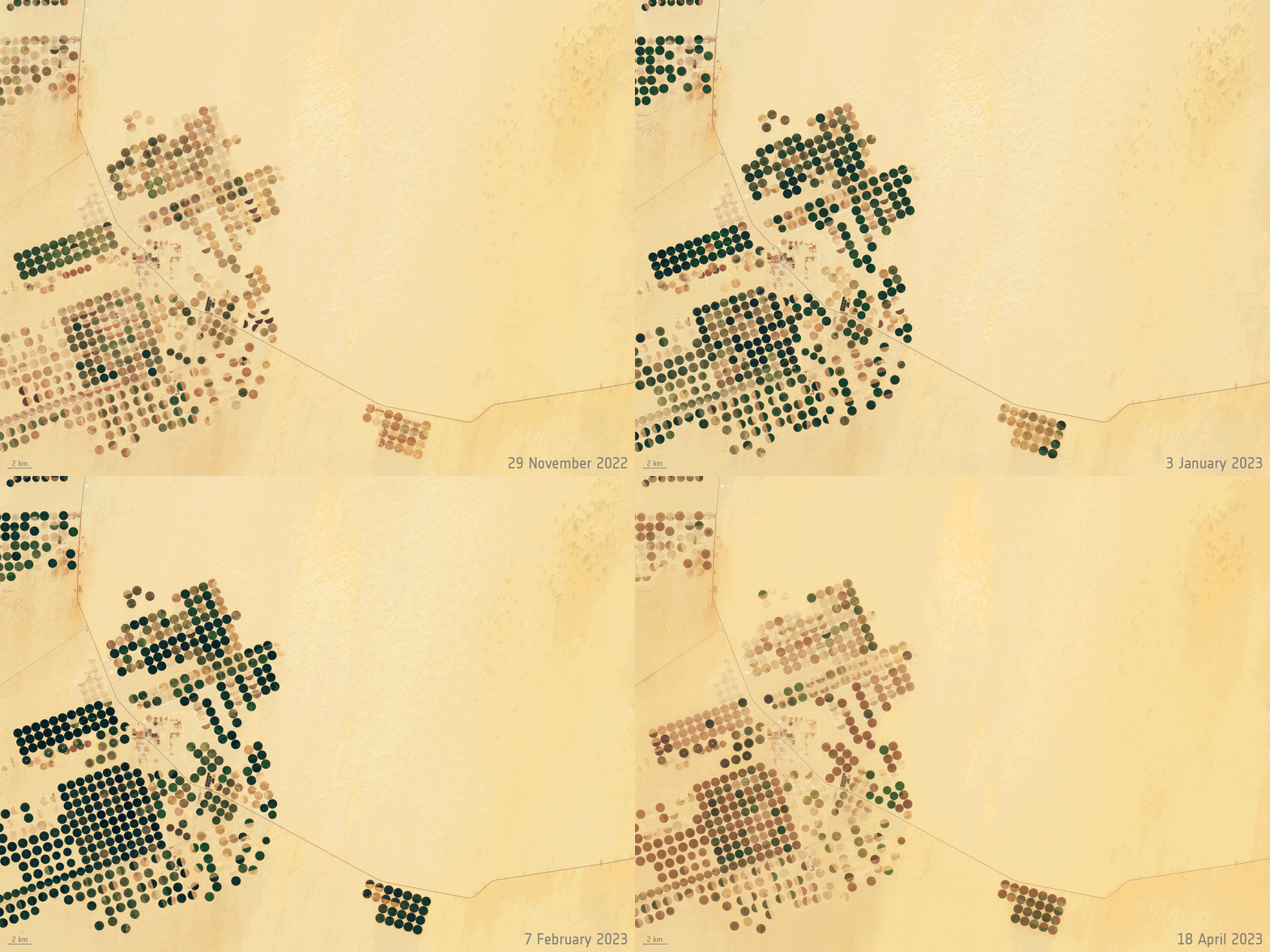
Desert crop fields
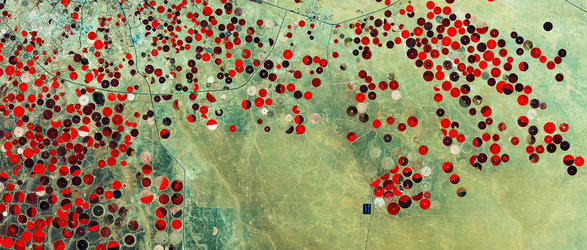
This Copernicus Sentinel-2 false-colour image, acquired in November 2015, shows how Egypt’s Western Desert is being used for agriculture. Sentinel-2’s near-infrared channel has been used to display vegetation in red – a particularly stark contrast to the desert areas across the region.
The circles come from a central-pivot irrigation system, where the long water pipe rotates around a well at the centre. Since no crops can grow in this climate without intensive irrigation, the fields are perfectly round. This type of irrigation helps farmers manage their watering demands and conserve precious resources.
Canals can be seen as thin, black lines cutting through the desert and supplying water to the agricultural fields from Lake Nasser, visible in black on the bottom right. One of the largest artificial reservoirs in the world, Lake Nasser is the result of the construction of a dam across the waters of the Nile to provide irrigation in the nearby areas.